The odd thing about these television discussions designed to “get all sides of the issue” is that they do not feature a spectrum of people with different views on reality. Rather, they frequently give us a face-off between those who see reality and those who have missed it entirely. In the name of objectivity, we are getting fantasy-land.
Molly Ivins (1944–2007) American writer, political columnist [Mary Tyler Ivins]
Essay (1987-03), “Killing the Messenger,” The Progressive
(Source)
Collected in Molly Ivins Can't Say That, Can She? (1991).
Quotations about:
balance
Note not all quotations have been tagged, so Search may find additional quotes on this topic.

The true rule, in determining to embrace, or reject any thing, is not whether it have any evil in it; but whether it have more of evil, than of good. There are few things wholly evil, or wholly good. Almost every thing, especially of governmental policy, is an inseparable compound of the two; so that our best judgment of the preponderance between them is continually demanded.
Abraham Lincoln (1809–1865) American lawyer, politician, US President (1861–65)
Speech (1848-06-20), “Internal Improvements,” US House of Representatives, Washington, D.C.
(Source)
Speaking on internal improvements (infrastructure) as part of governmental policy. Taken from the copy of the speech Lincoln submitted to the Congressional Globe Appendix and the Illinois Journal (1848-07-20).

Busy work brings after ease;
Ease brings sport and sport brings rest;
For young and old, of all degrees,
The mingled lot is best.Joanna Baillie (1762–1851) Scottish poet and dramatist
Poem (1790), “Rhymes,” Fugitive Verses
(Source)

A man is rich whose income is larger than his expenses, and he is poor if his expenses are greater than his income.
[Celui-là est riche, qui reçoit plus qu’il ne consume; celui-là est pauvre, dont la dépense excède la recette.]Jean de La Bruyère (1645–1696) French essayist, moralist
The Characters [Les Caractères], ch. 6 “Of Gifts of Fortune [Des Biens de Fortune],” § 49 (6.49) (1688) [tr. Van Laun (1885)]
(Source)
(Source (French)). Other translations:He is rich whose Receipt is more than his Expences, and he is poor whose Expences are more than his Receipt.
[Bullord ed. (1696)]He is rich, whose Income is more than his Expences; and he is poor whose Expences are more than his Income.
[Curll ed. (1713)]He is rich, whose Income is more than his Expences; and he is poor whose Expences exceed his Income.
[Browne ed. (1752)]That man is rich, who gets more than he spends; that man is poor, whose expenses exceed his receipts.
[tr. Stewart (1970)]

You have to laugh at the things that hurt you just to keep yourself in balance, just to keep the world from running you plumb crazy.
Ken Kesey (1935–2001) American novelist, essayist, countercultural figure
One Flew Over the Cuckoo’s Nest, Part 3 (1962)
(Source)

The national unity of a free people depends upon a sufficiently even balance of political power to make it impracticable for the administration to be arbitrary and for the opposition to be revolutionary and irreconcilable. Where that balance no longer exists, democracy perishes. For unless all the citizens of a state are forced by circumstances to compromise, unless they feel that they can affect policy but that no one can wholly dominate it, unless by habit and necessity they have to give and take, freedom cannot be maintained.
Walter Lippmann (1889–1974) American journalist and author
“The Indispensable Opposition,” The Atlantic Monthly (Aug 1939)
(Source)
It is advantageous to an author, that his book should be attacked as well as praised. Fame is a shuttlecock. If it be struck at one end of the room, it will soon fall to the ground. To keep it up, it must be struck at both ends.
Samuel Johnson (1709–1784) English writer, lexicographer, critic
Comment (11-19 Nov 1793), in James Boswell, Journey of a Tour to the Hebrides (1785)
(Source)
We therefore say once more that a strong mind is not one that is merely capable of strong emotions, but one that under stress of the strongest emotions keeps its balance, so that in spite for the storms within the breast, judgment and conviction can act with perfect freedom, like the needle of the compass on a storm-tossed ship.
[Wir sagen es also noch einmal: Ein starkes Gemüth ist nicht ein solches, welches bloss starker Regungen fähig ist, sondern dasjenige, welches bei den stärksten Regungen im Gleichgewicht bleibt, so dass trotz den Stürmen in der Brust der Einsicht und Ueberzeugung wie der Nadel des Kompasses auf dem sturmbewegten Schiff das feinste Spiel gestattet ist.]
Karl von Clausewitz (1780–1831) Prussian soldier, historian, military theorist
On War [Vom Kriege], Book 1, ch. 3 “On Military Genius [Der Kriegerische Genius],” (1.3) (1832) [tr. Jolles (1943)]
(Source)
(Source (German)). Other translations:We, therefore, say once more a strong mind is not one that is merely susceptible of strong excitement, but one which can maintain its serenity under the most powerful excitement; so that, in spite of the storm in the breast, the perception and judgment can act with perfect freedom, like the needle of the compass in the storm-tossed ship.
[tr. Graham (1873)]We repeat: strength of character does not consist solely in having powerful feelings, but in maintaining one’s balance in spite of them. Even with the violence of emotion, judgment and principle must still function like a ship’s compass, which records the slightest variations however rough the sea.
[tr. Howard & Paret (1976)]

Now and in the time to be, I think it will pay for you to zero in on being precise with your language. Try to build and treat your vocabulary the way you are to treat your checking account. Pay every attention to it and try to increase your earnings. The purpose here is not to boost your bedroom eloquence or your professional success — although those, too, can be consequences — nor is it to turn you into parlor sophisticates. The purpose is to enable you to articulate yourselves as fully and precisely as possible; in a word, the purpose is your balance.
Joseph Brodsky (1940–1996) Russian-American poet, essayist, Nobel laureate, US Poet Laureate [Iosif Aleksandrovič Brodskij]
“Speech at the Stadium,” Commencement Address, University of Michigan (18 Dec 1988)
(Source)
The man who will not investigate both sides of a question is dishonest.
Abraham Lincoln (1809–1865) American lawyer, politician, US President (1861–65)
(Attributed)
Man’s urge for change and his need for stability have always balanced and checked each other, and our current vocabulary, which distinguishes between two factions, the progressives and the conservatives, indicates a state of affairs in which this balance has been thrown out of order. No civilization — the man-made artifact to house successive generations — would ever have been possible without a framework of stability, to provide the wherein for the flux of change.
Hannah Arendt (1906–1975) German-American philosopher, political theorist
Essay (1969-02-27), “Reflections on Violence,” The New York Review of Books
(Source)
Revised and collected in Crises of the Republic, "On Violence" (1972).

The crucial task of age is balance, a veritable tightrope of balance; keeping just well enough, just brave enough, just gay and interested and starkly honest enough to remain a sentient human being.
Florida Scott-Maxwell (1883–1979) American-British playwright, author, psychologist
The Measure of My Days (1968)
(Source)
During the greater part of the nineteenth century the significance of the opposition between the two principles of individual rights and social functions was masked by the doctrine of the inevitable harmony between private interests and public good. Competition, it was argued, was an effective substitute for honesty. Today … few now would profess adherence to the compound of economic optimism and moral bankruptcy which led a nineteenth century economist to say: “Greed is held in check by greed, and the desire for gain sets limits to itself.”
R. H. Tawney (1880–1962) English writer, economist, historian, social critic [Richard Henry Tawney]
The Acquisitive Century, ch. 3 “The Acquisitive Society” (1920)
(Source)
[T.E. Lawrence] is one of those great men for whom one feels intensely sorry because he was nothing but a great man.
Aldous Huxley (1894–1963) English novelist, essayist and critic
Letter to Virginia Ocampo (12 Dec 1946)

If individuality has no play, society does not advance; if individuality breaks out of all bounds, society perishes.
T. H. Huxley (1825–1895) English biologist [Thomas Henry Huxley]
“Administrative Nihilism” (1871)
There is — in world affairs — a steady course to be followed between an assertion of strength that is truculent and a confession of helplessness that is cowardly.
Dwight David Eisenhower (1890–1969) American general, US President (1953–61)
State of the Union Address (2 Feb 1953)
Justice cannot be for one side alone, but must be for both.
Eleanor Roosevelt (1884–1962) American politician, diplomat, activist; First Lady of the US (1933–45)
Column (1947-10-15), “My Day”
(Source)
On the US, hoping that "a just and workable plan would be evolved," officially declaring support on 11 October for the United Nations plan to partition Palestine into separate Arab and Jewish states.

Almost every wise saying has an opposite one, no less wise, to balance it.
George Santayana (1863–1952) Spanish-American poet and philosopher [Jorge Agustín Nicolás Ruíz de Santayana y Borrás]
The Life of Reason or The Phases of Human Progress, Vol. 5 “Reason in Science,” ch. 8 “Prerational Morality” (1905)
(Source)
In politics, again, it is almost a commonplace, that a party of order or stability, and a party of progress or reform, are both necessary elements of a healthy state of political life. […] Each of these modes of thinking derives its utility from the deficiencies of the other; but it is in a great measure the opposition of the other that keeps each within the limits of reason and sanity.
John Stuart Mill (1806–1873) English philosopher and economist
On Liberty, ch. 2 “Of the Liberty of Thought and Discussion” (1859)
(Source)
To put everything in balance is good, to put everything in harmony is better. Above the scales there’s the lyre.
[Mettre tout en équilibre, c’est bien; mettre tout en harmonie, c’est mieux. Au-dessus de la balance il y a la lyre.]
Victor Hugo (1802–1885) French writer, journalist, human rights activist, politician
Ninety-Three [Quatrevingt-Treize], Part 3, Book 7, ch. 5 (1874) [tr. (1962)]
(Source)
Gauvain, arguing for a "republic of the ideal" rather than Cimourdain's law-focused "republic of the absolute."
(Source (French)). Other translations:Putting everything in equilibrium is good; making everything harmonious is better. Above the scales is the lyre.
[tr. Dole (1885)]An accurate adjustment of proportions is a good thing, but harmony is still better. The lyre stands higher than the scales.
[tr. Delano (1888)]To set all in equilibrium, is well; to put all in harmony, it is better. Above the balance is the lyre.
[tr. Gray (1903)]To set all in equilibrium, it is well; to put all in harmony, it is better. Above the Balance is the Lyre.
[tr. Gray/Benedict (1988)]

Perhaps it is impossible for a person who does no good not to do harm.
Harriet Beecher Stowe (1811–1896) American author
Uncle Tom’s Cabin, ch. 28 “Reunion” (1852)
(Source)

A strong mind is one which does not lose its balance even under the most violent excitement.
[Ein starkes Gemüt ist ein solches, welches auch bei den heftigsten Regungen nicht aus dem Gleichgewicht kommt.]
Karl von Clausewitz (1780–1831) Prussian soldier, historian, military theorist
On War [Vom Kriege], Book 1, ch. 3 “On Military Genius [Der Kriegerische Genius],” (1.3) (1832) [tr. Graham (1873)]
(Source)
(Source (German)). Other translations:A stout heart is one which does not lose its balance even under the most violent excitement.
[tr. Jolles (1943)]A strong character is one that will not be unbalanced by the most powerful emotions.
[tr. Howard & Paret (1976)]
We […] hold the just balance and set ourselves as resolutely against improper corporate influence on the one hand as against demagogy and mob rule on the other. I understand perfectly that such an attitude of moderation is apt to be misunderstood when passions are greatly excited and when victory is apt to rest with the extremists on one side or the other; yet I think it is in the long run the only wise attitude.
Theodore Roosevelt (1858–1919) American politician, statesman, conservationist, writer; US President (1901–09)
Letter (1899, Spring) to Senator Thomas Platt (R-NY)
(Source)
Quoted in Roosevelt's Autobiography, ch. 8 "The New York Governorship" (1913). Platt, the top Republican in New York, had sent a letter to the new Governor of New York, questioning whether Roosevelt's "altruism" in business/labor affairs meant he was potentially a Populist or Socialist.
When you have only two pennies left in the world, buy a loaf of bread with one, and a lily with the other.
Proverbs, Sayings, and Adages
Chinese proverb

It is only a step from victory to disaster. My experience is that, in a crisis, some detail always decides the issue.
Napoleon Bonaparte (1769–1821) French emperor, military leader
Letter to Tallyrand (7 Oct 1797)
(Source)
Napoleon's Letters [tr. J. M. Thompson (1934)]

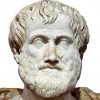
It is the mark of an educated mind to be able to entertain a thought without accepting it.
Aristotle (384–322 BC) Greek philosopher
(Spurious)
First attributed to Aristotle in Lowell L. Bennion, Religion and the Pursuit of Truth (1959). Unfound as such.
Sometimes thought (though I feel it's a bit of a stretch) a misinterpretation of Nicomachean Ethics 1.3.4 (1094b): "For it is the mark of an educated person to search for the same kind of clarity in each topic to the extent that the nature of the matter accepts it."
More discussion of this quotation:
You should not confuse your career with your life.
Dave Barry (b. 1947) American humorist, author, columnist
“25 Things I Have Learned In 50 Years,” #20 (1997)

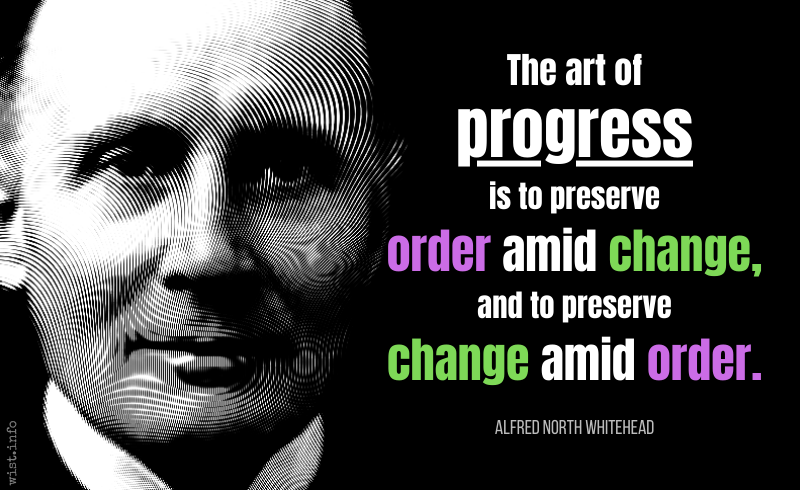
The art of progress is to preserve order amid change, and to preserve change amid order.
Alfred North Whitehead (1861–1947) English mathematician and philosopher
Process and Reality: An Essay in Cosmology (1929)
(Source)
Based on his Gifford Lectures, University of Edinburgh (1927-28), on process philosophy.