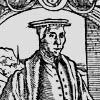
Everywhere in life, the true question is not what we gain, but what we do.
Thomas Carlyle (1795–1881) Scottish essayist and historian
Essay (1828-05), “Goethe’s Helena,” Foreign Review, Vol. 1, No. 2, Article 5
(Source)
Review of Goethe's Sämmtliche Werke, Vol. 1 (1827); not labeled as Carlyle but believed to be his. Collected in Carlyle, Critical and Miscellaneous Essays (1827-1855).
Quotations about:
gain
Note not all quotations have been tagged, so Search may find additional quotes on this topic.
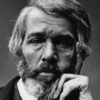
The Spirit of Commerce, Madam, which even insinuates itself into Families, and influences holy Matrimony, and thereby corrupts the Morals of Families as well as destroys their Happiness, it is much to be feared is incompatible with that purity of Heart, and Greatness of soul which is necessary for an happy Republic.
John Adams (1735–1826) American lawyer, Founder, statesman; US President (1797–1801)
Letter (1776-04-16) to Mercy Otis Warren
(Source)
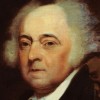
We grudge no man a fortune which represents his own power and sagacity, when exercised with entire regard to the welfare of his fellows. […] We grudge no man a fortune in civil life if it is honorably obtained and well used. It is not even enough that it should have gained without doing damage to the community. We should permit it to be gained only so long as the gaining represents benefit to the community. This, I know, implies a policy of a far more active governmental interference with social and economic conditions in this country than we have yet had, but I think we have got to face the fact that such an increase in governmental control is now necessary.
Theodore Roosevelt (1858–1919) American politician, statesman, conservationist, writer; US President (1901–09)
Speech (1910-08-31), “The New Nationalism,” John Brown Memorial Park dedication, Osawatomie, Kansas
(Source)
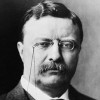
“But he won’t gain anything by it.” Well, no, I don’t suppose he could get four-and-sixpence a day for being hung, take the year round; but then he stands a chance to save a considerable part of his soul, — and such a soul! — when you do not. No doubt you can get more in your market for a quart of milk than for a quart of blood, but that is not the market that heroes carry their blood to.
Henry David Thoreau (1817–1862) American philosopher and writer
Speech (1859-10-30), “A Plea for Captain John Brown,” Concord, Massachusetts
(Source)
Speaking of John Brown and his raid on Harpers Ferry. Collected in A Yankee in Canada (1866).
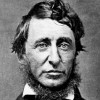
No gains without pains.
Benjamin Franklin (1706–1790) American statesman, scientist, philosopher, aphorist
Poor Richard (1745 ed.)
(Source)
Franklin recapped this in his final Poor Richard Improved (1758 ed.): "There are no Gains, without Pains." This was in turn reprinted in abridged Way to Wealth (1773).
Sometimes erroneously cited to Poor Richard (1734 ed.); that has something different in structure and meaning: "Hope of gain / Lessens pain."
See also Breton (1577) and Herrick (1648).
SUSAN: The world is hard, they must take pain that look for any gayn.
Nicholas Breton (c. 1545/53 - c. 1625/26) English Renaissance poet and prose writer [Britton; Brittaine]
Workes of a Young Wyt (1577)
(Source)
First record of something resembling "No pain, no gain" in English.

By virtue of exchange, one man’s prosperity is beneficial to all others.
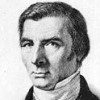
During the greater part of the nineteenth century the significance of the opposition between the two principles of individual rights and social functions was masked by the doctrine of the inevitable harmony between private interests and public good. Competition, it was argued, was an effective substitute for honesty. Today … few now would profess adherence to the compound of economic optimism and moral bankruptcy which led a nineteenth century economist to say: “Greed is held in check by greed, and the desire for gain sets limits to itself.”
R. H. Tawney (1880–1962) English writer, economist, historian, social critic [Richard Henry Tawney]
The Acquisitive Century, ch. 3 “The Acquisitive Society” (1920)
(Source)
What shall it profit a man, if he shall gain the whole world, and lose his own soul?
[τί γὰρ ὠφελεῖ ἄνθρωπον κερδῆσαι τὸν κόσμον ὅλον καὶ ζημιωθῆναι τὴν ψυχὴν αὐτοῦ]
The Bible (The New Testament) (AD 1st - 2nd C) Christian sacred scripture
Book 2. Gospel of Mark 8:36 (Mark 8:36) (Jesus) [KJV (1611)]
(Source)
This passage is paralleled in Matthew 16:26 and Luke 9:25.
(Source (Greek)). Other translations:What gain, then, is it for a man to win the whole world and ruin his life?
[JB (1966)]What gain, then, is it for anyone to win the whole world and forfeit his life?
[NJB (1985)]Do you gain anything if you win the whole world but lose your life? Of course not!
[GNT (1992 ed.)]Why would people gain the whole world but lose their lives?
[CEB (2011)]For what will it profit them to gain the whole world and forfeit their life?
[NRSV (2021 ed.)]

No one was ever ruined by taking a profit.
Proverbs, Sayings, and Adages
American proverb (Wall Street)

Honour and profit lie not in one sacke.
George Herbert (1593–1633) Welsh priest, orator, poet.
Jacula Prudentum, or Outlandish Proverbs, Sentences, &c. (compiler), # 232 (1640 ed.)
(Source)
Nought venter nought have.
John Heywood (1497?-1580?) English playwright and epigrammist
Proverbes, Part 1, ch. 11 (1564)
(Source)
More commonly rendered, "Nothing ventured, nothing gained."