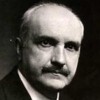
APOLLO: If she dies old, the burial will be richer.
DEATH: Phoebus, that argument favours the rich.
APOLLO: What! Are you witty unawares?
DEATH: The rich would gladly pay to die old.[ἈΠΌΛΛΩΝ: κἂν γραῦς ὄληται, πλουσίως ταφήσεται.
ΘΆΝΑΤΟΣ: πρὸς τῶν ἐχόντων, Φοῖβε, τὸν νόμον τίθης.
ἈΠΌΛΛΩΝ: πῶς εἶπας; ἀλλ᾽ ἦ καὶ σοφὸς λέληθας ὤν;
ΘΆΝΑΤΟΣ: ὠνοῖντ᾽ ἂν οἷς πάρεστι γηραιοὶ θανεῖν.]Euripides (485?-406? BC) Greek tragic dramatist
Alcestis [Ἄλκηστις ], l. 56ff (438 BC) [tr. Aldington (1930)]
(Source)
Apollo, trying to persuade Death to not yet take the young bride Alcestis, the only one willing to die in place of her husband Admetus.
(Source (Greek)). Other translations:APOLLO: More sumptuous obsequies await her age.
ORCUS: This were a law in favour of the rich.
APOLLO: What secret meaning hath thy wisdom here?
ORCUS: They with their wealth would purchase to die old.
[tr. Potter (1781)]APOLLO: But in mature old age if she expire,
She will be buried sumptuously.
DEATH:The law
Thou hast propos'd, O Phœbus, tends to serve
The rich, and them alone.
APOLLO:What mean these words?
Are you grown wise? I knew not this before.
DEATH: They who had any wealth might buy me off
Till the grow old.
[tr. Wodhull (1782)]APOLLO: And if she die old, she will be sumptuously intombed.
DEATH: Thou layest down the law, Phœbus, in favor of the rich.
APOLLO: How sayest thou? what? hast thou been clever without my perceiving it?
DEATH: Those who have means would purchase to die old.
[tr. Buckley (1858)]PHŒBOS: If old she died, the Fun'ral Pomp would richer be!
THANATOS: For wealthy Mortals, Phœbus, lay'st thou down the law!
PHŒBOS: What say'st? A Sophist art? Has't hid the fact from me?
THANATOS: (laughing) So, all rich folks may buy the right of dying old!
[tr. HBL (1884)]APOLLO:But if age
Come on her ere she die, her funeral rites
Will be the richer.
DEATH:Phœbus, what thou say'st
Is a law for the rich.
APOLLO:How say'st thou? Art
Thou witty inadvertently?
DEATH:The rich
Would buy the privilege of dying old.
[tr. Cudworth (1888)]APOLLO. Should she die old, a sumptuous funeral will she have.
DEATH. Phœbus, the law thou layest down is all in favour of the rich.
APOLLO. What mean'st thou? art so wise, and I never knew it?
DEATH. Those who have wealth would buy the chance of their dying old.
[tr. Coleridge (1891)]APOLLO: Think — royal obsequies if old she die!
DEATH: Lo, Phœbus making laws to shield the rich!
APOLLO: How say'st thou? — thou a sophist unawares!
DEATH: Would wealth not buy the boon of dying old?
[tr. Way (1894)]APOLLO: But aged wives receive more pomp at death.
DEATH: Thou suitest my Laws, O Phoebus, to the rich.
APOLLO: Old Death is shrewder than I thought he was!
DEATH: The rich would buy the chance of dying old.
[tr. Beloit College (1908)]APOLLO: Old, with great riches they will bury her.
THANATOS: Fie on thee, fie! Thou rich-man’s lawgiver!
APOLLO: How? Is there wit in Death, who seemed so blind?
THANATOS: The rich would buy long life for all their kind.
[tr. Murray (1915)]APOLLO: Let her die old, and her funeral will bring you riches.
DEATH: I leave you the riches, Apollo. You know what they are worth.
Your rich men
Can pay you well to buy them away from Death.
APOLLO: Who would ever have said Death had such wit!
[tr. Fitts/Fitzgerald (1936)]APOLLO: If she dies old, she will be richly buried.
DEATH: Phoebus, your law may favour wealth; not mine.
You'ld sell long life to the rich.
APOLLO:Do you say so?
Your keen wit has gone long unrecognized.
[tr. Vellacott (1953)]APOLLO: And yet if she dies old, she will receive a rich burial.
DEATH: The law you are trying to establish, Phoebus, is to the advantage of the rich.
APOLLO: What do you mean? Can I have failed to appreciate what a thinker you are?
DEATH: Those with means could buy death at an advanced age.
[tr. Kovacs (1994)]APOLLO: Even if it is an old woman who dies, her funeral will be costly.
DEATH: Why, Phoebus, it's for the benefit of the rich, the law you advocate!
APOLLO: What do you mean? Have I underestimated your intelligence?
DEATH: Those with the means would pay for the privilege of dying old.
[tr. Davie (1996)]APOLLO: If she dies as an old woman, she will be buried more lavishly.
DEATH: You set up a law weighted toward "the haves," Phoibos!
APOLLO: What did you say? I never noticed that you were so clever before.
DEATH: Those who could afford it would pay to die old.
[tr. Rabinowitz (1999)]APOLLO: Still, the older she dies the more wealth she’ll take down there with her on her burial day.
THANATOS: Apollo, you’re trying to set an unfair precedent here! It’s a law that will favour the rich!
APOLLO: O, I can see you’re a deep thinker, Thanatos! A true philosopher.
THANATOS: Can’t you see? Anyone with money would try and buy long life! All the poor would die young.
[tr. Theodoridis (2008)]APOLLO: And yet if she dies in old age, she will have a rich funeral.
THANATOS: Your law favors the haves over the have nots, Phoebus.
APOLLO: What do you mean? Have you become a sophist and not told anybody?
THANATOS: Those who could afford it would buy a ripe old age.
[tr. Luschnig / Luschnig (2019)]
Quotations about:
lifespan
Note not all quotations have been tagged, so Search may find additional quotes on this topic.
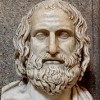
MARCUS: As our birth brings to us the beginning, so may death bring the end of all things. As nothing belonged to us before we were born, so nothing will belong to us after we are dead.
[Ut, quo modo initium nobis rerum omnium ortus noster adferat, sic exitum mors, ut nihil pertinuit ad nos ante ortum, sic nihil post mortem pertinebit.]
Marcus Tullius Cicero (106–43 BC) Roman orator, statesman, philosopher
Tusculan Disputations [Tusculanae Disputationes], Book 1, ch. 38 (1.38) / sec. 91 (1.91) (45 BC) [tr. Peabody (1886)]
(Source)
(Source (Latin)). Other translations:As our Birth giveth us an entrance into the business of this World, so Death should give our Exit from it. Which, as before our Birth, it nothing concern'd us, so neither shall it after Death.
[tr. Wase (1643)]As our birth was the beginning of things with us, death will be the end; and as we were no ways concerned with them before we were born, so we shall have none after we are dead.
[tr. Main (1824)]As our birth is the entrance of all things for us, so death is the exit; as before we saw the light nothing belonged to us, so nothing will belong to us after the scene is closed.
[tr. Otis (1839)]Just in the same manner as our birth was the beginning of things with us, so death will be the end; and as we were no ways concerned with anything before we were born, so neither shall we be after we are dead.
[tr. Yonge (1853)]As birth introduces us to the beginning of things, so does death to the end, it follows that, as before [birth] there was nothing which concerned us, so there will be nothing that concerns us after death.
[tr. Black (1889)][...] As we possessed nothing before birth, so will nothing remain to us after death.
[ed. Harbottle (1897)]Our birth brings the beginning of everything for us, so death brings the end: then just as nothing affected us before [birth], so nothing will affect us after death.
[tr. Douglas (1985)]Just as birth is the beginning of everything for us, so death is the end, and just as nothing mattered to us before we were born, nothing will matter after we die.
[tr. Habinek (1996)]Just as our birth brings the beginning of all things, so our death brings the end of all, then just as nothing affected us before birth, so nothing will affect us after death.
[tr. Davie (2017)]
And so, live as long as you please, you will strike nothing off the time you will have to spend dead.
[Aussi avez vous beau vivre, vous n’en rabattrez rien du temps que vous avez à estre mort.]
Michel de Montaigne (1533–1592) French essayist
Essays, Book 1, ch. 19 (1.19), “That to Philosophize Is to Learn to Die [Que Philosopher, c’est apprendre à mourir]” (1572) [tr. Frame (1943), 1.20]
(Source)
Some translators use the 1588 sequence of chapters, not the 1595, and so identify this as ch. 20.
The essay as a whole was published in the 1st (1580) edition. Ives indicates this passage was added for the 1595 edition; Frame and Screech identify it as being part of the original.
(Source (French)). Alternate translations:So may you live long enough, you shall never diminish any thing from the time you have to die.
[tr. Florio (1603)]Besides, live as long as you can, you shall by that nothing shorten the space you are to lie dead in the Grave.
[tr. Cotton (1686)]Besides, live as long as you can, you will thereby not at all shorten the space of time that you are to lie dead in the grave.
[tr. Cotton/Hazlitt (1877)]However long you may live, you will thereby subtract nothing from the time that you must be dead.
[tr. Ives (1925), 1.20]It is no good going on living: it will in no wise shorten the time you will stay dead.
[tr. Screech (1987), 1.20]So live as long as you please, you will in no way shorten the time you have to be dead.
[tr. Atkinson/Sices (2012), 1.20]Live as long as you want, you can never knock any time off your death.
[tr. HyperEssays (2025)]

The gladness of the heart is the life of man, and the joyfulness of a man prolongeth his days.
[εὐφροσύνη καρδίας ζωὴ ἀνθρώπου,
καὶ ἀγαλλίαμα ἀνδρὸς μακροημέρευσις.]The Bible (The Old Testament) (14th - 2nd C BC) Judeo-Christian sacred scripture [Tanakh, Hebrew Bible], incl. the Apocrypha (Deuterocanonicals)
Book 22b. Sirach (Ecclesiasticus) 30:22ff (Sir 30:22) [tr. KJV (1611)]
(Source)
More on the history and acceptance of this Apocryphal book here and here.
(Source (Greek)). Alternate translations:The joyfulness of the heart, is the life of a man, and a never failing treasure of holiness: and the joy of a man is length of life.
[tr. DRA (1899); 30:23]Gladness of heart is life to a man,
joy is what gives him length of days.
[tr. JB (1966)]Gladness of heart is life to anyone,
joy is what gives length of days.
[tr. NJB (1985)]Happiness makes for a long life and makes it worth living.
[tr. GNT (1992 ed.)]A joyful heart means life
for a human being,
and a person’s rejoicing
provides long life.
[tr. CEB (2011)]A joyful heart is life itself,
and rejoicing lengthens one’s life span.
[tr. NRSV (2021 ed.)]

Memento mori — remember death! These are important words. If we kept in mind that we will soon inevitably die, our lives would be completely different. If a person knows that he will die in a half hour, he certainly will not bother doing trivial, stupid, or, especially, bad things during this half hour. Perhaps you have half a century before you die — what makes this any different from a half hour?
Leo Tolstoy (1828–1910) Russian novelist and moral philosopher
Path of Life [Calendar of Wisdom; Круг чтения], ch. 21 “Living in the Present,” sec. 5.12 (1903-1911) [(tr. Cote (2002)]
(Source)
Wherein, then, is your grievance? You are not ejected from the city [life] by any unjust judge or tyrant, but by the selfsame Nature which brought you into it; just as when an actor is dismissed by the manager who engaged him.
“But I have played no more than three of the five acts.” Just so; in your drama of life, three acts are all the play. Its point of completeness is determined by him who formerly sanctioned your creation, and today sanctions your dissolution. Neither of those decisions lay within yourself.
Pass on your way, then, with a smiling face, under the smile of him who bids you go.[τί οὖν δεινόν, εἰ τῆς πόλεως ἀποπέμπει σε οὐ τύραννος οὐδὲ δικαστὴς ἄδικος, ἀλλ̓ ἡ φύσις ἡ εἰσαγαγοῦσα, οἷον εἰ κωμῳδὸν ἀπολύοι τῆς σκηνῆς ὁ παραλαβὼν στρατηγός;—ἀλλ̓ οὐκ εἶπον τὰ πέντε μέρη, ἀλλὰ τὰ τρία.—καλῶς εἶπας: ἐν μέντοι τῷ βίῳ τὰ τρία ὅλον τὸ δρᾶμά ἐστι. τὸ γὰρ τέλειον ἐκεῖνος ὁρίζει ὁ τότε μὲν τῆς συγκρίσεως. νῦν δὲ τῆς διαλύσεως αἴτιος: σὺ δὲ ἀναίτιος ἀμφοτέρων. ἄπιθι οὖν ἵλεως: καὶ γὰρ ὁ ἀπολύων ἵλεως.]
Marcus Aurelius (AD 121–180) Roman emperor (161–180), Stoic philosopher
Meditations [To Himself; Τὰ εἰς ἑαυτόν], Book 12, ch. 36 (12.36) (AD 161-180) [tr. Staniforth (1964)]
(Source)
Concluding words of the Meditations. See Cicero (44 BC).
(Source (Greek)). Other translations:Why then should it be grievous unto thee, if (not a tyrant, nor an unjust judge, but) the same nature that brought thee in, doth now send thee out of the world? As if the praetor should fairly dismiss him from the stage, whom he had taken in to act a while.
Oh, but the play is not yet at an end, there are but three acts yet acted of it? Thou hast well said: for in matter of life, three acts is the whole play. Now to set a certain time to every man's acting, belongs unto him only, who as first he was of thy composition, so is now the cause of thy dissolution. As for thyself; thou hast to do with neither.
Go thy ways then well pleased and contented: for so is He that dismisseth thee.
[tr. Casaubon (1634), 12.27]You can't say you are sent off by a Tyrannical, and Unrighteous Sentence; No, you quit the Stage as fairly as a Player does that has his Discharge from the Master of the Revels:
But I have only gone through three Acts, and not held out to the End of the Fifth. You say well; but in Life three Acts make the Play entire. He that appoints the Entertainment is the best Judge of the length on't; and as he ordered the opening of the first Scene, so now he gives the sign for shutting up the last: You are neither accountable for one or to'ther;
Therefore retire in good Humour, for He by whom you are dismiss'd means you no harm.
[tr. Collier (1701)]What is there terrible in this, that you are sent out, not by a tyrant, or an unjust judge, but by that nature, which at first introduced you? As if the praetor who employed the player, should dismiss him again from the scene.
But, say you, I have not finished the five acts, but only three. You say true; but, in life, three acts make a complete play. For, ’tis he who appoints the end to it, who, as he was the cause of the composition, is now the cause of the dissolution. Neither of them are chargeable on you:
Depart, therefore, contented, and in good humour; for, he is propitious and kind, who dismisses you.
[tr. Hutcheson/Moor (1742)]Is it any hardship that you are sent out of the world, not by a tyrant, or an unjust judge, but by that Being which first introduced you? As the magistrate who engages an actor for the stage, dismisses him again at his pleasure.
"But I have performed only three acts of the play, and not the whole five."
Very true; but in life, even three acts may complete the whole drama. He determines the duration of the piece, who first cause it to be composed, and now orders its conclusion. You are not accountable for either.
Depart, therefore, with a good grace; for he who dismisses you is a gracious and benevolent Being.
[tr. Graves (1792)]Where is the hardship then, if no tyrant nor yet an unjust judge sends thee away from the state, but nature, who brought thee into it? the same as if a praetor who has employed an actor dismisses him from the stage.
-- "But I have not finished the five acts, but only three of them." -- Thou sayest well, but in life the three acts are the whole drama; for what shall be a complete drama is determined by him who was once the cause of its composition, and now of its dissolution: but thou art the cause of neither.
Depart then satisfied, for he also who releases thee is satisfied.
[tr. Long (1862)]Where is the hardship then if nature, that planted you here, orders your removal? You cannot say you are sent off by a tyrant or unjust judge. No; you quit the stage as fairly as a player does that has his discharge from the master of the revels.
But I have only gone through three acts, and not held out to the end of the fifth. You say well; but in life three acts make the play entire. He that ordered the opening of the first scene now gives the sign for shutting up the last; you are neither accountable for one nor the other;
Therefore retire well satisfied, for He, by whom you are dismissed, is satisfied too.
[tr. Collier/Zimmern (1887)]Why then protest? No tyrant gives you your dismissal, no unjust judge, but nature who gave you the admission. It is like the praetor discharging some player whom he has engaged.
-- "But the five acts are not complete; I have played but three." -- Good: life's drama, look you, is complete in three. The completeness is in his hands, who first authorized your composition, and now your dissolution; neither was your work.
Serenely take your leave; serene as he who gives you discharge.
[tr. Rendall (1898)]Where then is the calamity, if you are sent out of the city, by no tyrant or unjust judge, but Nature herself who at first introduced you, just as the praetor who engaged the actor again dismisses him from the stage?
“But,” say you, “I have not spoken my five acts, but only three.” True, but in life three acts make up the play. For he sets the end who was responsible for its composition at the first, and for its present dissolution. You are responsible for neither.
Depart then graciously; for he who dismisses you is gracious.
[tr. Hutcheson/Chrystal (1902)]What hardship then is there in being banished from the city, not by a tyrant or an unjust judge but by Nature who settled thee in it? So might a praetor who commissions a comic actor, dismiss him from the stage.
But I have not played my five acts, but only three. Very possibly, but in life three acts count as a full play. For he, that is responsible for thy composition originally and thy dissolution now, decides when it is complete. But thou art responsible for neither.
Depart then with a good grace, for he that dismisses thee is gracious.
[tr. Haines (Loeb) (1916)]Why is it hard, then, if Nature who brought you in, and no despot nor unjust judge, sends you out of the City -- as though the master of the show, who engaged an actor, were to dismiss him from the stage?
"But I have not spoken my five acts, only three." "What you say is true, but in life three acts are the whole play." For He determines the perfect whole, the cause yesterday of your composition, to-day of your dissolution; you are the cause of neither.
Leave the stage, therefore, and be reconciled, for He also who lets his servant depart is reconciled.
[tr. Farquharson (1944)]Where is the hardship, then, if it is no tyrant or unjust judge who sends you out of the city, but nature who brought you into it? It is just as if the director of a show, after first engaging an actor, were dismissing him from the stage.
"But I haven't played all five acts, only three!" Very well; but in life three can make up a full play. For the one who determines when it is complete is he who once arranged for your composition and now arranges for your dissolution, while you for your part are responsible for neither.
So make your departure with good grace, as he who is releasing you shows a good grace.
[tr. Hard (1997 ed.; 2011 ed.)]And to be sent away from it, not by a tyrant or a dishonest judge, but by Nature, who first invited you in -- why is that so terrible?
Like the impresario ringing down the curtain on an actor:
“But I’ve only gotten through three acts ...!”
Yes. This will be a drama in three acts, the length fixed by the power that directed your creation, and now directs your dissolution. Neither was yours to determine.
So make your exit with grace -- the same grace shown to you.
[tr. Hays (2003)]So what is there to fear in your dismissal from the city? This is no tyrant or corrupt judge who dismisses you, but the very same nature that brought you in. It is like the officer who engaged a comic actor dismissing him from the stage.
"But I have not played my five acts, only three." "True, but in life three acts can be the whole play." Completion is determined by that being who caused first your composition and now your dissolution. You have no part in either causation.
Go then in peace: the god who lets you go is at peace with you.
[tr. Hammond (2006)]
O man! as a citizen thou hast lived, and conversed in this great city the world. Whether just for so many years, or no, what is it unto thee? Thou hast lived (thou mayest be sure) as long as the laws and orders of the city required; which may be the common comfort of all.
[Ἄνθρωπε, ἐπολιτεύσω ἐν τῇ μεγάλῃ ταύτῃ πόλει: τί σοι διαφέρει, εἰ πέντε ἔτεσιν ἢ τρισί; τὸ γὰρ κατὰ τοὺς νόμους ἴσον ἑκάστῳ.]
Marcus Aurelius (AD 121–180) Roman emperor (161–180), Stoic philosopher
Meditations [To Himself; Τὰ εἰς ἑαυτόν], Book 12, ch. 36 (12.36) (AD 161-180) [tr. Casaubon (1634), 12.27]
(Source)
(Source (Greek)). Other translations:Hark ye Friend; you have been a Burgher of this Great City; what's matter tho' you have lived in't but a few Years; if you have observ'd the Laws of the Corporation, the length or shortness of the Time, makes no difference.
[tr. Collier (1701)]You have lived, O man, as a denizen of this great state: Of what consequence to you, whether it be only for five years? What is according to the laws, is equal and just to all.
[tr. Hutcheson/Moor (1742)]O! my friend, you have lived a citizen of this great commonwealth, the world; of what consequence is it to you, whether you have lived precisely five years or not? What is according to the laws of the community, is equal and just to all.
[tr. Graves (1792)]Man, thou hast been a citizen in this great state [the world]; what difference does it make to thee whether for five years [or three]? for that which is conformable to the laws is just for all.
[tr. Long (1862)]Hark ye friend; you have been a burgher of this great city, what matter though you have lived in it five years or three; if you have observed the laws of the corporation, the length or shortness of the time makes no difference.
[tr. Collier/Zimmern (1887)]Man, you have been a citizen of the great world city. Five years or fifty, what matters it? To every man his due, as law allots.
[tr. Rendall (1898)]You have lived, O man, as a citizen of this great city; of what consequence to you whether for five years or for three? What comes by law is fair to all.
[tr. Hutcheson/Chrystal (1902)]Man, thou hast been a citizen in this World-City, what matters it to thee if for five years or a hundred? For under its laws equal treatment is meted out to all.
[tr. Haines (Loeb) (1916)]Mortal man, you have been a citizen in this great City; what does it matter to you whether for five or fifty years? For what is according to its laws is equal for every man.
[tr. Farquharson (1944)]O man, citizenship of this great world-city has been yours. Whether for five years or fivescore, what is that to you? Whatever the law of that city decrees is fair to one and all alike.
[tr. Staniforth (1964)]My friend, you have been a citizen of this great city [of the universe]. What difference if you live in it for five years or a hundred? For what is laid down in its laws is equitable for all.
[tr. Hard (1997 ed.; 2011 ed.)]You've lived as a citizen in a great city. Five years or a hundred -- what's the difference? The laws make no distinction.
[tr. Hays (2003)]Mortal man, you have lived as a citizen in this great city. What matter if that life is five or fifty years? The laws of the city apply equally to all.
[tr. Hammond (2006)]Man, you have been a citizen in this world city; what does it matter whether for five years or fifty? [...]
[tr. Oxford Dictionary of Quotations (2004)]
The longer I live, the more urgent it seems to me to endure and transcribe the whole dictation of existence up to its end, for it might just be the case that only the very last sentence contains that small and possibly inconspicuous word through which everything we had struggled to learn and everything we had failed to understand will be transformed suddenly into magnificent sense.
Rainer Maria Rilke (1875–1963) German poet
Letter (1913-12-21) to Ilse Erdman [tr. Baer (2005)]
(Source)
Collected in The Poet's Guide to Life [Letters on Life], "On Life and Living" [ed. Baer (2005)]
Every time a man laffs he takes a kink out ov the chain ov life, and thus lengthens it.
[Every time a man laughs he takes a kink out of the chain of life, and thus lengthens it.]
Josh Billings (1818–1885) American humorist, aphorist [pseud. of Henry Wheeler Shaw]
Josh Billings’ Farmer’s Allminax, 1871-07 (1871 ed.)
(Source)

You live through time, that little piece of time that is yours, but that piece of time is not only your own life, it is the summing-up of all the other lives that are simultaneous with yours. It is, in other words, History, and what you are is an expression of History, and you do not live your life, but somehow, your life lives you, and you are, therefore, only what History does to you.
Robert Penn Warren (1905–1989) American poet, novelist, literary critic
Band of Angels, ch. 6 (1955)
(Source)
This is sometimes cited to Warren's World Enough and Time (1950), but is not found there.
Often seen edited down:You live through that little piece of time that is yours, but that piece of time is not only your own life, it is the summing-up of all the other lives that are simultaneous with yours. [...] What you are is an expression of History.
Note that the narrator continues:That is what I have heard said, but we have to try to make sense of what we have lived, or what has lived us, and there are so many questions that cry for an answer, as children gather about your knee and cry for a sweetmeat. No, it would be better to change the comparison and say it is like children gathering about your knee to cry for a story, a bedtime story, and if you can tell the right story, then these children, then these questions, will sleep, and you can, too.
“I’ve never seen Death actually at work.”
“Not many have,” said Albert. “Not twice, at any rate.”

All the best sands of my life are somehow getting into the wrong end of the hourglass. If I could only reverse it! Were it in my power to do so, would I?
Thomas Bailey Aldrich (1836–1907) American writer, poet, critic, editor
“Leaves from a Notebook,” Ponkapog Papers (1903)
(Source)
Having many cats is good. If you feel bad, you look at the cats and you feel better, because they know that everything is just the way it is. You don’t have to be nervous about anything. And they know it. They are saviors. The more cats you have, the longer you will live. If you have a hundred cats, you will live ten times longer than if you have ten. One day, this will be known and people will have thousands of cats. It’s truly ridiculous.
Charles Bukowski (1920–1994) German-American author, poet
Interview (1987-09) by Sean Penn, “Tough Guys Write Poetry,” Interview Magazine, Vol. 17, No. 19
(Source)
Collected in Bukowski, Sunlight Here I Am (2003) [ed. David Calonne].
I feel like I was walking across Nevada, like the pioneers, carrying a lot of stuff I need, but as I go along I have to keep dropping off things. I had a piano once but it got swamped at a crossing of the Platte. I had a good frypan but it got too heavy and I left it in the Rockies. I had a couple ovaries but they wore out around the time we were in the Carson Sink. I had a good memory but pieces of it keep dropping off, have to leave them scattered around in the sage brush, on the sand hills.
Time is the coin of your life. It is the only coin you have and only you can determine how it will be spent. Be careful lest you let other people spend it for you.
Carl Sandburg (1878–1967) American poet, biographer
(Attributed)
(Source)
Recalled by journalist Ralph McGill from a 1951 conversation with Sandburg, in a October 1959 syndicated column. In a 1966 column about Sandburg's 88th birthday, he quoted it as:Time is the coin of your life. You spend it. Do not allow others to spend it for you.
For more information on the background and origin of this quotation see Quote Origin: Time Is the Coin of Your Life. It Is the Only Coin You Have – Quote Investigator®.
Life’s usefulness is not in its length, but in its use: some who have lived a long time have lived but little — take heed of it while you are still in it. For you to have lived enough lies in your will, not in the number of your years.
[L’utilité du vivre n’est pas en l’espace: elle est en l’usage. Tel a vescu long temps, qui a peu vescu. Attendez vous y pendant que vous y estes. Il gist en vostre volonté, non au nombre des ans, que vous ayez assez vescu.]
Michel de Montaigne (1533–1592) French essayist
Essays, Book 1, ch. 19 (1.19), “That to Philosophize Is to Learn to Die [Que Philosopher, c’est apprendre à mourir]” (1572-03) [tr. Atkinson/Sices (2012)]
(Source)
This essay was present in the 1st (1580) edition, but this passage dates from the final (1595) collection.
Some translators use the older 1588 chapter sequence, and identify this as ch. 20.
(Source (French)). Alternate translations:The profit of life consistes not in the space, but rather in the use. Some man hath lived long, that hath had a short life. Follow it whilst you have time. It consists not in number of yeares, but in your will, that you have lived long enough.
[tr. Florio (1603)]Neither does the Utility of living consist in the length of days, but in the well husbanding and improving of Time, and such an one may have been who has longer continued in the World than the ordinary Age of Man; that has yet liv’d but a little while. Make use of Time while it is present with you. It depends upon your Will, and not upon the number of Days, to have a sufficient length of Life.
[tr. Cotton (1686)]The benefit of life consists not in the space, but in the use of it. Such a one may have lived a long time who yet may be said to have enjoyed but a short life. Give attention to time while it is present with you. It depends upon your will and not upon the nujmber of years that you have lived long enough.
[tr. Friswell (1868)]The utility of living consists not in the length of days, but in the use of time; a man may have lived long, and yet lived but a little. Make use of time while it is present with you. It depends upon your will, and not upon the number of days, to have a sufficient length of life.
[tr. Cotton/Hazlitt (1877)]The usefulness of living is not in length of time, but in its use. A man may have lived long who has lived little. Look well to life whilst you are in life. It depends on your will, not on the number of your years, whether you ahve loved long enough.
[tr. Ives (1925)]Wherever your life ends, it is all there. “The advantage of living is not measured by length, but by use; some men have lived long, and lived little; attend to it while you are in it. It lies in your will, not in the number of years, for you to have lived enough.
[tr. Frame (1943)]The value of life lies not in the length of days but in the use you make of them; he has lived for a long time who has little lived. Whether you have lived enough depends not on the number of your years but on your will.
[tr. Rat (1958), 1.20]The usefulness of living lies not in duration but in what you make of it. Some have lived long and lived little. See to it while you are still here. Whether you have lived enough depends not on a count of years but on your will.
[tr. Screech (1987)]Life is worth not its extent but its use. Some lived little who lived a long while. Pay attention to life while you live yours. Whether you have lived enough depends on your will, not on a number of years.
[tr. HyperEssays (2025)]
Taking it all together, keep always in view that human life is transitory and cheap: yesterday a drop of semen, tomorrow a buried corpse or ashes. So make your way through this brief moment in time in line with nature and let go of your life gladly, as an olive might fall when ripe, blessing the earth that bore it and grateful to the tree that gave it growth.
[τὸ γὰρ ὅλον, κατιδεῖν ἀεὶ τὰ ἀνθρώπινα ὡς ἐφήμερα καὶ εὐτελῆ καὶ ἐχθὲς μὲν μυξάριον, αὔριον δὲ τάριχος ἢ τέφρα. τὸ ἀκαριαῖον οὖν τοῦτο τοῦ χρόνου κατὰ φύσιν διελθεῖν καὶ ἵλεων καταλῦσαι, ὡς ἂν εἰ ἐλαία πέπειρος γενομένη ἔπιπτεν, εὐφημοῦσα τὴν ἐνεγκοῦσαν καὶ χάριν εἰδυῖα τῷ φύσαντι δένδρῳ.]
Marcus Aurelius (AD 121–180) Roman emperor (161–180), Stoic philosopher
Meditations [To Himself; Τὰ εἰς ἑαυτόν], Book 4, ch. 48 (4.48) (AD 161-180) [tr. Gill (2013)]
(Source)
(Source (Greek)). Other translations:For herein lieth all indeed, ever to look upon all worldly things, as things for their continuance, that are but for a day: and for their worth, most vile, and contemptible, as for example, What is man? That which but the other day when he was conceived was vile snivel; and within few days shall be either an embalmed carcass, or mere ashes. Thus must thou according to truth and nature, throughly consider how man's life is but for a very moment of time, and so depart meek and contented: even as if a ripe olive falling should praise the ground that bare her, and give thanks to the tree that begat her.
[tr. Casaubon (1634) 4.39]Mankind are poor Transitory Things! They are one Day in the Rudiments of Life, and almost the next, turn'd to Mummie, or Ashes. Your way is therefore to manage this Minute Wisely, and part with it chearfully; And like a ripe Nut when you drop out of the Husk, be sure to speak well of the Season, and make your Acknowledgments to the Tree that bore you.
[tr. Collier (1701)]And, in general, all human affairs are mean, and but for a day. What yesterday was a trifling embryo, to morrow shall be an embalmed carcase, or ashes. Pass this short moment of time according to nature, and depart contentedly; as the full ripe olive falls of its own accord, applauding the earth whence it sprung, and thankful to the tree that bore it.
[tr. Hutcheson/Moor (1742)]On the whole, then, a wise man will consider all human affairs as of a day's continuance, contemptible, and of little importance. Man himself is to-day in embryo, to-morrow a mummy or a handful of ashes.
Let us then employ properly this moment of time allotted us by fate, and leave the world contentedly; like a ripe olive dropping from its stalk, speaking well of the soil that produced it, and of the tree that bore it.
[tr. Graves (1792)]To conclude, always observe how ephemeral and worthless human things are, and what was yesterday a little mucus, to-morrow will be a mummy or ashes. Pass then through this little space of time conformably to nature, and end thy journey in content, as an olive falls off when it is ripe, blessing nature who produced it, and thanking the tree on which it grew.
[tr. Long (1862)]In short, mankind are poor, transitory things! They are one day in the rudiments of life, and almost the next turned to mummy or ashes. Your way is therefore to manage this minute in harmony with nature, and part with it cheerfully; and like a ripe olive when you droop, be sure to speak well of the mother that bare you.
[tr. Collier/Zimmern (1887)]In a word, look at all human things, behold how fleeting and how sorry -- but yesterday a mucus-clot, to-morrow dust or ashes! Spend your brief moment then according to nature's law, and serenely greet the journey's end, as an olive falls when it is ripe, blessing the branch that bears it and giving thanks to the tree which gave it life.
[tr. Rendall (1898)]In sum, look upon human things, and behold how short-lived and how vile they are; mucus yesterday, tomorrow ashes or pickled carrion. Spend, then, the fleeting remnant of your time in a spirit that accords with Nature, and depart contentedly. So the olive falls when it is grown ripe, blessing the ground from whence it sprung, and thankful to the tree that bore it.
[tr. Hutcheson/Chrystal (1902)]In a word, fail not to note how short-lived are all mortal things, and how paltry -- yesterday a little mucus, to-morrow a mummy or burnt ash. Pass then through this tiny span of time in accordance with Nature, and come to thy journey's end with a good grace, just as an olive falls when it is fully ripe, praising the earth that bare it and grateful to the tree that gave it growth.
[tr. Haines (Loeb) (1916)]This is the whole matter: see always how ephemeral and cheap are the things of man -- yesterday, a spot of albumen, to-morrow, ashes or a mummy. Therefore make your passage through this span of time in obedience to Nature and gladly lay down your life, as an olive, when ripe, might fall, blessing her who bare it and grateful to the tree which gave it life.
[tr. Farquharson (1944)]Observe, in short, how transient and trivial is all mortal life; yesterday a drop of semen, tomorrow a handful of spice or ashes. Spend, therefore, these fleeting moments on earth as Nature would have you spend them, and then go to your rest with good grace, as an olive falls in its season, with a blessing for the earth that bore it and a thanskgiving to the tree that gave it life.
[tr. Staniforth (1964)]In a word, never cease to observe how evanescent are all things human, and how worthless: today a drop of mucus, and tomorrow a mummy or a pile of ash. So make your eay through this brief moment of time as one who is obedient to nature, and accept your end with a cheerful heart, just as an olive might ripen and fall, blessing the earth that bare it and grateful to the tree that gave it growth.
[tr. Hard (1997 ed.); Hard (2011 ed.)]In general, consider always how ephemeral and cheap human affairs are; yesterday slime, tomorrow pickle or ashes. Go through this momentary time in accordance with nature, and come to an end cheerfully, like an olive that falls when it is ripe, speaking well of the earth who bore it you and giving thanks to the tree that begat you.
[tr. Hard? (1997 ed.)]In short, know this: Human lives are brief and trivial. Yesterday a blob of semen; tomorrow embalming fluid, ash.
To pass through this brief life as nature demands. To give it up without complaint.
Like an olive that ripens and falls.
Praising its mother, thanking the tree it grew on.
[tr. Hays (2003)]The conclusion of this? You should always look on human life as short and cheap. Yesterday sperm: tomorrow a mummy or ashes.
So one should pass through this tiny fragment of time in tune with nature, and leave it gladly, as an olive might fall when ripe, blessing the earth which bore it and grateful to the tree which gave it growth.
[tr. Hammond (2006)]So always keep in mind how short-lived and insignificant human things really are: yesterday a glob of mucous, tomorrow a corpse or a pile of ashes. So pass this brief amount of time in accordance with Nature and dissolve graciously, just as a ripe olive falls to the ground praising both he earth which gave it life and the tree which nourished it.
[tr. Needleman/Piazza (2008)]Mark how fleeting and paltry is the estate of man, yesterday in infancy, tomorrow embalmed or in ashes. For the hairsbreadth of time assigned to thee, live rationally, and part with life gracefully, as a ripe olive falls, blessing the season that bore it and thanking the tree that gave it life.
[ed. Yeroulanos (2016)]
If one of the gods informed you, ‘You will die tomorrow or, at any rate, the day after tomorrow’, you would consider it no great matter whether it were the day after tomorrow rather than tomorrow, unless, indeed, you were an extraordinary coward, for the difference is minimal; so likewise, consider it no great matter whether you will die after many a long year rather than tomorrow.
[Ὥσπερ εἴ τίς σοι θεῶν εἶπεν, ὅτι αὔριον τεθνήξῃ ἢ πάντως γε εἰς τρίτην, οὐκέτ̓ ἂν παρὰ μέγα ἐποιοῦ τὸ εἰς τρίτην μᾶλλον ἢ αὔριον, εἴ γε μὴ ἐσχάτως ἀγεννὴς εἶ: πόσον γάρ ἐστι τὸ μεταξύ; οὕτως καὶ τὸ εἰς πολλοστὸν ἔτος μᾶλλον ἢ αὔριον μηδὲν μέγα εἶναι νόμιζε.]
Marcus Aurelius (AD 121–180) Roman emperor (161–180), Stoic philosopher
Meditations [To Himself; Τὰ εἰς ἑαυτόν], Book 4, ch. 47 (4.47) (AD 161-180) [tr. Hard (1997 ed.)]
(Source)
(Source (Greek)). Alternate translations:Even as if any of the gods should tell thee, Thou shalt certainly die to-morrow, or next day, thou wouldst not, except thou wert extremely base and pusillanimous, take it for a great benefit, rather to die the next day after, than to-morrow; (for alas, what is the difference!) so, for the same reason, think it no great matter to die rather many years after, than the very next day.
[tr. Casaubon (1634), 4.38]Put the case some God should acquaint you, you were to Die to Morrow, or next Day at farthest. Under this Warning, you would be a very Poor Wretch if you should strongly solicit for the longest time: For alas ! how inconsiderable is the difference? In like manner if you would Reason right, and compute upon the Notion of Eternity, you would not be much concerned whether your Life was up to Morrow, or a Thousand Years hence.
[tr. Collier (1701)]If any God would assure you, you must die either to morrow, or the next day at farthest, you would little matter whether it were to morrow or the day after; unless you were exceedingly mean-spirited: for how trifling is the difference? Just so, you should repute it of small consequence, whether you are to die in extreme old age, or to morrow.
[tr. Hutcheson/Moor (1742)]If any God should inform you that you were infallibly to die, either to-morrow or the following day at fartherst; you would not be very solicitous, nor deem it any great favour, unless you were the most abject wretch breathing, to have a reprieve till the third day, instead of having your death take place to-morrow. For how inconsiderable is the difference! In like manner, you ought not to esteem it a matter of any great importance, whether your life be prolonged to the most distant period, or be terminated to-morrow.
[tr. Graves (1792)]If any god told thee that thou shalt die to-morrow, or certainly on the day after to-morrow, thou wouldst not care much whether it was on the third day or on the morrow, unless thou wast in the highest degree mean-spirited; for how small is the difference! So think it no great thing to die after as many years as thou canst name rather than to-morrow.
[tr. Long (1862)]Put the case, some god should acquaint you you were to die to-morrow, or next day at farthest. Under this warning, you would be a very poor wretch if you should strongly solicit for the longest time. For, alas! how inconsiderable is the difference? In like manner, if you would reason right, you would not be much concerned whether your life was to end to-morrow or a thousand years hence.
[tr. Collier/Zimmern (1887)]Suppose some god informed you that to-morrow, or at most the day after, you would be dead, you would not be greatly exercised whether it were the day after rather than to-morrow, not if you have a spark of spirit -- for what difference is there worth considering? So, too, never mind whether it is ever so many years hence, or to-morrow.
[tr. Rendall (1898)]If some God were to inform you that you must die tomorrow, or the next day at farthest, you would take little concern whether it was to be tomorrow or the next day; that is if you were not the most miserable of cowards. For how small is the difference? Wherefore, account it of no great moment whether you die after many years or tomorrow.
[tr. Hutcheson/Chrystal (1902)]Just as, if a God had told thee, Thou shalt die to-morrow or in any case the day after, thou wouldest no longer count it of any consequence whether it were the day after to-morrow or to-morrow, unless thou art in the last degree mean-spirited, for how little is the difference! -- so also deem it but a trifling thing that thou shouldest die after ever so many years rather than to-morrow.
[tr. Haines (Loeb) (1916)]Just as, if one of the gods told you: 'to-morrow you will be dead or in any case the day after to-morrow', you would no longer be making that day after important any more than to-morrow, unless you are an arrant coward (for the difference is a mere trifle), in the same way count it no great matter to live to a year that is an infinite distance off rather than till to-morrow.
[tr. Farquharson (1944)]If a god were to tell you, “Tomorrow, or at best the day after, you will be dead,’ you would not, unless the most abject of men, be greatly solicitous whether it was to be the later day, rather than the morrow -- for what is the difference between them? In the same way, do not reckon it of great moment whether it will come years and years hence, or tomorrow.
[tr. Staniforth (1964)]Suppose that a god announced that you were going to die tomorrow “or the day after.” Unless you were a complete coward you wouldn’t kick up a fuss about which day it was -- what difference could it make? Now recognize that the difference between years from now and tomorrow is just as small.
[tr. Hays (2003)]Just as if a god told you that you would die tomorrow or at least the day after tomorrow, you would attach no importance to the difference of one day, unless you are a complete coward (such is the tiny gap of time): so you should think there no great difference between life to the umpteenth year and life to tomorrow.
[tr. Hammond (2006)]If some god told you that you would die tomorrow, or the next day at the latest, you would not consider death on the third day to be anything better than death on the second day, unless you were a wholly base person. And so just the same, do not think that living many years is any better than dying tomorrow.
[tr. Needleman/Piazza (2008)]If one of the gods informed you, ‘You will die tomorrow or, at any rate, the day after tomorrow’, you would consider it no great matter whether it were the day after tomorrow rather than tomorrow, unless, indeed, you were a terrible coward, for the difference is minimal; so likewise, consider it no great matter whether you will die after many a long year rather than tomorrow.
[tr. Hard (2011 ed.)]If one of the gods told you that tomorrow you would be dead or at least all events the day after tomorrow, you would no longer consider that it mattered whether it was the day after tomorrow rather than tomorrow, unless you were extremely small-minded (what is the difference between them?). In the same way, do not regard it as very important whether you live for many years rather than tomorrow.
[tr. Gill (2013)]
You are young, and then you are middle-aged, but it is hard to tell the moment of passage from one state to the next. Then you are old, but you hardly know when it happened.
Doris Lessing (1919–2013) British author, biographer, playwright [b. Doris May Tayler]
The Summer Before the Dark (1973)
(Source)

He had never before been quite so acutely aware of the particular quality and function of November, its ripeness and its hushed sadness. The year proceeds not in a straight line through the seasons, but in a circle that brings the world and man back to the dimness and mystery in which both began, and out of which a new seed-time and a new generation are about to begin. Old men, thought Cadfael, believe in that new beginning, but experience only the ending. It may be that God is reminding me that I am approaching my November. Well, why regret it? November has beauty, has seen the harvest into the barns, even laid by next year’s seed. No need to fret about not being allowed to stay and sow it, someone else will do that. So go contentedly into the earth with the moist, gentle, skeletal leaves, worn to cobweb fragility, like the skins of very old men, that bruise and stain at the mere brushing of the breeze, and flower into brown blotches as the leaves into rotting gold. The colours of late autumn are the colours of the sunset: the farewell of the year and the farewell of the day. And of the life of man? Well, if it ends in a flourish of gold, that is no bad ending.
Ellis Peters (1913–1995) English writer, translator [pseud. of Edith Mary Pargeter, who also wrote under the names John Redfern, Jolyon Carr, Peter Benedict]
Cadfael Chronicles No. 21, Brother Cadfael’s Penance, ch. 1 (1994)
(Source)

Years ago we discovered the exact point, the dead center of middle age. It occurs when you are too young to take up golf and too old to rush up to the net.
Franklin Pierce Adams (1881–1960) American journalist and humorist ["F. P. A."]
Nods and Becks (1944)
(Source)
Originally published in Franklin's "Conning Tower" newspaper column during 1934-1935.
The drama of life begins with a wail and end with a sigh.
Minna Antrim (1861–1950) American epigrammatist, writer
Naked Truth and Veiled Allusions (1902)
(Source)

LIFE
We laugh and laugh,
Then cry and cry —
Then feebler laugh,
Then die.Mark Twain (1835–1910) American writer [pseud. of Samuel Clemens]
Note (1898-07-04), Mark Twain’s Notebook, ch. 21 “In Vienna” (1935) [ed. Albert Bigelow Paine]
(Source)
While summering in Kaltenleutgeben, Austria.
GARCIN: I died too soon. I wasn’t allowed time to — to do my deeds.
INEZ: One always dies too soon — or too late. And yet one’s whole life is complete at that moment, with a line drawn neatly under it, ready for the summing up. You are — your life, and nothing else.
This increase in the life span and in the number of our senior citizens presents this Nation with increased opportunities: the opportunity to draw upon their skill and sagacity — and the opportunity to provide the respect and recognition they have earned. It is not enough for a great nation merely to have added new years to life — our objective must also be to add new life to those years.
John F. Kennedy (1917–1963) American politician, author, journalist, US President (1961–63)
“Special Message to the Congress on the Needs of the Nation’s Senior Citizens” (1963-02-21)
(Source)
Still you say, the young man has the hope of long life — a hope which the old cannot have. That hope is sheer wishful thinking, for what is more irrational than to count the uncertain as certain, the false as true? But the old man has nothing to look forward to at all. Even so, he is in better sort than the young, for he has obtained what the young only hope for: the young want to live a long life; the old have lived it.
[At sperat adulescens diu se victurum, quod sperare idem senex non potest. Insipienter sperat; quid enim stultius quam incerta pro certis habere, falsa pro veris? At senex ne quod speret quidem habet. At est eo meliore condicione quam adulescens, quoniam id quod ille sperat hic consecutus est: ille volt diu vivere, hic diu vixit.]
Marcus Tullius Cicero (106–43 BC) Roman orator, statesman, philosopher
De Senectute [Cato Maior; On Old Age], ch. 19 / sec. 68 (19.68) (44 BC) [tr. Copley (1967)]
(Source)
(Source (Latin)). Other translations:But ye may saye that the man adolescent & yong hopith that he shall lyve longe & aftir that a man is olde he may not have such an hope. Therfor I answere you that the yong man hopith foliously if by cause of his yong age he wenith to live long, for he is not certayn therof nor knowith not the trouthe. Now ther is nothyng more foly thene is for to have & holde the doubtuose thyngys as certayn & the fals as true & if ye oppose agenst olde age that the olde man hath nothyng in hym whereby he may hope to lyve more, I answere you, Scipion & Lelius, that by this thyng is bettir the condicion & the astate of the olde man than of the yong man, for the yong man will lyve long & the olde man hath lyved long.
[tr. Worcester/Worcester/Scrope (1481)]But a young man hopeth to live long, which an old man may not look to do. He truly feedeth himself with a vain and a foolish, hope. For what merer folly can there be, than to accompt and repute things which be doubtful and uncertain, for infallible and certain, and things that are false, for true? An old man hath nothing to hope for; but he is therefore in far better state and case than is a young man, for he hath already enjoyed and obtained that, which the young man doth but hope for. The one desireth to live long, the other hath already lived long.
[tr. Newton (1569)]But the young man hopes to live long, which the old man cannot. He hopes foolishly; for what is greater folly, then to account uncertain things for certain, false for true? The old man hath nothing to hope for more; therefore he is in better state then the former, seeing that what the other wisheth for, he hath obtained already; the young man would live long, the old man hath lived long.
[tr. Austin (1648), ch. 21]But vigorous Youth may his gay thoughts erect
To many years, which Age must not expect,
But when he sees his airy hopes deceiv'd,
With grief he saies, who this would have believ'd?
We happier are then they, who but desir'd
To possess that, which we long since acquir'd.
[tr. Denham (1669)]But Youth, you'll say perhaps, may live in Hopes of Length of Days, when we are deprived even of all Hope. A childish Hope this indeed! To hold Uncertainties for Certainties, and Falsity for Truth! Old Age, you say, has not even Hope for its Relief; but, even in that Respect, is it not far preferable to Youth, in being actually possessed of what the other only hopes for? Long Life is sure on the one side, and only wished for on the other.
[tr. Hemming (1716)]But the young Man is in Hopes of Living long, which the Old cannot. I must tell him he hopes foolishly; for, can there be a greater Instance of Folly than to make sure of Uncertainties; or embrace Falsities for Truth? The Old Man has nothing more to hope for; then he is in a better State than the Young one, since what this hopes for, the other has already attain'd: The one is in Hopes of Living long, the other has done it.
[tr. J. D. (1744)]It may however be said, perhaps, that Youth has Room at least to hope they have Length of Life before them, which in Old Men would be vain. But foolish is that Hope: For what can be more absurd, than to build on utter Uncertainties, and account on that for sure, which probably may never happen? And to what is alleged, that the Old Man has no Room lest for Hope, I say, Just so much the happier is his Condition, than that of the Young; because he has already attained, and is sure of what the other only wishes and hopes for: The one wishes to live long, the other is at the End of that Wish, he has got it; for he has lived long already.
[tr. Logan (1744)]It will be replied, perhaps, that "youth may at least entertain the hope of enjoying many additional years; whereas an old man cannot rationally encourage so pleasing an expectation." But is it not a mark of extreme weakness to rely upon precarious contingencies, and to consider an event as absolutely to take place, which is altogether doubtful and uncertain? But admitting that the young may indulge this expectation with the highest reason, still the advantage evidently lies on the side of the old; as the latter is already in possession of that length of life which the former can only hope to attain.
[tr. Melmoth (1773)]But a young man hopes that he shall live long; which same thing an old man cannot hope. He hopes absurdly. For what is sillier than to hold uncertainties for certainties, the false for true? An old man has not even what he may hope; but he is by that in a better condition than the young man, since that which the former hopes for, the latter has attained. The former wishes to live long; the latter has lived long.
[Cornish Bros. ed. (1847)]Yet a young man hopes that he will live a long time, which expectation an old man cannot entertain. His hope is but a foolish one: for what can be more foolish than to regard uncertainties as certainties, delusions as truths? An old man indeed has nothing to hope for; yet he is in so much the happier state than a young one; since he has already attained what the other is only hoping for. The one is wishing to live long, the other has lived long.
[tr. Edmonds (1874)]But, it is said, the young man hopes to live long, while the old man can have no such hope. The hope, at any rate, is unwise; for what is more foolish than to take things uncertain for certain, false for true? Is it urged that the old man has absolutely nothing to hope? For that very reason he is in a better condition than the young man, because what the youth hopes he has already obtained. The one wishes to live long; the other has lived long.
[tr. Peabody (1884)]Yes, you will say; but a young man expects to live long; an old man cannot expect to do so. Well, he is a fool to expect it. For what can be more foolish than to regard the uncertain as certain, the false as true? "An old man has nothing even to hope." Ah, but it is just there that he is in a better position than a young man, since what the latter only hopes he has obtained. The one wishes to live long; the other has lived long.
[tr. Shuckburgh (1895)]But you will say the young
Have hope of life, which is to us denied.
A foolish hope. For what more foolish is
Than where no surety is to think things sure,
Where all is doubtful to believe them fixed?
Granted the old man cannot even hope:
'Tis all the better since he has attained
To what the young man only hopes to gain:
The one desires long life, the other's lived.
[tr. Allison (1916)]But, you may say, the young man hopes that he will live for a long time and this hope the old man cannot have. Such a hope is not wise, for what is more unwise than to mistake uncertainty for certainty, falsehood for truth? They say, also, that the old man has nothing even to hope for. Yet he is in better case than the young man, since what the latter merely hopes for, the former has already attained; the one wishes to live long, the other has lived long.
[tr. Falconer (1923)]There is a crucial difference between a young man and an old one: the one hopes for a long life yet to come, and the other knows that his time is nearly up. But a hope is only a hope: what is more foolish than to confuse what is uncertain with what is certain, and what is false with what is true? The young man who lives in a state of great expectations is much worse off than the old man who looks forward to nothing. One can only dream of what the other has accomplished: one wants to live a long time, but the other already has.
[tr. Cobbold (2012)]But, you say, that is not the point. The point is that a young person can reasonably hope to live a long time and an old one cannot. What an unwise hope. I mean, what is more follish than to value uncertainty above certainty? Look at life this way, what the young person only hopes for (and the hope is uncertain, as we have seen), the old person already has. The one hopes to live a long time, the other has already done so.
[tr. Gerberding (2014)]But they say a young man hopes in a long lease
Of life while an old man awaits its surcease.
Taking certain for uncertain is a wish,
Like taking false for true, completely foolish.
But, they add, even at the end of the rope
An old man is in a better shape than a young man
For he has already fulfilled his life’s hope.
One wants the long life the other had in full measure,
ut dear gods what is “long” in man’s nature?
[tr. Bozzi (2015)]But you may argue that young people can hope to live a long time, whereas old people cannot. Such hope is not wise, for what is more foolish than to mistake something certain for what is uncertain, or something false for what is true? You might also say8 that an old man has nothing at all to hope for. But he in fact possesses something better than a young person. For what youth longs for, old age has attained. A young person hopes to have a long life, but an old man has already had one.
[tr. Freeman (2016)]But the young person hopes to live for a long time, a very hope which the old person cannot hold. They hope unwisely for what is more foolish than to take uncertainty for certainty and falsehood for truth. They claim also that the old person has nothing to hope for. But the elderly are in a better place than the young because the young merely hope for what the elderly have obtained and the one wishes to live long, while the other has already done so.
[tr. @sentantiq (2021)]
People say that age creeps up on them quicker than they expected. First of all, who forced them to think that way? Does age creep up on adults more quickly than maturity creeps up on children? And again, would their age lie less heavily upon them if they were in their eight hundredth year rather than their eightieth? It doesn’t matter how much time has passed; a foolish old man can never be consoled or comforted.
[Obrepere aiunt eam citius, quam putassent. Primum quis coegit eos falsum putare? Qui enim citius adulescentiae senectus quam pueritiae adulescentia obrepit? Deinde qui minus gravis esset eis senectus, si octingentesimum annum agerent quam si octogesimum? Praeterita enim aetas quamvis longa cum effluxisset, nulla consolatio permulcere posset stultam senectutem.]Marcus Tullius Cicero (106–43 BC) Roman orator, statesman, philosopher
De Senectute [Cato Maior; On Old Age], ch. 2 / sec. 4 (2.4) [Cato] (44 BC) [tr. Cobbold (2012)]
(Source)
(Source (Latin)). Other translations:All the folis seyn that olde age comyth in them sonner thenne they wend, but I demaunde a question of such men what maner foly constreyned them forto trowe or suppose the thyng the which is fals, for they can sey no reason how olde age entrith sonner in the man aftir adolescence no more than doeth adolescence aftir puerice callid chidlhode which is the seconde age, how be it that it is so ordeyned by nature that that one of the ages entrith aftir the ende of the othir. More ovir I demaunde such foolys how olde age shuld be lesse chargyng & lesse grevous to men if they myght lyve viii C yere, for how be it that the age past had be longer yit it may neithir comforte ne allege ne satisfye the foole olde man.
[tr. Worcester/Worcester/Scrope (1481)]They say [old age] creepeth and stealeth upon them faster and sooner than they thought it would. First, who causeth them to imagine and think such a false and peevish untruth? for why should they think that after their youth and adolescency, old age creepeth faster upon them, rather than their adolescency and youth doth after childhood? Seeing therefore they do not repine nor complain any whit after that they have been children to grow up to be tall striplings and lusty young men, why should they be aggrieved or think themselves discontented, after they have been striplings and young men, to be old and aged? Again, if they might reach ot the age of eight hundreth years, what greater pleasure and commodity is therein, or wherein should they think it to be less troublesome and tedious than it is when they be of the age of four-score years? for the age that is once passed and gone, be it never so long, can with no manner of pleasure or delectation comfort, recreate nor mitigate the old age that is in such fond persons.
[tr. Newton (1569)]They say that [age] creepeth upon them ere they are aware. First let me aske, who bade them over reckon themselves? for how much sooner doth age creep on youth, then youth on child-hood? then, how much more grievous would their age be to them, if they should as well live to the eight hundred year, as to the eighty year? for the former age (though long,) when it is past, can asswage a foolish old age, with no comfort.
[tr. Austin (1648)][They are] always complaining that [Old Age] stole upon them unawares. But pray whose fault is it, that they were so surprized by a wrong computation? Why may they not with equal reason exclaim, that their Youth came too quick upon their Childhood, as that Old Age stole upon their Youth? Or what reason have they to expect Old Age to be less burthensome at eight hundred, than at eighty? For the time they have passed, of what length soever it be, will administer no comfort to Old Age, if foolishly squandered away.
[tr. Hemming (1716)]They charge Old Age with stealing on them faster than it was expected. Who constrain'd them to think wrongfully? Does not Age gain sooner on Youth, than Youth does on Childhood? Besides, How much easier would Old Age fit upon them, where they in their eight-hundredth Year, than in their eightieth? Because the Effluction of Time thro' several Æras,, can give no Comfort to us in these Years of Dotage.
[tr. J. D. (1744)]But, oh! they say, [Old Age] has crept on us too fast, and overtaken us sooner than we thought or expected. In the first Place, pray who put them on thinking wrong? How can they say, Old Age creeps faster on Manhood, than Manhood succeeded Youth and Childhood? Or how would it sit lighter at the Age of Eight Hundred Years, if that were the Term of it, than at Eighty? For the longer Duration of the preceding Age, when once 'tis past, abates Nothing from the Effects of Old Age, when come; nor affords any Relief against the Follies and Weakness of such as sink under it.
[tr. Logan (1744)]It is usual with men at this season of life to complain that old age has stolen upon them by surprise, and much sooner than they expected. But if they were deceived by their own false calculations, must not the blame rest wholly on themselves? For, in the first place, old age surely does not gain by swifter and more imperceptible steps on manhood, than manhood advances on youth ; and in the next, in what respect would age have sitten less heavily upon them, had its progress been much slower, and, instead of making his visit at fourscore years, it had not reached them till four hundred? For the years that are elapsed, how numerous soever they may have been, can by no means console a weak and frivolous mind under the usual consequences of long life.
[tr. Melmoth (1773)]They say that [old age] steals upon them sooner than they had supposed. First, who compelled them to make a truthless supposition? For, what? Does old age steal upon adolescence sooner than adolescence upon boyhood? Then, how would old age be less onerous to them, if they were passing their eight-hundredth year than their eightieth? For the past life, however long, when it had run out, could sooth a foolish old age with no consolation.
[Cornish Bros. ed. (1847)]They say that [old age] steals over them more quickly than they had supposed. Now, first of all, who compelled them to form a false estimate of its progress? for how does old age more quickly steal upon youth, than youth upon boyhood? Then, again, how would old age be less burdensome to them, if they were in their 800th year than in their 80th? for the past time, however long, when it had flowed away, would not be able to soothe with any consolation an old age of folly.
[tr. Edmonds (1874)]They say that age creeps upon them faster than they had thought possible. In the first place, who forced them to make this false estimate? In the next place, how could old age be less burdensome to them if it came on their eight-hundredth year than it is in their eightieth? For the time past, however long, when it had elapsed, could furnish no comfort to soothe a foolish old age.
[tr. Peabody (1884)]They say that [old age] is stealing upon them faster than they expected. In the first place, who compelled them to hug an illusion? For in what respect did old age steal upon manhood faster than manhood upon childhood? In the next place, in what way would old age have been less disagreeable to them if they were in their eight-hundredth year than in their eightieth? For their past, however long, when once it was past, would have no consolation for a stupid old age.
[tr. Shuckburgh (1895)]They say that it has come with quicker step
Than they expected: pray, who was it then
Forced them to this illusion?
Did old age Come quicker upon youth, than youth itself
On childhood? Had it seemed a lighter load
If they had reached not to their eightieth year
But e'en to ten times that? For sure past years
Howe'er prolonged could ne'er endow with charm
A stupid old age.
[tr. Allison (1916)]They say that [old age] stole upon them faster than they had expected. In the first place, who has forced them to form a mistaken judgement? For how much more rapidly does old age steal upon youth than youth upon childhood? And again, how much less burdensome would old age be to them if they were in their eight hundredth rather than in their eightieth year? In fact, no lapse of time, however long, once it had slipped away, could solace or soothe a foolish old age.
[tr. Falconer (1923)]Old age, they protest, crept up on them more rapidly than they had expected. But, to begin with, who was to blame for their mistaken forecast? For age does not steal upon adults any faster than adulthood steals upon children. Besides, if they were approaching eight hundred instead of eight, they would complain of the burden just as loudly! If old people are stupid enough, then nothing can console them for the time that has gone by, however great its length.
[tr. Grant (1960, 1971 ed.)]They complain that [old age] crept up on them faster than they had thought it would. To begin with, who compelled them to accept something that is patently untrue? How does old age “creep up on” adulthood any faster than adulthood does on childhood? In the second place, how would old age be less burdensome to these people if it were to come at age eight hundred instead of at age eighty? No matter how many years of life might have gone by, there could be no effective word of comfort for the old, if they were foolish and thoughtless.
[tr. Copley (1967)]They also say old age creeps up on us more quickly than we thought it would. But tell me, just how does old age creep up on middle age any more quickly than middle age creeps up on youth? The length of time before the onset of old age is not the issue here. To those who think it is, a life in their 800th year would be just as bothersome as one in their 80th. No matter how long the past lasts, once it has gone, it is gone, and a past that has no other virtue than its length will offer no consolation for old age.
[tr. Gerberding (2014)]Faster than they thought, they say,
Senility worms its way
Into them but who obliged them to
Hold such an imaginary view?
But how much faster in truth
Does old age encroach on youth
Than youth itself upon infancy?
And again how overbearing would old age be
Were one eight hundred years old rather than eighty?
Indeed no past life could, as a rule,
Soothe and cheer the old age of a fool.
[tr. Bozzi (2015)]They say that old age crept up on them much faster than they expected. But, first of all, who is to blame for such poor judgment? Does old age steal upon youth any faster than youth does on childhood? Would growing old really be less of a burden to them if they were approaching eight hundred rather than eighty? If old people are foolish, nothing can console them for time slipping away, no matter how long they live.
[tr. Freeman (2016)]They say that [old age] came upon them faster than they had expected. Who forced them to this false belief? For, who would claim that old age succeeded adolescence any faster than adolescence succeeded childhood? Would old age seem any less a burden to them if they were living their eight-hundredth year instead of their eightieth? Once an age has passed and flown away, no consolation is able to soften the blow of a feeble-minded senescence.
[tr. Robinson / @sentantiq (2017)]
Every man’s last day is fixed.
Lifetimes are brief and not to be regained,
For all mankind. But by their deeds to make
Their fame last: that is labor for the brave.[Stat sua cuique dies, breve et inreparabile tempus
Omnibus est vitae; sed famam extendere factis,
Hoc virtutis opus.]Virgil (70–19 BC) Roman poet [b. Publius Vergilius Maro; also Vergil]
The Aeneid [Ænē̆is], Book 10, l. 467ff (10.467-69) [Jove] (29-19 BC) [tr. Fitzgerald (1981)]
(Source)
Jove, to Alcides (Hercules), comforting him on the pending, but brave, death of Pallas.
(Source (Latin)). Other translations:Each hath his fate; Short and irreparable time
Man's life enjoyes: But by brave deeds to clime
To honour's height, this they by valour gain.
[tr. Ogilby (1649)]Short bounds of life are set to mortal man.
'Tis virtue's work alone to stretch the narrow span.
[tr. Dryden (1697)]To every one his day is fixed: a short and irretrievable term of life is given to all: but by deeds to lengthen out fame, this is virtue's task.
[tr. Davidson/Buckley (1854)]Each has his destined time: a span
Is all the heritage of man:
'Tis virtue's part by deeds of praise
To lengthen fame through after days.
[tr. Conington (1866)]To every one his day
Stands fixed by fate. The term of mortal life
Is brief, and irretrievable to all.
But to extend the period of its fame
By noble actions, this is virtue's work.
[tr. Cranch (1872), l. 615ff]Each hath his own appointed day; short and irrecoverable is the span of life for all: but to spread renown by deeds is the task of valour.
[tr. Mackail (1885)]His own day bideth every man; short space that none may mend
Is each man's life: but yet by deeds wide-spreading fame to send,
Man's valour hath this work to do.
[tr. Morris (1900)]Each hath his day; irreparably brief
Is mortal life, and fading as the leaf.
'Tis valour's part to bid it bloom anew
By deeds of fame.
[tr. Taylor (1907), st. 63, l. 562ff]To each his day is given. Beyond recall
man's little time runs by: but to prolong
life's glory by great deeds is virtue's power.
[tr. Williams (1910)]Each has his day appointed; short and irretrievable is the span of life to all: but to lengthen fame by deeds -- that is valour's task.
[tr. Fairclough (1918)]Every man, my son,
Has his appointed time; life’s day is short
For all men; they can never win it back,
But to extend it further by noble deeds
Is the task set for valor.
[tr. Humphries (1951)]Every man's hour is appointed. Brief and unalterable
For all, the span of life. To enlarge his fame by great deeds
Is what the brave man must aim at.
[tr. Day-Lewis (1952)]Each has his day; there is, for all, a short,
irreparable time of life; the task
of courage: to prolong one's fame by acts.
[tr. Mandelbaum (1971), l. 648ff]Each man has his allotted day. All life is brief and time once past can never be restored. But the task of the brave man is to enlarge his fame by his actions.
[tr. West (1990)]Every man has his day, the course
of life is brief and cannot be recalled: but virtue’s task
is this, to increase fame by deeds.
[tr. Kline (2002)]Each man has his day, and the time of life
is brief for all, and never comes again.
But to lengthen out one’s fame with action,
that’s the work of courage.
[tr. Fagles (2006), l. 553ff]The day of death awaits all men; their time is brief and comes just once. But they can prolong their fame by action. This is the task of valor.
[tr. Bartsch (2021)]
Therefore, when the young die I am reminded of a strong flame extinguished by a torrent; but when old men die it is as if a fire had gone out without the use of force and of its own accord, after the fuel had been consumed; and, just as apples when they are green are with difficulty plucked from the tree, but when ripe and mellow fall of themselves, so, with the young, death comes as a result of force, while with the old it is the result of ripeness. To me, indeed, the thought of this “ripeness” for death is so pleasant, that the nearer I approach death the more I feel like one who is in sight of land at last and is about to anchor in his home port after a long voyage.
[Itaque adulescentes mihi mori sic videntur, ut cum aquae multitudine flammae vis opprimitur, senes autem sic, ut cum sua sponte nulla adhibita vi consumptus ignis exstinguitur; et quasi poma ex arboribus, cruda si sunt, vix evelluntur, si matura et cocta, decidunt, sic vitam adulescentibus vis aufert, senibus maturitas; quae quidem mihi tam iucunda est, ut, quo propius ad mortem accedam, quasi terram videre videar aliquandoque in portum ex longa navigatione esse venturus.]
Marcus Tullius Cicero (106–43 BC) Roman orator, statesman, philosopher
De Senectute [Cato Maior; On Old Age], ch. 19 / sec. 71 (19.71) (44 BC) [tr. Falconer (1923)]
(Source)
(Source (Latin)). Other translations:And by that the adolescentes & yong men as me semyth dyen like as old men which quencheth a strong & a right grete fflame of fyre by castyng in of moche watir, and olde men dyen as a fyre which stynteth and wasteth itself or as a candel & the matche in a lampe of oyle consumith withoute doyng violence & withoute any force & strength. I make eftsonys anothir comparison of deth whiche comyth both to yong & olde men ffor as the appils & othir fruytes hangyng on the trees be by force plucked in the meanetyme whiles they be rawe & newe & when they be ripe & melowe by the heete of the sonne they fallen of with their free & playne will & so the deth takith awey by hir violente force the life of yong men and the ripnesse of olde age takith awey the life of olde men softely and withoute force. And this deth whiche comith by ripnesse of long age is so ioyfull and so agreable to me in so moche as I shall applye and come more nygh to it in a convenient season. The deth is also to me noon othirwise ioyfull or agreable than shuld be to me the deye londe if me thought that I shulde see it when I seyle in a ship or swymme in the see to the porte or havyn. And that it were likly that I shuld come to the porte or havyn aftir that I have sey∣led and vyaged long upon the see. That is to witt that deth which comith to the wise man aftir long age is like the porte or haven that men see from ferr in seylyng upon the see whiche doth grete ioye when men be upon the river into the haven warde and to have takyn their porte salve ffor the drede of the parelles and dangers of rokkes sandys and grete tempestys be than passid chaungid and turned in saftee and rest.
[tr. Worcester/Worcester/Scrope (1481)]Therefore, young men, in mine opinion, seem so to die as when a raging and violent flame of fire is quenched, with a great quantity or effusion of water; but old men die as if it were fire, which, lacking wood and cumbustible matter to nourish it, goeth out quietly and is quenched, as though it were of his own accord, not forcibly. And as apples which are green and unripe are not plucked from the tree but by a certain violent plucking, but if they be ripe and mellow they fall voluntarily down from teh tree; so likewise, young men depart out of their life by violent force and painful struggling, but old men die by a certain ripeness and maturity. And as often as I think thereon, I am rapt with such joy and comfort, that the nearer I draw and approach to death, the sooner, methink, I see the dry land, and (as it were, afer a long navigation and seafaring voyage) shall at length arrive at the quiet haven ahd port of all rest and security.
[tr. Newton (1569)]Therefore a young man seemeth to me to die like fire put out with water, but old men like fire which being put out by no force, is quietly consumed of it selfe; and as apples on trees being not ripe, are plucked of by violence, but being ripe they fall of themselves: so force taketh away the life of young men, but ripenesse of age the life of old men: which consideration is so pleasant to me, that I seem to behold the earth, as a quiet port, whither after a long and troublesome navigation I shall arrive.
[tr. Austin (1648), ch. 21]All things which Nature did ordain, are good,
And so must be receiv'd, and understood,
Age, like ripe Apples, on earth's bosom drops,
Whil'st force our youth, like fruits untimely crops;
The sparkling flame of our warm blood expires,
As when huge streams are pour'd on raging fires,
But age unforc'd falls by her own consent,
As Coals to ashes, when the Spirit's spent;
Therefore to death I with such joy resort,
As Seamen from a Tempest to their Port.
[tr. Denham (1669)]For this Reason, I think it not so improper, to compare the Death of Youth to Flames extinguished, by a violent and suddain Splash of Water; and that of Riper Years, to such a Fire, as without any Violence, goes out, when all its Fewel is decayed and spent. And as Fruit, when it is green, is torn and plucked with Violence from the Boughs, which, when become more ripe and mellow, falls gently of it self: so Youth departs this Life with Violent Strugles, while Old Age drops off mature with Years. And indeed the Prospect of this is so far from being unpleasant, that the nearer it is, the more delightful does it seem: nor is it less grateful, than the Sight of land can be to one, quite tired with a long and tedious Voyage.
[tr. Hemming (1716)]Thus the Youthful seem, I think, to die like Fire forcibly quench'd with Water, whereas the Aged go smoothly off, and like the Fire burnt to the last Spark, need no Force to be extinguished; or as green Fruit which must be plucked from the Trees, but when ripe falls off it self. Thus do the Young die with Repugnancy, and the Old fall with Maturity. So that Life becomes the pleasanter to me, the nearer I approach its End, thinking to myself the Earth is my Harbour, into which I shall arrive, after a long and tedious Voyage.
[tr. J. D. (1744)]For Young Men seem to be forced from Life, as Fires are extinguished by great Quantities of Water thrown on them; when on the contrary, Old Men expire of themselves, like a Flame when all its Fuel is spent. And as unripe Fruit requires some Force to part it from its native Bough; but when come to full Maturity, it drops of itself, without any Hand to touch it: So Young People die by something violent or unnatural; but the Old by mere Ripeness. The Thoughts of which to me are now become so agreeable, that the nearer I draw to my End, it seems like discovering the Land at Sea, that, after the Tossings of a tedious and stormy Voyage, will yield me a safe and quiet Harbour.
[tr. Logan (1744)]In the latter instance [youth]; the privation of life may be resembled to a fire forcibly extinguished by a deluge of water; in the former [an old man], to a fire spontaneously and gradually going out from a total consumption of its fuel. Or, to have recourse to another illustration; as fruit before it is ripe cannot, without some degree of force, be separated from the stalk, but drops of itself when perfectly mature; so the disunion of the soul and body is effected in the young by dint of violence, but is wrought in the old by a mere fullness and completion of years. This ripeness for death I perceive in myself with much satisfaction; and I look forward to my dissolution as to a secure haven, where I shall at length find a happy repose from the fatigues of a long voyage.
[tr. Melmoth (1773)]Therefore young men seem to me to die just as when the force of flame is suddenly overpowered by a mass of water; but old men, just as fire that is spent is extinguished of itself, no violence having been applied to it. And, as apples are pulled from trees by force, if they are unripe; if ripe and mellowed, they fall down; so force takes away life from young men, maturity from old men; which maturity to me, indeed, is so pleasant, that the nearer I approach to death, I seem, as it were, to behold land, and to be about to come, at length, into port form a long voyage.
[Cornish Bros. ed. (1847)]And thus it is that young men seem to me to die, just as when the violence of flame is extinguished by a flood of water; whereas old men die, as the exhausted fire goes out, spontaneously, without the exertion of any force: and as fruits when they are green are plucked by force from the trees, but when ripe and mellow drop off, so violence takes away their lives from youths, maturity from old men; a state which to me indeed is so delightful, that the nearer I approach to death, I seem as it were to be getting sight of land, and at length, after a long voyage, to be just coming into harbour.
[tr. Edmonds (1874)]Thus young men seem to me to die as when a fierce flame is extinguished by a stream of water; while old men die as when a spent fire goes out of its own accord, without force employed to quench it. Or, as apples, if unripe, are violently wrenched from the tree, while, mature and ripened, they fall, so force takes life from the young, maturity from the old; and this ripeness of old age is to me so pleasant, that, in proportion as I draw near to death, I seem to see land, and after a long voyage to be on the point of entering the harbor.
[tr. Peabody (1884)]Accordingly, the death of young men seems to me like putting out a great fire with a deluge of water; but old men die like a fire going out because it has burnt down of its own nature without artificial means. Again, just as apples when unripe are torn from trees, but when ripe and mellow drop down, so it is violence that takes life from young men, ripeness from old. This ripeness is so delightful to me, that, as I approach nearer to death, I seem as it were to be sighting land, and to be coming to port at last after a long voyage.
[tr. Shuckburgh (1895)]The death of the young seems to me to resemble the sudden extinction of a flame with volumes of water; the old seem rather to die as a fire which flickers out of itself.
[ed. Harbottle (1906)]To them it comes
It seems to me, as when a fire is quenched
By streams of water: to the old it comes
As when a fire dies slowly down itself:
Just so the apples, when unripe, are torn
With violence from the boughs: if ripe with age
They gently fall: and so the life of youth
Is taken by some violent attack;
The old man's troublous age comes gently to an end.
To me this seems so pleasant, that I feel
The nearer that I draw towards the end,
I sight the land, and see before my eyes
The harbour waiting to receive the bark
Which long as voyaged on the toilsome sea.
[tr. Allison (1916)]It seems to me that the death of a young man is like the drowning of a blazing flame by a flood of water, whereas the death of the old is like the gradual, utterly gentle and spontaneous flickering out of a fire that has used up its fuel. Fruits, too, if they are green, must be forcefully pulled from the bough, but if they are ripe and mellow, they drop off. So it is with the life of man: from the young, it is taken by violence, from the old, by the fullness of time. This is a thought that gives me great comfort; as I come closer and closer to death, I seem, so to speak, to see the land and to be at last about to come into harbor after a long sea-journey.
[tr. Copley (1967)]Death at an early age seems to me like a fire that has suddenly been swamped by a bucket of water; but death in old age is like a fire that has not been extinguished but has gone out of its own accord, because it has used up all its fuel. When an apple is not yet ripe, it takes some work to tug it off the branch; but when it is fully ripe, it simply falls to the ground. In the same way, though some act of violence may snatch life from the young, the old are ready to die. And that to me is a pleasant thought -- so much so that the nearer I get to death, the more I feel like a sailor who, after a long voyage, has made landfall and is about to tie up in his home port.
[tr. Cobbold (2012)]When a young person dies, it seems to me to be like a vigorous flame being put out by a fire hose; with old people, on the other hand, the flame is extinguished, having burned itself out on its own accord with no violent outside force. When unripe apples are plucked from trees it takes real force, but the mature and mellow ones fall gently and naturally. Violence carries life away from the young, from the old it is ripeness. And, you know, the ripeness is so pleasant to me that the nearer I approach death, the more I see it as land and that at last I am about to come into port after a long voyage.
[tr. Gerberding (2014)]Therefore young people, it seems to me, pass
Away like tall flames put out by a large mass
Of water while old men die out like the fumes
Of an unquenchable fire which consumes
Itself without recourse to another force.
And just as unripe fruits are hard to pluck
From the trees to which they’re closely stuck,
But once mature and fully grown
Drop down to the ground on their own,
So young lives are cut down by ferocity
While old ones are spent by maturity.
A maturity to me so suave
The nearer I get to the grave.
It also seems to me as though
I were almost shouting land-ho!
On reaching the port of destination
After a very long navigation.
[tr. Bozzi (2015)]A young person dying reminds me of a fire extinguished by a deluge. But when an old person dies, it is like a flame that diminishes gradually and flickers away of its own accord with no force applied after its fuel has been used up. In the same way, green apples are hard to pick from a tree, but when ripe and ready they fall to the ground by themselves. So death comes to the young with force, but to the old when the time is right. To me there is great comfort in this idea, so that as death grows nearer, the more I feel like a traveler who at last sees the land of his home port after a long voyage.
[tr. Freeman (2016)]
It was later that the story of Windle Poons really came to an end, if “story” means all that he did and caused and set in motion. In the Ramtop village where they dance the real Morris dance, for example, they believe that no one is finally dead until the ripples they cause in the world die away — until the clock he wound up winds down, until the wine she made has finished its ferment, until the crop they planted is harvested. The span of someone’s life, they say, is only the core of their actual existence.
Every hour wounds. The last one kills.
Neil Gaiman (b. 1960) British author, screenwriter, fabulist
American Gods, epigraph (2001)
(Source)
Gaiman notes this as an "old saying." It is frequently found on sun dials or other clocks, sometimes in Latin. Variations:
- "All hours wound; the last one kills."
- "All the hours wound you, the last one kills."
- "They all wound; the last one kills."
- "Vulnerant omnes, ultima necat."
- "Omnes vulnerant. Postuma necat."

You may get a large amount of truth into a brief space.
Henry Ward Beecher (1813–1887) American clergyman and orator
(Attributed)
Life is short and we have never too much time for gladdening the hearts of those who are traveling the dark journey with us. Oh, be swift to love, make haste to be kind!
Henri-Frédéric Amiel (1821–1881) Swiss philosopher, poet, critic
Journal Intime (1869-12-16) [tr. Ward (1897)]
(Source)
Hence comes it that the man is rarely seen
Who owns that his a happy life has been,
And, thankful for past blessings, with good will
Retires, like one who has enjoyed his fill.
[Inde fit ut raro, qui se vixisse beatum
dicat et exacto contentus tempore vita
cedat uti conviva satur, reperire queamus.]Horace (65–8 BC) Roman poet, satirist, soldier, politician [Quintus Horatius Flaccus]
Satires [Saturae, Sermones], Book 1, # 1 “Qui fit, Mæcenas,” l. 117ff (1.1.117-119) (35 BC) [tr. Conington (1874)]
(Source)
(Source (Latin)). Other translations:This is it why very selde we fynde
A man so cloyed with the worlde as he that new hathe dynde
Is with his meate and that thers none which in their extreame dayes
Will parte from lyfe as full from feast to goe theyr homewarde wayes
[tr. Drant (1567)]And hence it comes, we seldome find a man
That sayes He has liv'd happily, and can
Like a well-feasted-guest depart at last
Contented with that part of 's life that past.
[tr. A. B.; ed. Brome (1666)]Hence 'tis scarce any thinks his state is blest,
Nor when Death calls like a contented Guest
Will rise from Life, and lay him down to rest.
[tr. Creech (1684)]From hence, how few, like sated guests, depart
From life's full banquet with a cheerful heart!
[tr. Francis (1747)]Hence few are found, who dying can declare
That theirs was comfort unalloy'd with care;
Or, rising from life's banquet, quit their seat,
Like cheerful guests, contented with the treat.
[tr. Howes (1845)]Hence it is, that we rarely find a man who can say he has lived happy, and content with his past life, can retire from the world like a satisfied guest.
[tr. Smart/Buckley (1853)]And so it is that seldom can we find a man
to say he has lived happily, and to quit life
as sated guests can quit the feast, well pleased
with all the time he spent in it.
[tr. Millington (1870)]Thus it comes that seldom can we find one who says he has had a happy life, and who, when his time is sped, will quit life in contentment, like a guest who has had his fill.
[tr. Fairclough (Loeb) (1926)]So it is
That you rarely find someone who admits to having been happy
With the time allotted him, who admits that he has lived well
And lived right and is ready to leave, like one who gets up
From a banquet.
[tr. Palmer Bovie (1959)]That's why we rarely find anyone who admits he's led
a happy life and is prepared to leave it, pleased
with the time he spent, like a guest after a good dinner.
[tr. Fuchs (1977)]And therefore it’s hard
To find a man so happy with his life
That he’s ready to leave what he’s thoroughly enjoyed,
Like a guest who’s had all he could want.
[tr. Raffel (1983)]Hence it happens
that rarely can we find anyone who
admits having lived happily and now,
content with how he hasa spent his years,
retires from the banquet like a satiated guest.
[tr. Alexander (1999)]No wonder it’s rare that one of them will claim
a happy life or, when that life’s sped past him,
resign like a thankful guest who’s eaten well.
[tr.. Matthews (2002)]So it is that we can rarely find a man who says
he has lived a happy life and who, when his time is up,
contentedly leaves the world like a guest who has had his fill.
[tr. Rudd (2005 ed.)]So we can rarely find a man who claims to have lived
A happy life, who when his time is done is content
To go, like a guest at the banquet who is well sated.
[tr. Kline (2015)]
BERNIE: But I did okay, didn’t I? I mean I got, what, fifteen thousand years. That’s pretty good, isn’t it? I lived a pretty long time.
DEATH: You lived what anybody gets, Bernie. You got a lifetime. No more. No less. You got a lifetime.
Neil Gaiman (b. 1960) British author, screenwriter, fabulist
Sandman, Book 7. Brief Lives, # 43 “Part 3” (1992-11)
(Source)
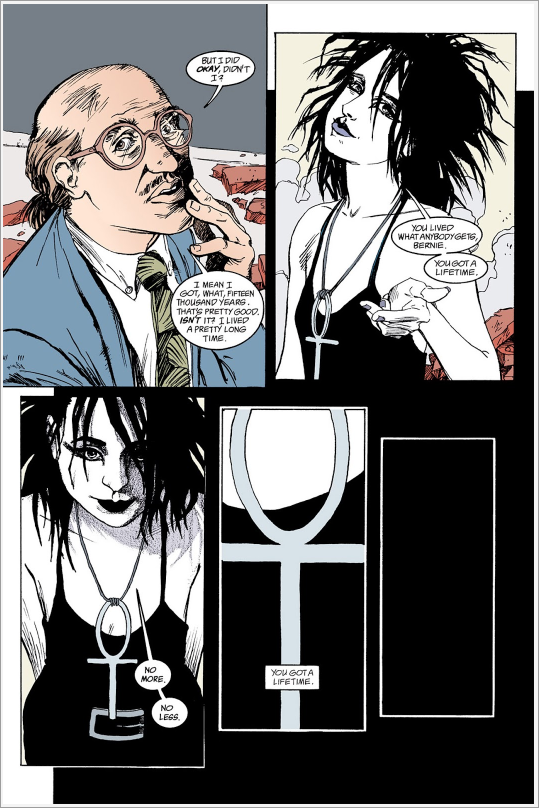
The most important thing I learned on Tralfamadore was that when a person dies he only appears to die. He is still very much alive in the past, so it is very silly for people to cry at his funeral. All moments, past, present and future, always have existed, always will exist. The Tralfamadorians can look at all the different moments just that way we can look at a stretch of the Rocky Mountains, for instance. They can see how permanent all the moments are, and they can look at any moment that interests them. It is just an illusion we have here on Earth that one moment follows another one, like beads on a string, and that once a moment is gone it is gone forever.
Kurt Vonnegut, Jr. (1922–2007) American novelist, journalist
Slaughterhouse-Five, ch. 2 (1969)
(Source)
The beginning of Billy's second letter.

There is no cure for birth and death save to enjoy the interval.
George Santayana (1863–1952) Spanish-American poet and philosopher [Jorge Agustín Nicolás Ruíz de Santayana y Borrás]
Essay (1916 ca.), “War Shrines,” Soliloquies in England, ch. 24 (1922)
(Source)