Soar, eat ether, see what has never been seen; depart, be lost,
But climb.Edna St. Vincent Millay (1892-1950) American poet
Poem (1934), “On Thought in Harness,” Wine from These Grapes, Part 4 (1934)
(Source)
Quotations about:
liberation
Note not all quotations have been tagged, so Search may find additional quotes on this topic.

For Freedom’s battle once begun,
Bequeathed by bleeding Sire to Son,
Though baffled oft is ever won.

The saddest thing in my life was when I discovered that people can get their freedom from colonial masters and find themselves unfree.
Joshua Nkomo (1917-1999) Zimbawean politician, trade unionist, guerrilla leader
In The Observer (UK) (22 Apr 1984)
Yet at this very point it becomes quite clear that only an act of liberation, not instruction, can overcome stupidity. Here we must come to terms with the fact that in most cases a genuine internal liberation becomes possible only when external liberation has preceded it. Until then we must abandon all attempts to convince the stupid person. This state of affairs explains why in such circumstances our attempts to know what “the people” really think are in vain and why, under these circumstances, this question is so irrelevant for the person who is thinking and acting responsibly.
Dietrich Bonhoeffer (1906-1945) German Lutheran pastor, theologian, martyr
“On Stupidity” (1942)
(Source)
For to be free is not merely to cast off one’s chains, but to live in a way that respects and enhances the freedom of others
Nelson Mandela (1918-2013) South African revolutionary, politician, statesman
A Long Walk to Freedom, ch. 114 (1994)
(Source)

Everything that frees our spirit without giving us control of ourselves is ruinous.
[Alles, was unsern Geist befreit, ohne uns die Herrschaft über uns selbst zu geben, ist verderblich.]
Johann Wolfgang von Goethe (1749-1832) German poet, statesman, scientist
Sprüche in Prosa: Maximen und Reflexionen [Proverbs in Prose: Maxims and Reflections] (1833) [tr. Saunders (1893), “Life and Character,” #33]
(Source)
From Wilhelm Meister's Journeyman Years (1829). (Source (German)). Alternate translations:Every thing that frees our spirit without giving us the mastery over ourselves is pernicious.
[tr. Rönnfeldt (1900)]Everything that liberates our mind without at the same time imparting self-control is pernicious.
[tr. Stopp (1995), #504]

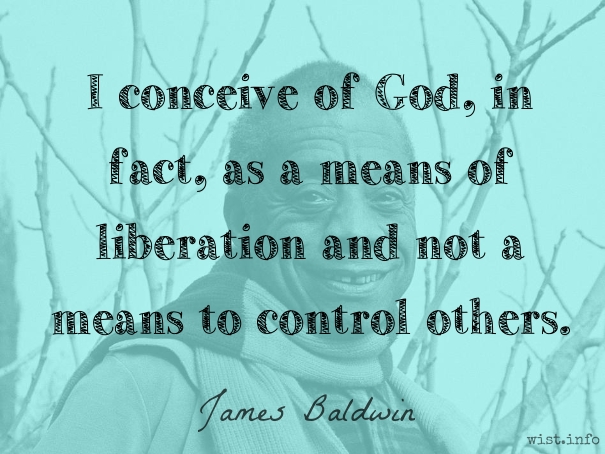
I conceive of God, in fact, as a means of liberation and not a means to control others.
James Baldwin (1924-1987) American novelist, playwright, activist
“In Search of a Majority,” Speech, Kalamazoo College (Feb 1960)
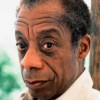
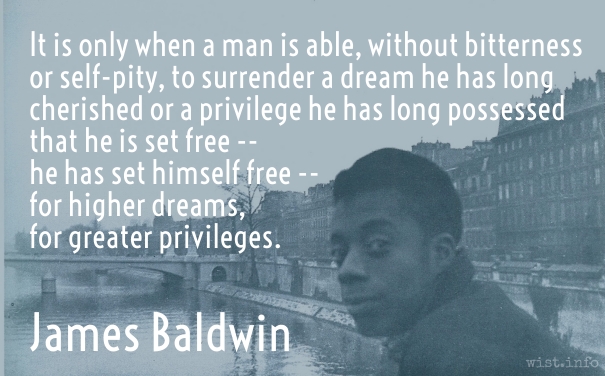
Any real change implies the breakup of the world as one has always known it, the loss of all that gave one an identity, the end of safety. And at such a moment, unable to see and not daring to imagine what the future will now bring forth, one clings to what one knew, or dreamed that one possessed. Yet, it is only when a man is able, without bitterness or self-pity, to surrender a dream he has long cherished or a privilege he has long possessed that he is set free — he has set himself free — for higher dreams, for greater privileges.
James Baldwin (1924-1987) American novelist, playwright, activist
“Faulkner and Desegregation,” Partisan Review (Fall 1956)