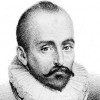
It makes sense to say that those without a solid memory should not get in the habit of telling lies.
[Ce n’est pas sans raison qu’on dict, que qui ne se sent point assez ferme de memoire, ne se doit pas mesler d’estre menteur.]
Michel de Montaigne (1533–1592) French essayist
Essays, Book 1, ch. 9 (1.9), “Of Liars [Des Menteurs]” (1572) [tr. HyperEssays (2025)]
(Source)
This essay and passage were present in the 1st (1580) edition.
(Source (French)). Alternate translations:It is not without reason, men say, that hee who hath not a good and ready memorie, shoulde never meddle with telling of lies, and feare to become a liar.
[tr. Florio (1603)]It is not without reason said, that he who has not a good memory, should never offer to tell lies.
[tr. Cotton (1686)]It is not without good reason said "that he who has not a good memory should never take upon him the trade of lying.
[tr. Cotton/Hazlitt (1877)]Not without reason is it said that he who does not know himself to be of sane memory should not meddle with lying.
[tr. Ives (1925)]It is not unreasonably said that anyone who does not feel sufficiently strong in memory should not meddle with lying.
[tr. Frame (1943)]Not without reason is it said that no one who is not conscious of having a sound memory should set up to be a liar.
[tr. Cohen (1958)]It is not for nothing that it is said that he who does not feel his memory to be strong enough has no business lying.
[tr. Screech (1987)]
Note that Montaigne frames this as a common saying, and one translator attributes it to Quintilian, Instituio Oratoria, Book 4, 2.92, though that source notes it as already being proverbial (English, Latin):And there is no doubt about the truth of the proverb that a liar should have a good memory.
[Verumque est illud, quod vulgo dicitur, mendacem memorem esse oportere.]
Quotations about:
memory lapses
Note not all quotations have been tagged, so Search may find additional quotes on this topic.