It makes sense to say that those without a solid memory should not get in the habit of telling lies.
[Ce n’est pas sans raison qu’on dict, que qui ne se sent point assez ferme de memoire, ne se doit pas mesler d’estre menteur.]
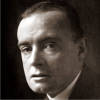
Michel de Montaigne (1533–1592) French essayist
Essays, Book 1, ch. 9 (1.9), “Of Liars [Des Menteurs]” (1572) [tr. HyperEssays (2025)]
(Source)
This essay and passage were present in the 1st (1580) edition.
(Source (French)). Alternate translations:It is not without reason, men say, that hee who hath not a good and ready memorie, shoulde never meddle with telling of lies, and feare to become a liar.
[tr. Florio (1603)]It is not without reason said, that he who has not a good memory, should never offer to tell lies.
[tr. Cotton (1686)]It is not without good reason said "that he who has not a good memory should never take upon him the trade of lying.
[tr. Cotton/Hazlitt (1877)]Not without reason is it said that he who does not know himself to be of sane memory should not meddle with lying.
[tr. Ives (1925)]It is not unreasonably said that anyone who does not feel sufficiently strong in memory should not meddle with lying.
[tr. Frame (1943)]Not without reason is it said that no one who is not conscious of having a sound memory should set up to be a liar.
[tr. Cohen (1958)]It is not for nothing that it is said that he who does not feel his memory to be strong enough has no business lying.
[tr. Screech (1987)]
Note that Montaigne frames this as a common saying, and one translator attributes it to Quintilian, Instituio Oratoria, Book 4, 2.92, though that source notes it as already being proverbial (English, Latin):And there is no doubt about the truth of the proverb that a liar should have a good memory.
[Verumque est illud, quod vulgo dicitur, mendacem memorem esse oportere.]
Quotations about:
complications
Note not all quotations have been tagged, so Search may find additional quotes on this topic.

“Simple things are never problems,” I told her. “Unfortunate, maybe, but if it isn’t complicated, it isn’t really a problem.”
The Goddess nodded. “Very good, Vlad; I didn’t expect such wisdom from you.”
I grunted and didn’t tell her I was quoting my grandfather; I’d rather she stayed impressed.
Steven Brust (b. 1955) American writer, systems programmer
Issola (2001)

Sometimes I don’t know if my life is complicated, or if it’s that I just think too much about things.
John Scalzi (b. 1969) American writer
Zoe’s Tale, ch. 7 (2008)

A transition from an author’s book to his conversation, is too often like an entrance into a large city, after a distant prospect. Remotely, we see nothing but spires of temples and turrets of palaces, and imagine it the residence of splendour, grandeur and magnificence; but when we have passed the gates, we find it perplexed with narrow passages, disgraced with despicable cottages, embarrassed with obstructions, and clouded with smoke.
Samuel Johnson (1709–1784) English writer, lexicographer, critic
The Rambler, #14 (5 May 1750)
(Source)

A little inaccuracy sometimes saves tons of explanation.
H. H. Munro (1870–1916) Scottish writer [Hector Hugh Munro; pseud. Saki]
“Clovis on the Alleged Romance of Business,” The Square Egg (1924)