AGAMEMNON:For it touches all,
Cities and men alike, that deeds of ill
Find evil ends, and virtue prosper still.[ἈΓΑΜΈΜΝΩΝ:πᾶσι γὰρ κοινὸν τόδε,
ἰδίᾳ θ᾽ ἑκάστῳ καὶ πόλει, τὸν μὲν κακὸν
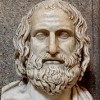
κακόν τι πάσχειν, τὸν δὲ χρηστὸν εὐτυχεῖν.]Euripides (485?-406? BC) Greek tragic dramatist
Hecuba [Hekabe; Ἑκάβη], l. 900ff (c. 424 BC) [tr. Sheppard (1924)]
(Source)
(Source (Greek)). Alternate translations:For 'tis the common interest of mankind.
Of every individual, every state.
That he who hath transgress'd should suffer ill.
And Fortune crown the efforts of the virtuous.
[tr. Wodhull (1809)]For this is a general principle among all, both individuals in private and states,
That the wicked man should feel vengeance, but the good man enjoy prosperity.
[tr. Edwards (1826)]For the general good
Of individuals and of states requires
That vengeance overtake th’ unrighteous deed,
And virtue triumph in her just reward.
[ed. Ramage (1864)]For all men's weal is this, --
Each several man's, and for the state, -- that ill
Betide the bad, prosperity the good.
[tr. Way (Loeb) (1894)]For this is the interest alike of citizen and state, that the wrong-doer be punished and the good man prosper.
[tr. Coleridge (1938)]The common interests
of states and individuals alike demand
that good and evil receive their just rewards.
[tr. Arrowsmith (1958)]Every man -- every slave -- shares one wish. May we each get what we deserve.
[tr. McGuinness (2004)]I think the wish is common among men, as individuals and citizens, that bad men should suffer and good men thrive.
[tr. Harrison (2005)]It is everyone’s conviction, individually and collectively as a city, that the evil man suffers and the good man rejoices.
[tr. Theodoridis (2007)]It’s in the interests of both
states and individuals that evil suffers evil
and good fares well.
[tr. Karden/Street (2011)]