For it is clear that in a monarchy, where the person who executes the laws holds himself above them, less virtue is required than in a popular government, where the person who executes the laws is aware that he himself is subject to them and that he will feel their weight.
[Car il est clair que, dans une monarchie, où celui qui fait exécuter les loix se juge au-dessus des loix, on a besoin de moins de vertu que dans un gouvernement populaire, où celui qui fait exécuter les loix, sent qu’il y est soumis lui-même, & qu’il en portera le poids.]
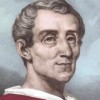
Charles-Lewis de Secondat, Baron de Montesquieu (1689–1755) French political philosopher
Spirit of Laws [The Spirit of the Laws; De l’esprit des lois], Book 3, ch. 3 (3.3) (1748) [tr. Stewart (2018)]
(Source)
(Source (French)). Other translations:For it is clear that in a monarchy, where he who commands the execution of the laws generally thinks himself above them, there is less need of virtue than in a popular government, where the person entrusted with the execution of the laws is sensible of his being subject to their direction.
[tr. Nugent (1750)]For it is clear that less virtue is needed in a monarchy, where the one who sees to the execution of the laws judges himself above the laws, than in a popular government, where the one who sees the execution of the laws feels that he is subject to them himself and that he will bear their weight.
[tr. Cohler/Miller/Stone (1989)]