

They do greatly err who acknowledge that the flesh of man was taken on Himself by Christ, but deny that the affections of man were taken; and they contravene the purpose of the Lord Jesus Himself, since thus they take away from man what constitutes man, for man cannot be man without human affections.
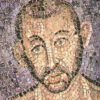
Ambrose of Milan (339-397) Roman theologian, statesman, Christian prelate, saint, Doctor of the Church [Aurelius Ambrosius]
“On Psalm 61”
Quotations by:
Ambrose of Milan
No one heals himself by wounding another.
Ambrose of Milan (339-397) Roman theologian, statesman, Christian prelate, saint, Doctor of the Church [Aurelius Ambrosius]
(Attributed)
(Source)
How far, O rich, do you extend your senseless avarice? Do you intend to be the sole inhabitants of the earth? Why do you drive out the fellow sharers of nature, and claim it all for yourselves? The earth was made for all, rich and poor, in common. Why do you rich claim it as your exclusive right? The soil was given to the rich and poor in common — wherefore, oh, ye rich, do you unjustly claim it for yourselves alone? Nature gave all things in common for the use of all; usurpation created private rights. Property hath no rights. The earth is the Lord’s, and we are his offspring. The pagans hold earth as property. They do blaspheme God.
Ambrose of Milan (339-397) Roman theologian, statesman, Christian prelate, saint, Doctor of the Church [Aurelius Ambrosius]
(Attributed)
Frequently quoted in the early 20th Century in various social justice writings, and in the years since then, but all citations I can find fall back to its inclusion in Upton Sinclair, The Cry for Justice, Book 8 "The Church" (1915) (though it can be found somewhat earlier than that).
It is not death therefore that is burdensome, but the fear of death.
Ambrose of Milan (339-397) Roman theologian, statesman, Christian prelate, saint, Doctor of the Church [Aurelius Ambrosius]
De bono mortis, 8, 31
No duty is more urgent than returning thanks.
Ambrose of Milan (339-397) Roman theologian, statesman, Christian prelate, saint, Doctor of the Church [Aurelius Ambrosius]
De excessu fratris Satyri [On the Passing of His Brother Satyrus], Book I, ch. 44
To avoid dissensions we should ever be on our guard, more especially with those who drive us to argue with them, with those who vex and irritate us, and who say things likely to excite us to anger. When we find ourselves in company with quarrelsome, eccentric individuals, people who openly and unblushingly say the most shocking things, difficult to put up with, we should take refuge in silence, and the wisest plan is not to reply to people whose behavior is so preposterous.
Those who insult us and treat us contumeliously are anxious for a spiteful and sarcastic reply: the silence we then affect disheartens them, and they cannot avoid showing their vexation; they do all they can to provoke us and to elicit a reply, but the best way to baffle them is to say nothing, refuse to argue with them, and to leave them to chew the cud of their hasty anger. This method of bringing down their pride disarms them, and shows them plainly that we slight and despise them.[Sed etiam ille cavendus; est, qui videri potest, quicumque inritat, quicumque incitat, quicumque exasperat, quicumque incentiva luxuriae aut libidinis suggerit. Quando ergo aliquis nobis convitiatur, lacessit, ad violentiam provocat, ad iurgium vocat: tunc silentium exerceamus, tunc muti fieri non erubescamus. Peccator est enim qui nos provocat, qui iniuriam facit et nos similes sui fieri desiderat.
Denique si taceas, si dissimules, solet dicere: Quid taces? Loquere, si audes; sed non audes, mutus es, elinguem te feci. Si ergo taceas, plus rumpitur; victum sese putat, inrisum, posthabitum atque inlusum.]Ambrose of Milan (339-397) Roman theologian, statesman, Christian prelate, saint, Doctor of the Church [Aurelius Ambrosius]
De Officiis Ministrorum [On the Duties of the Clergy], Book 1, ch. 5, sec. 17-18 (AD 386)
(Source)
(Source (Latin)). Other translation:But he also is to be shunned which is visible whosoever he be that provoketh, whosoever he be that inciteth, whosoever he be that exaspereth, whosoever he be that giveth the first breath, that suggesteth the first blast to kindle the coales to luxurie, and lustfulnesse. When some one therefore doth raile at us, doth vexe, provoke to violence, stirre up to wrath, then let us exercise silence; then let us not be ashamed to be dumbe.
For hee is a very sinfull wretch, that provoking, that offering injurie is desirous therein to make us like himselfe. To shut up the matter if thou holdest thy peace, if thou seemest not to regard whatsoever he speakes, he is wont to say, why art thou mute? speake if thou darest? but thou darest not, thou art put to a non-plus, I have made thee lose thy tongue; If therefore thou be silent he is more molested, and ready to breake with anger, because he thinkes himselfe overcome, skorned, deluded, and contemned.
[tr. Humfrey (1637)]
When I am in Rome, I fast as the Romans do; when I am at Milan, I do not fast. So likewise you, whatever church you come to, observe the custom of the place.
[Cum Romanum venio, ieiuno Sabbato; cum hic sum, non ieiuno: sic etiam tu, ad quam forte ecclesiam veneris, eius morem serva, si cuiquam non vis esse scandalum nec quemquam tibi.]
Ambrose of Milan (339-397) Roman theologian, statesman, Christian prelate, saint, Doctor of the Church [Aurelius Ambrosius]
In Augustine, Epistulae, Letter 36 (c. AD 400)
Alt trans.:Various Augustine citations described:
- Popularly, "When in Rome, do as the Romans do."
- "When I am at Rome, I fast on a Saturday; when I am at Milan, I do not. Follow the custom of the church where you are."
- "When I am here, I do not fast on the Sabbath; when I am in Rome, I fast on the Sabbath."
- Alternately given as "If you are at Rome, live in the Roman style; if you are elsewhere, live as they live there. [Si fueris Romae, Romano vivito more; / Si fueris alibi, vivito sicut ibi.]" in J. Taylor, Ductor Dubitantium, or the Rule of Conscience, I.i.5 (1660).
- Epistulae 36, 14 or 32
- Letter 54 to Januarius
- Epistle to Januarius, 2, sec. 18
- Epistle to Casualanus, 36, sec. 32
For if justice be a virtue, it must be free from the imputation of crime, and not return evil for evil. For what kind of virtue is it for you to do yourself what you punish in another? This is merely to propagate iniquity, not to punish it; and the character of the person whom you injure, whether he be just or unjust, makes no difference, for you ought not to have done evil.
Ambrose of Milan (339-397) Roman theologian, statesman, Christian prelate, saint, Doctor of the Church [Aurelius Ambrosius]
Letter to the Church of Vercellae, para. 83
(Source)