

Tell yourself, when you feel exasperated and out of all patience, that this mortal life endures but a moment; it will not be long before we shall one and all have been laid to rest.
[ὅταν λίαν ἀγανακτῇς ἢ καὶ δυσπαθῇς, ἀκαριαῖος ὁ ἀνθρώπειος βίος καὶ μετ᾿ ὀλίγον πάντες ἐξετάθημεν.]
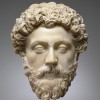
Marcus Aurelius (AD 121–180) Roman emperor (161–180), Stoic philosopher
Meditations [To Himself; Τὰ εἰς ἑαυτόν], Book 11, ch. 18 (11.18) (AD 161-180) [tr. Staniforth (1964)]
(Source)
Marcus' 6th point to remember when aggravated by another's actions.
(Source (Greek)). Alternate translations:That whensoever thou doest take on grievously, or makest great woe, little doest thou remember then that a man's life is but for a moment of time, and that within a while we shall all be in our graves.
[tr. Casaubon (1634)]When you are most Angry and Gall'd, remember that Humane Life lasts but a Moment, and that we shall all of us very quickly , be laid in our Graves.
[tr. Collier (1701)]When your anger and resentment is highest, remember human life is but for a moment. We shall be all presently stretched out dead corpses.
[tr. Hutcheson/Moor (1742)]When you are excessively provoked and suffer some real injury, reflect that human life is but of a moment's duration, and that in a short time we shall all be laid in our tombes together.
[tr. Graves (1792)]Consider when thou art much vexed or grieved, that man's life is only a moment, and after a short time we are all laid out dead.
[tr. Long (1862)]When you are most angry and vexed remember that human life lasts but a moment, and that we shall all of us very quickly be laid in our graves.
[tr. Collier/Zimmern (1887)]When sorely provoked and out of patience, remember that man's life is but for a moment; a little while, and we all lie stretched in death.
[tr. Rendall (1898)]When you are vexed or worried overmuch, remember that man’s life is but for a moment, and that in a little we shall all be laid to rest.
[tr. Hutcheson/Chrystal (1902)]When thou art above measure angry or even out of patience, bethink thee that man's life is momentary, and in a little while we shall all have been laid out.
[tr. Haines (Loeb) (1916)]When you are highly indignant or actually suffering, that man's life is but a moment, and in a little we are one and all laid low in death.
[tr. Farquharson (1944)]When you are annoyed beyond measure and losing all patience, remember that human life lasts but a moment, and that in a short while we shall all have been laid to rest.
[tr. Hard (1997 ed. and 2011 ed.)]When you lose your temper, or even feel irritated: that human life is very short. Before long all of us will be laid out side by side.
[tr. Hays (2003)]When you are high in indignation and perhaps losing patience, remember that human life is a mere fragment of time and shortly we are all in our grave.
[tr. Hammond (2006)]Whenever you are excessively disturbed or even suffering, remember that human life lasts only a moment and that in a short time we will all be laid out for burial.
[tr. Needleman/Piazza (2008)]Whenever you are really angry and upset, [remember] that human life is short and soon we will all be in the ground.
[tr. @sentantiq (2020)]
Quotations about:
vexation
Note not all quotations have been tagged, so Search may find additional quotes on this topic.
Men ought to feel most annoyed with what has been brought about by their own fault.
[Ea molestissime ferre homines debent quae ipsorum culpa contracta sunt.]
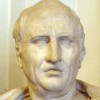
Marcus Tullius Cicero (106–43 BC) Roman orator, statesman, philosopher
Epistulae ad Fratrem Quintum [Letters to His Brother Quintus], Book 1, Letter 1, sec. 3 (1.1.3) (60 BC) [tr. Williams (Loeb) (1928)]
(Source)
(Source (Latin)). Alternate translations:Men are naturally most concerned at misfortunes which have been incurred by their own fault.
[tr. Watson (1896)]Men ought to be most annoyed by the sufferings which come from their own faults.
[ed. Hoyt (1896)]Men ought to feel most vexed at what has been brought upon them by their own fault.
[tr. Shuckburgh (1900), # 29]It is the misfortunes for which they are ourselves to blame that ought to distress people the most.
[tr. Shackleton Bailey (1978), # 1]
To avoid dissensions we should ever be on our guard, more especially with those who drive us to argue with them, with those who vex and irritate us, and who say things likely to excite us to anger. When we find ourselves in company with quarrelsome, eccentric individuals, people who openly and unblushingly say the most shocking things, difficult to put up with, we should take refuge in silence, and the wisest plan is not to reply to people whose behavior is so preposterous.
Those who insult us and treat us contumeliously are anxious for a spiteful and sarcastic reply: the silence we then affect disheartens them, and they cannot avoid showing their vexation; they do all they can to provoke us and to elicit a reply, but the best way to baffle them is to say nothing, refuse to argue with them, and to leave them to chew the cud of their hasty anger. This method of bringing down their pride disarms them, and shows them plainly that we slight and despise them.[Sed etiam ille cavendus; est, qui videri potest, quicumque inritat, quicumque incitat, quicumque exasperat, quicumque incentiva luxuriae aut libidinis suggerit. Quando ergo aliquis nobis convitiatur, lacessit, ad violentiam provocat, ad iurgium vocat: tunc silentium exerceamus, tunc muti fieri non erubescamus. Peccator est enim qui nos provocat, qui iniuriam facit et nos similes sui fieri desiderat.
Denique si taceas, si dissimules, solet dicere: Quid taces? Loquere, si audes; sed non audes, mutus es, elinguem te feci. Si ergo taceas, plus rumpitur; victum sese putat, inrisum, posthabitum atque inlusum.]Ambrose of Milan (339–397) Roman theologian, statesman, Christian prelate, saint, Doctor of the Church [Aurelius Ambrosius]
De Officiis Ministrorum [On the Duties of the Clergy], Book 1, ch. 5, sec. 17-18 (AD 386)
(Source)
(Source (Latin)). Another translation:But he also is to be shunned which is visible whosoever he be that provoketh, whosoever he be that inciteth, whosoever he be that exaspereth, whosoever he be that giveth the first breath, that suggesteth the first blast to kindle the coales to luxurie, and lustfulnesse. When some one therefore doth raile at us, doth vexe, provoke to violence, stirre up to wrath, then let us exercise silence; then let us not be ashamed to be dumbe.
For hee is a very sinfull wretch, that provoking, that offering injurie is desirous therein to make us like himselfe. To shut up the matter if thou holdest thy peace, if thou seemest not to regard whatsoever he speakes, he is wont to say, why art thou mute? speake if thou darest? but thou darest not, thou art put to a non-plus, I have made thee lose thy tongue; If therefore thou be silent he is more molested, and ready to breake with anger, because he thinkes himselfe overcome, skorned, deluded, and contemned.
[tr. Humfrey (1637)]

The misery of man proceeds not from any single crush of overwhelming evil, but from small vexations continually repeated.
Samuel Johnson (1709–1784) English writer, lexicographer, critic
Lives of the Most Eminent English Poets, “Pope” (1781)
(Source)
Also known as Lives of English Poets and Lives of the Poets.

Our anger and annoyance are more detrimental to us than the things themselves which anger or annoy us.
[Ὄγδοον, ὅσῳ χαλεπώτερα ἐπιφέρουσιν αἱ ὀργαὶ καὶ λῦπαι αἱ ἐπὶ τοῖς τοιούτοις, ἤπερ αὐτά ἐστιν ἐφ’ οἷς ὀργιζόμεθα καὶ λυπούμεθα.]
Marcus Aurelius (AD 121–180) Roman emperor (161–180), Stoic philosopher
Meditations [To Himself; Τὰ εἰς ἑαυτόν], Book 11, ch. 18 (11.18) (AD 161-180) [tr. Staniforth (1964)]
(Source)
One of the points to consider when evaluating how others are behaving, especially when it makes us angry or aggravated.
(Source (Greek)). Other translations:How many things may and do oftentimes follow upon such fits of anger and grief; far more grievous in themselves, than those very things which we are so grieved or angry for.
[tr. Casaubon (1634), 11.15]Consider that our anger and impatience often proves much more mischievous than the provocation could possibly have done.
[tr. Collier (1701)]What worse evils we suffer by anger and sorrow for such things, than by the things themselves about which those passions rise.
[tr. Hutcheson/Moor (1742)]Consider, how much more we suffer from our anger and grief on those occasions, than from the things themselves which excite our anger or our grief.
[tr. Graves (1792)]Consider how much more pain is brought on us by the anger and vexation caused by such acts than by the acts themselves, at which we are angry and vexed.
[tr. Long (1862)]Consider that our anger and impatience often prove much more mischievous than the things about which we are angry or impatient.
[tr. Collier/Zimmern (1887)]How much mroe unconscionable are our anger and vexation at the acts, than the acts which make us angry and vexed!
[tr. Rendall (1898)]How much worse evils we suffer from anger and grief about certain things than from the things themselves about which these passions arise.
[tr. Hutcheson/Chrystal (1902)]Bethink thee how much more grievous are the consequences of our anger and vexation at such actions than are the acts themselves which arouse that anger and vexation.
[tr. Haines (Loeb) (1916)]How much more grievous are what fits of anger and the consequent sorrows bring than the actual things are which produce in us those angry fits and sorrows.
[tr. Farquharson (1944)]The anger and distress that we feel at such behaviour brings us more suffering than the very things that give rise to that anger and distress.
[tr. Hard (1997 ed.), (2011 ed.)]How much more damage anger and grief do than the things that cause them.
[tr. Hays (2003)]The greater grief comes from the consequent anger and pain, rather than the original causes of our anger and pain.
[tr. Hammond (2006)]Anger and the sorrow it produces are far more harmful than the things that make us angry.
[tr. Needleman/Piazza (2008)]
If you suffer distress because of some external cause, it is not the thing itself that troubles you but your judgment on it, and it is within your power to cancel that judgment at any moment.
[Εἰ μὲν διά τι τῶν ἐκτὸς λυπῇ, οὐκ ἐκεῖνό σοι ἐνοχλεῖ, ἀλλὰ τὸ σὸν περὶ αὐτοῦ κρῖμα, τοῦτο δὲ ἤδη ἐξαλεῖψαι ἐπὶ σοί ἐστιν.]
Marcus Aurelius (AD 121–180) Roman emperor (161–180), Stoic philosopher
Meditations [To Himself; Τὰ εἰς ἑαυτόν], Book 8, ch. 47 (8.47) (AD 161-180) [tr. Hard (1997 ed.)]
(Source)
(Source (Greek)). Other translations:If therefore it be a thing external that causes thy grief, know, that it is not that properly that doth cause it, but thine own conceit and opinion concerning the thing: which thou mayest rid thyself of, when thou wilt.
[tr. Casaubon (1634), 8.45]If externals put you into the spleen, take notice 'tis not the thing which disturbs you, but your notion about it: which notion you may dismiss if you please.
[tr. Collier (1701)]If you are grieved about anything external, ’tis not the thing itself that afflicts you, but your judgment about it; and it is in your power to correct this judgment and get quit of it.
[tr. Hutcheson/Moor (1742)]If you are uneasy on account of anything external, be assured, it is not the thing itself that disturbs you, but your opinion concerning it. Now this opinion is in your own power to get rid of, if you please.
[tr. Graves (1792), 8.46]If thou art pained by any external thing, it is not this thing that disturbs thee, but thy own judgment about it. And it is in thy power to wipe out this judgment now.
[tr. Long (1862), original]If you are pained by external things, it is not they that disturb you, but your own judgment of them. And it is in your power to wipe out that judgment now.
[tr. Long (1862), modernized]If anything external vexes you, take notice that it is not the thing which disturbs you, but your notion about it, which notion you may dismiss at once if you please.
[tr. Collier/Zimmern (1887)]If you are pained by anything without, it is not the thing agitates you, but your own judgment concerning the thing; and this it is in your own power to efface.
[tr. Rendall (1898)]When you are grieved about anything external it is not the thing itself which afflicts you, but your judgment about it. This judgment it is in your power to efface.
[tr. Hutcheson/Chrystal (1902)]When thou art vexed at some external cross, it is not the thing itself that troubles thee, but thy judgment on it. And this thou canst annul in a moment.
[tr. Haines (Loeb) (1916)]If you suffer pain because of some external cause, what troubles you is not the thing but your decision about it, and this it is in your power to wipe out at once.
[tr. Farquharson (1944)]If you are distressed by anything external, the pain is not due to the thing yourself but to your estimate of it; and this you have the power to revoke at any moment.
[tr. Staniforth (1964)]External things are not the problem. It’s your assessment of them. Which you can erase right now.
[tr. Hays (2003)]If your distress has some external cause, it is not the thing itself that troubles you, but your own judgement of it -- and you can erase this immediately.
[tr. Hammond (2006)]If you suffer distress because of some external cause, it is not the thing itself that troubles you but your judgement about it, and it is within your power to cancel that judgement at any moment.
[tr. Hard (2011 ed.)]