

There is no man, however wise, who has not at some period in his youth said things, or lived in a way the consciousness of which is so unpleasant to him in later life that he would gladly, if he could, expunge it from his memory.
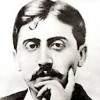
Marcel Proust (1871–1922) French author
“Seascape, with Frieze of Girls” [Elstir] Remembrance of Things Past, Vol. II Within a Budding Grove (1919)
trans. by Scott Moncrieff (1924)
Quotations by:
Proust, Marcel
We are at times too ready to believe that the present is the only possible state of things.
Marcel Proust (1871–1922) French author
(Attributed)
In reality, every reader, as he reads, is actually the reader of himself. The writer’s work is only a kind of optical instrument he provides the reader so he can discern what he might never have seen in himself without this book. The reader’s recognition in himself of what the book says is the proof of the book’s truth.
[En réalité, chaque lecteur est quand il lit le propre lecteur de soi-même. L’ouvrage de l’écrivain n’est qu’une espèce d’instrument optique qu’il offre au lecteur afin de lui permettre de discerner ce que sans ce livre il n’eût peut-être pas vu en soi-même. La reconnaissance en soi-même, par le lecteur, de ce que dit le livre, est la preuve de la vérité de celui-ci.]
Marcel Proust (1871–1922) French author
Le Temps Retrouvé [Time Regained], ch. 22 (1926) [tr. Moncrieff/Kilmartin]
(Source)
The bonds that unite another person to ourself exist only in our mind. Memory as it grows fainter relaxes them, and notwithstanding the illusion by which we would fain be cheated and with which, out of love, friendship, politeness, deference, duty, we cheat other people and we exist alone. Man is the only creature that cannot emerge from himself, that knows his fellows only in himself; when he asserts the contrary he is lying.
Marcel Proust (1871–1922) French author
Remembrance of Things Past “The Sweet Cheat Gone” (1913-27)
Happiness is beneficial for the body but it is grief that develops the powers of the mind.
Marcel Proust (1871–1922) French author
Remembrance of Things Past (1913-27)