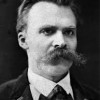
You are a little soul carrying around a corpse, as Epictetus used to say.
[Ψυχάριον εἶ βαστάζον νεκρόν, ὡς Ἐπίκτητος ἔλεγεν.]
Epictetus (c. 55-c. 135 AD) Greek (Phrygian) Stoic philosopher [Ἐπίκτητος, Epíktētos]
Discourses, Fragment 26 (Schenkl) (AD 108) [tr. Gill (2013)]
(Source)
The sole source for this fragment is Marcus Aurelius, Meditations [To Himself; Τὰ εἰς ἑαυτόν], Book 4, ch. 41 (4.41) (AD 161-180). The parallel translations here are from translators of both Marcus Aurelius and Epictetus.
(Source (Greek)). Alternate translations:What art thou, that better and divine part excepted, but as Epictetus said well, a wretched soul, appointed to carry a carcass up and down?
[tr. Casaubon (1634), 4.33]Would you know what you are? Epictetus will tell you that you are a Living Soul, that drags a Carcass about with her.
[tr. Collier (1701)]“Thou art a poor spirit, carrying a dead carcase about with thee,” says Epictetus.
[tr. Hutcheson/Moor (1742)]As to your own being, "It is a living soul, that bears about with it a lifeless carcass," as Epictetus expresses it.
[tr. Graves (1792), 4.33]Thou art a little soul bearing about a corpse, as Epictetus used to say.
[tr. Long (1862)]You are a little soul carrying a dead body, as Epictetus said.
[tr. Long (1890), frag. 176]Epictetus will tell you that you are a living soul, that drags a corpse about with her.
[tr. Collier/Zimmern (1887)]What am I? "A poor soul, laden with a corpse" -- said Epictetus.
[tr. Rendall (1898)]“Thou art a poor soul, saddled with a corpse,” said Epictetus.
[tr. Hutcheson/Chrystal (1902)]You are a little soul, carrying a corpse, as Epictetus used to say.
[tr. Matheson (1916)]Thou art a little soul bearing up a corpse, as Epictetus said.
[tr. Haines (Loeb) (1916)]You are a little soul, carrying around a corpse, as Epictetus used to say.
[tr. Oldfather (Loeb) (1928)]You are a spirit bearing the weight of a dead body, as Epictetus used to say.
[tr. Farquharson (1944)]"A poor soul burdened with a corpse," Epictetus calls you.
[tr. Staniforth (1964)]"You are a little soul carrying a corpse around," as Epictetus used to say.
[tr. Hard (1997 ed.)]“A little wisp of soul carrying a corpse.” -- Epictetus.
[tr. Hays (2003)]You are a soul carrying a corpse, as Epictetus used to say.
[tr. Hammond (2006)]You are a bit of soul carrying around a dead body, as Epictetus used to say.
[tr. Dobbin (2008)]You are a little soul carrying a corpse around, as Epictetus used to say.
[tr. Hard (2011; 2014)]You're a pathetic little soul sustaining a corpse, as Epictetus used to say.
[tr. Waterfield (2012)]
Quotations about:
dualism
Note not all quotations have been tagged, so Search may find additional quotes on this topic.
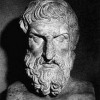
The Christian determination to find the world ugly and bad has made the world ugly and bad.
[Der christliche Entschluss, die Welt hässlich und schlecht zu finden, hat die Welt hässlich und schlecht gemacht.]
Friedrich Nietzsche (1844–1900) German philosopher and poet
The Gay Science [Die fröhliche Wissenschaft], Book 3, § 130 (1882) [tr. Hill (2018)]
(Source)
Also known as La Gaya Scienza, The Joyful Wisdom, or The Joyous Science.
(Source (German)). Other translations:The Christian resolution to find the world ugly and bad, has made the world ugly and bad.
[tr. Common (1911)]The Christian resolve to find the world ugly and bad, has made the world ugly and bad.
[tr. Kaufmann (1974)]The Christian decision to find the world ugly and bad has made the world ugly and bad.
[tr. Nauckhoff (2001)]