‘Twas the saying of an ancient Sage, “That Humour was the only Test of Gravity, and Gravity of Humour. For a Subject which would not bear Raillery is suspicious; and a Jest which would not bear a serious Examination is certainly false Wit.”
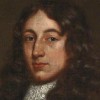
Anthony Cooper, 3rd Earl of Shaftesbury (1671–1713) English politician and philosopher
Characteristics, Treatise 2 “Freedom of Wit and Humour,” Part 1, sec. 5 (1709)
(Source)
Shaftesbury, according to his footnote, is paraphrasing from Aristotle, Rhetoric, Book 3, ch. 18, 1419b, in turn quoting Gorgias Leontinus. The phrase is sometimes incorrectly attributed directly to Aristotle. The Greek here is:δεῖν ἔφη Γοργίας τὴν μὲν σπουδὴν διαφθείρειν τῶν ἐναντίων γέλωτι, τὸν δὲ γέλωτα σπουδῇ
The Latin translation of the Greek is "Seria risu, risum seriis discutere" ("In arguing one should meet serious pleading with humor, and humor with serious pleading"). Shaftesbury's second sentence is actually his own commentary. Lord Chesterfield, in a letter to his son (1752-02-06), renders down the Latin as "Ridicule is the best test of truth" (Chesterfield disagrees with the sentiment).
Shaftesbury actually misuses the quotation. In context Gorgias is offering rhetorical advice in argument, to meet seriousness with humor, and humor with seriousness, not to use humor as a test of the argument.
Shaftesbury used to this theme on a number of occasions. Elsewhere in the same Treatise, Part 1, sec. 1 (1709):Truth, 'tis supposed, may bear all lights; and one of those principal lights, or natural mediums, by which things are to be viewed, in order to a thorough recognition, is ridicule itself, or that manner of proof by which we discern whatever is liable to just raillery in any subject.
In Characteristics, Treatise 1 "Enthusiasm," sec. 2 (1708):How comes it to pass, then, that we appear such cowards in reasoning, and are so afraid to stand the test of ridicule? O! say we, the subjects are too grave. Perhaps so: but let us see first whether they are really grave or no: for in the manner we may conceive them they may, peradventure, be very grave and weighty in our imagination, but very ridiculous and impertinent in their own nature.
Thomas Carlyle in Foreign Review, No. 6, "Voltaire" (1829), lacking access to the Internet, noted:We have oftener than once endeavoured to attach some meaning to that aphorism, vulgarly imputed to Shaftesbury, which however we can find nowhere in his works, that "ridicule is the test of truth."
Carlyle also disagreed with the sentiment, on the grounds that finding something humorous is subjective, and there is no reason to think that a subjective reaction defines the truth of the matter.
Quotations about:
making fun
Note not all quotations have been tagged, so Search may find additional quotes on this topic.