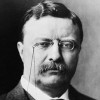
A man who stays long in our American political life, if he has in his soul the generous desire to do effective service for great causes, inevitably grows to regard himself merely as one of many instruments, all of which it may be necessary to use, one at one time, one at another, in achieving the triumph of those causes; and whenever the usefulness of any one has been exhausted, it is to be thrown aside. If such a man is wise, he will gladly do the thing that is next, when the time and the need come together, without asking what the future holds for him. Let the half-god play his part well and manfully, and then be content to draw aside when the god appears. Nor should he feel vain regrets that to another it is given to render greater services and reap a greater reward. Let it be enough for him that he too has served, and that by doing well he has prepared the way for the other man who can do better.
Theodore Roosevelt (1858–1919) American politician, statesman, conservationist, writer; US President (1901–09)
Autobiography, ch. 3 “Practical Politics” (1913)
(Source)
Quotations about:
transition
Note not all quotations have been tagged, so Search may find additional quotes on this topic.
Halfway down the stairs
Is a stair
Where I sit.
There isn’t any
Other stair
Quite like
It.
I’m not at the bottom,
I’m not at the top;
So this is the stair
Where
I always
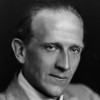
Stop.A. A. Milne (1882–1956) English poet and playwright [Alan Alexander Milne]
When We Were Very Young, “Halfway Down,” st. 1 (1924)
(Source)

I had set foot in that part of life beyond which one cannot go with any hope of returning.
[Io tenni li piedi in quella parte de la vita di là da la quale non si puote ire più per intendimento di ritornare.]
Dante Alighieri (1265–1321) Italian poet
La Vita Nuova [Vita Nova; New Life], ch. 14 (c. 1294, pub. 1576) [tr. Reynolds (1969)]
(Source)
Said to his friend after seeing Beatrice at a wedding feast (perhaps her own to Simone de’ Bardi), at which point his passion for her has have been set.
(Source (Italian)). Other translations:Of a surety I have now set my feet on that point of life, beyond the which he must not pass who would return.
[tr. Rossetti (c. 1847; 1899 ed.)]I have set my foot in that part of life, to pass beyond which with purpose to return is impossible.
[tr. Martin (1862)]I have held my feet on that part of life beyond which no man can go with intent to return.
[tr. Norton (1867)]I have placed my feet on those boundaries of life beyond which no one can go further and hope to return.
[tr. Musa (1971)]I have just set foot on that boundary of life beyond which no one can go, hoping to return.
[tr. Hollander (1997)]I have set foot in that region of life where it is not possible to go with any more intention of returning.
[tr. Kline (2002)]My feet were at the edge of life beyond which one cannot pass with an expectation of returning.
[tr. Appelbaum (2006)]I have set my feet in that place in life beyond which one cannot go with the intention of returning.
[tr. Frisardi (2012), ch. 7]

There is no Death! What seems so is transition;
This life of mortal breath
Is but a suburb of the life Elysian,
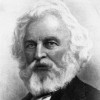
Whose portal we call Death.Henry Wadsworth Longfellow (1807–1882) American poet
“Resignation,” st. 5 (1849), The Seaside and the Fireside (1850)
(Source)
Looking back, you can usually find the moment of the birth of new era, whereas, when it happened, it was one day hooked on the tail of another.
It is not sufficient that the state of affairs which we seek to promote should be better than the state of affairs which preceded it; it must be sufficiently better to make up for the evils of the transition.
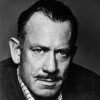
John Maynard Keynes (1883–1946) English economist
“The Political Doctrines of Edmund Burke” (1904)
(Source)
DEATH: You see. No shock. No engulfment. No tearing asunder. What you feared would come like an explosion is like a whisper. What you thought was the end is the beginning.
George Clayton Johnson (1929–2015) American writer
Twilight Zone, 3×16 “Nothing in the Dark” (5 Jan 1962)
It is never to be expected in a revolution that every man is to change his opinion at the same moment. There never yet was any truth or any principle so irresistibly obvious that all men believed it at once.
Thomas Paine (1737–1809) American political philosopher and writer
“Dissertation on the First Principles of Government” (Jul 1795)
Source essay