As to the Weather, if I were to fall into the Method my Brother J****n sometimes uses, and tell you, Snow here or in New England, — Rain here or in South-Carolina, — Cold to the Northward, — Warm to the Southward, and the like, whatever Errors I might commit, I should be something more secure of not being detected in them: But I consider, it will be of no Service to any body to know what Weather it is 1000 miles off, and therefore I always set down positively what Weather my Reader will have, be he where he will at the time. We modestly desire only the favourable Allowance of a day or two before and a day or two after the precise Day against which the Weather is set; and if it does not come to pass accordingly, let the Fault be laid upon the Printer, who, ’tis very like, may have transpos’d or misplac’d it, perhaps for the Conveniency of putting in his Holidays: And since, in spight of all I can say, People will give him great part of the Credit of making my Almanacks, ’tis but reasonable he should take some share of the Blame.
Benjamin Franklin (1706-1790) American statesman, scientist, philosopher, aphorist
Poor Richard (1737 ed.)
(Source)
"Brother J****n" is John Jerman, whose almanac Franklin had printed for several years, but who in 1737 moved to a different printer. Weather, forecast, prediction, blame
Quotations about:
forecast
Note not all quotations have been tagged, so Search may find additional quotes on this topic.
Prudent men are in the habit of saying — and not by chance or without basis — that he who wishes to see what is to come should observe what has already happened, because all the affairs of the world, in every age, have their individual counterparts in ancient times. The reason for this is that since they are carried on by men, who have and always have had the same passions, of necessity the same results appear.
Niccolò Machiavelli (1469-1527) Italian politician, philosopher, political scientist
The Discourses on Livy, Book 3, ch. 43 (1517) [tr. Gilbert (1958)]
(Source)
Alt. trans.: "The wise are wont to say, and not without reason or at random, that he who would forecast what is about to happen should look to what has been; since all human events, whether present or to come, have their exact counterpart in the past. And this, because these events are brought about by men, whose passions and dispositions remaining in all ages the same naturally give rise to the same effects." [tr. Thomson]
We have two classes of forecasters: those who don’t know and those who know they don’t know.
John Kenneth Galbraith (1908-2006) Canadian-American economist, diplomat, author
(Attributed)
Variants:
- There are two classes of people who tell what is going to happen in the future: Those who don't know, and those who don't know they don't know.
- You can divide the world into those who don't know and those who don't know they don't know.
- There are those who don't know, and there are those who don't know they don't know.
- We have two kinds of forecasters: Those who don't know ... and those who don't know they don't know.
- There are two kinds of economists: those who don't know the future, and those who don't know they don't know.
Forecast: To observe that which has passed, and guess it will happen again; to anticipate the future by guessing at the past; to predict that an event will happen, if it does, by basing calculations on events that have already happened, if they did.
Elbert Hubbard (1856-1915) American writer, businessman, philosopher
The Roycroft Dictionary (1914)
(Source)
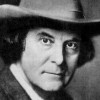
An economist is an expert who will know tomorrow why the things he predicted yesterday didn’t happen today.
Lawrence J. Peter (1919-1990) American educator, management theorist
(Attributed)
Our grand business undoubtedly is, not to see what lies dimly at a distance, but to do what lies clearly at hand.
Thomas Carlyle (1795-1881) Scottish essayist and historian
Essay (1829-06), “Signs of the Times,” Edinburgh Review, Vol. 49, No. 98, Art. 7
(Source)
Review of three 1829 books: Anticipation; or, an Hundred Years Hence; The Rise, Progress, and Present State of Public Opinion in Great Britain; Edward Irvine, The Last Days; or, Discourses on These Our Times.