I have known some pacifists who wished history taught without reference to wars, and thought that children should be kept as long as possible ignorant of the cruelty in the world. But I cannot praise the “fugitive and cloistered virtue” that depends upon absence of knowledge. As soon as history is taught at all, it should be taught truthfully. If true history contradicts any moral we wish to teach, our moral must be wrong, and we had better abandon it. I quite admit that many people, including some of the most virtuous, find facts inconvenient, but that is due to a certain feebleness in their virtue. A truly robust morality can only be strengthened by the fullest knowledge of what really happens in the world.
Bertrand Russell (1872–1970) English mathematician and philosopher
Education and the Good Life, Part 2, ch. 11 “Affection and Sympathy” (1926)
(Source)
Quotations about:
inconvenience
Note not all quotations have been tagged, so Search may find additional quotes on this topic.


The wisest thing to do, whenever someone says, “I knew you wouldn’t mind,” is to run. No good will follow.
Judith Martin (b. 1938) American author, journalist, etiquette expert [a.k.a. Miss Manners]
“Miss Manners,” syndicated column (2014-02-18)
(Source)

One thing travel teaches is why living at home is so popular.
Ashleigh Brilliant (b. 1933) Anglo-American epigramist, aphorist, cartoonist
Pot-Shots, #2701

Good manners are made up of petty sacrifices.
Ralph Waldo Emerson (1803–1882) American essayist, lecturer, poet
“Social Aims,” lecture, Boston (1864-12-04), Letters and Social Aims (1875)
(Source)

Myron reflected that there are so many people in the world who are eager to do for you things that you do not wish done, provided only that you will do for them things that you don’t wish to do.
Sinclair Lewis (1885–1951) American novelist, playwright
Work of Art, ch. 21 (1934)
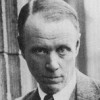
Friendship may well deserve the sacrifice of pleasure, though not of conscience.
Samuel Johnson (1709–1784) English writer, lexicographer, critic
The Rambler, #64 (27 Oct 1750)
(Source)

Surprises are foolish things. The pleasure is not enhanced, and the inconvenience is often considerable.

Poverty, sir, is no disgrace to a man, but it is confoundedly inconvenient.
Sydney Smith (1771–1845) English clergyman, essayist, wit
Sydney Smith: His Wit and Wisdom (1900) [ed. J. Potter Briscoe]
(Source)
In the Edinburgh Review (1855-07) coverage of Lady Holland's A Memoir of the Reverend Sydney Smith (1855), the reviewer notes that Smith himself attributed this phrase to "a fellow-passenger in a stage coach."

I would rather be exposed to the inconveniencies attending too much liberty than those attending too small a degree of it.
Thomas Jefferson (1743–1826) American political philosopher, polymath, statesman, US President (1801–09)
Letter (1791-12-23) to Archibald Stuart
(Source)
Jefferson originally wrote "dangers" instead of "inconveniencies."