CHORUS: Great treasure halls hath Zeus in heaven,
From whence to man strange dooms be given,
Past hope or fear.
And the end men looked for cometh not,
And a path is there where no man thought:
So hath it fallen here.[ΚΥΚΛΩΨ: πολλῶν ταμίας Ζεὺς ἐν Ὀλύμπῳ,
πολλὰ δ᾽ ἀέλπτως κραίνουσι θεοί:
καὶ τὰ δοκηθέντ᾽ οὐκ ἐτελέσθη,
τῶν δ᾽ ἀδοκήτων πόρον ηὗρε θεός.
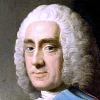
τοιόνδ᾽ ἀπέβη τόδε πρᾶγμα.]Euripides (485?-406? BC) Greek tragic dramatist
Medea [Μήδεια], l. 1415ff (431 BC) [tr. Murray (1906)]
(Source)
Euripides ended a number of his dramas with slight variations of this final chorus (some scholars believe that these endings were added in some cases after his death). See here for more discussion about this "standard" choral coda.
(Source (Greek)). Other translations:Thron'd on Olympus, with his sovereign nod,
Jove unexpectedlyi performs the schemes
Divine foreknowledge plann'd; our firmest hopes
Oft fail us: but the God still finds the means
Of compassing what man could ne'er have look'd for;
And thus doth this important business end.
[tr. Wodhull (1782)]Jove in the high heav'n dispenses various fates:
And now the gods show'r blessings, which our hopes
Dared not aspire to, now control the ills
We deem'd inevitable: thus the god
To these hat giv'n an end we never thought;
Such is the dreadful fortune of this day.
[tr. Potter (1814)]Zeus in Olympus parts out many lots,
And the gods work to many undreamed of ends,
And that we looked for is never fulfilled,
And to things not looked for the gods make a way:
Even so hath this issue been.
[tr. Webster (1868)]Many a fate doth Zeus dispense, high on his Olympian throne; oft do the gods bring things to pass beyond man's expectation; that, which we thought would be, is not fulfilled, while for the unlooked-for god finds out a way; and such hath been the issue of this matter.
[tr. Coleridge (1891)]Jove is the dispenser of various fates in heaven, and the Gods perform many things contrary to our expectations, and those things which we looked for are not accomplished; but the God hath brought to pass things unthought of. In such manner hath this affair ended.
[tr. Buckley (1892)]All dooms be of Zeus in Olympus; 'tis his to reveal them.
Manifold things unhoped-for the Gods to accomplishment bring.
And the things that we looked for, the Gods deign not to fulfil them;
And the paths undiscerned of our eyes, the Gods unseal them.
So fell this marvellous thing.
[tr. Way (Loeb) (1894)]Zeus in Olympus is the overseer
Of many doings. Many things the gods
Achieve beyond our judgment. What we thought
Is not confirmed and what we thought not god
Contrives. And so it happens in this story.
[tr. Warner (1944)]Many are the Fates which Zeus in Olympus dispenses;
Many matters the gods bring to surprising ends.
The things we thought would happen do not happen;
The unexpected God makes possible;
And such is the conclusion of this story.
[tr. Vellacott (1963)]Zeus, Olympus’ steward, controls many things,
And many things, too, beyond expectation the gods accomplish.
The expected does not turn out;
For the unexpected God finds a way.
Such is the end of this business.
[tr. Podlecki (1989)]Zeus on Olympus has many things in his treasure-house, and many are the things the gods accomplish against our expectation. What men expect is not brought to pass, but a god finds a way to achieve the unexpected. Such is the outcome of this story.
[tr. Kovacs (Perseus)]Zeus on Olympus has many things in his treasure-house, and many are the things the gods accomplish against our expectation. What men look for is not brought to pass, but a god finds a way to achieve the unexpected. Such is the outcome of this story.
[tr. Kovacs (Loeb) (1994)]Many are the things Zeus on Olympus has in his keeping and many things do the gods accomplish beyond men's hopes. What men expect does not happen; for the unexpected, heaven finds a way. And so it has turned out here today.
[tr. Davie (1996)]Our Olympian Zeus is most wise!
The deeds of the gods appear in many forms ...
And gods often perform deeds even beyond our hopes.
Our wishes might not be granted but the gods will find ways of achieving what we never thought achievable.
Such was the path of our story.
[tr. Theodoridis (2004)]Of many things Zeus in Olympus is keeper,
many are the things the gods bring about against all reason,
and what is looked for does not happen after all,
yet a god finds a way for the unexpected.
That is how this story has ended.
[tr. Luschnig (2007)]Zeus on Olympus,
dispenses many things.
Gods often contradict
our fondest expectations.
What we anticipate
does not come to pass.
What we don’t expect
some god finds a way
to make it happen.
So with this story.
[tr. Johnston (2008)]Zeus on Olympus ordains many things,
and gods achieve much that surprises us.
What we thought would happen didn't,
and the god found a way for unimaginable deeds;
That's how the story ends.
[tr. Ewans (2022)]Many are the fates that Zeus dispenses in Olympus, and the gods bring many things to pass unexpectedly. What is expected does not come to telos, and a god finds a way for the unexpected. So too has this affair turned out.
[tr. Coleridge / Ceragioli / Nagy / Hour25]
Quotations about:
unpredictability
Note not all quotations have been tagged, so Search may find additional quotes on this topic.
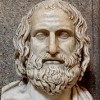

THE DOCTOR: Oh, I always like to do the unexpected. Takes people by surprise.
Doctor Who (1963–1989) British science fiction television series, original run (BBC)
23×01 “The Trial of a Time Lord: The Mysterious Planet,” Part 1 (1985-01-05) [w. Robert Holmes]
(Source)
(Source (Video)).
A number of sources start the second sentence with "It takes," which is not supported by the video.
Numbering for the story/serial within the season is controversial. Season 23 consisted of 14 episodes ("Part One" through "Part Fourteen") under the title "The Trial of a Time Lord." In turn, there were four distinct segments directed/written by different individuals, which were then separately novelized under new names (in this case, "The Mysterious Planet").

Life is so constructed, that the event does not, cannot, will not, meet the expectation.
Charlotte Brontë (1816–1855) British novelist [pseud. Currer Bell]
Villette, ch. 36 “The Apple of Discord” (1853)
(Source)

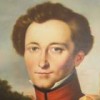
If the mind is to emerge unscathed from this relentless struggle with the unforeseen, two qualities are indispensable: first, an intellect that, even in the darkest hour, retains some glimmerings of the inner light which leads to truth; and second, the courage to follow this faint light wherever it may lead.
[So sind ihm zwei Eigenschaften unentbehrlich: einmal ein Verstand, der auch in dieser gesteigerten Dunkelheit nicht ohne einige Spuren des inneren Lichts ist, die ihn zur Wahrheit führen, und dann Mut, diesem schwachen Lichte zu folgen.]
Karl von Clausewitz (1780–1831) Prussian soldier, historian, military theorist
On War [Vom Kriege], Book 1, ch. 3 “On Military Genius [Der Kriegerische Genius]” (1.3) (1832) [tr. Howard & Paret (1976)]
(Source)
(Source (German)). Other translations:Now, if it is to get safely through this perpetual conflict with the unexpected, two qualities are indispensable: in the first place an understanding which, even in the midst of this intense obscurity, is not without some traces of inner light, which lead to the truth, and then the courage to follow this faint light.
[tr. Graham (1873)]Now if it is to get safely through this continual conflict with the unexpected, two qualities are indispensable: in the first place, an intellect which even in the midst of this intensified obscurity is not without some traces of inner light which lead to the truth, and next, courage to follow this faint light.
[tr. Jolles (1943)]
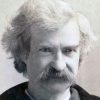
But don’t you know, there are some things that can beat smartness and foresight? Awkwardness and stupidity can. The best swordsman in the world doesn’t need to fear the second best swordsman in the world; no, the person for him to be afraid of is some ignorant antagonist who has never had a sword in his hand before; he doesn’t do the thing he ought to do, and so the expert isn’t prepared for him; he does the thing he ought not to do: and often it catches the expert out and ends him on the spot.
Mark Twain (1835–1910) American writer [pseud. of Samuel Clemens]
A Connecticut Yankee in King Arthur’s Court, ch. 34 (1889)
(Source)
Origin of more simplified versions of the phrase. More discussion: The Best Swordsman in the World Doesn’t Need To Fear the Second Best Swordsman – Quote Investigator.
We must not suppose that, because a man is a rational animal, he will, therefore, always act rationally; or, because he has such or such a predominant passion, that he will act invariably and consequentially in the pursuit of it. No, we are complicated machines; and though we have one main spring that gives motion to the whole, we have an infinity of little wheels, which, in their turns, retard, precipitate, and sometimes stop that motion.
Lord Chesterfield (1694–1773) English statesman, wit [Philip Dormer Stanhope]
Letter to his son, #209 (19 Dec 1749)
(Source)