And certainly a wise man never loses anything if he has himself.
[Certes l’homme d’entendement n’a rien perdu, s’il a soy-mesme.]
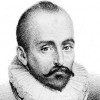
Michel de Montaigne (1533–1592) French essayist
Essays, Book 1, ch. 38 (1.38)), “Of Solitude [De la solitude]” (1572) [tr. Cotton/Hazlitt (1877)]
(Source)
This essay and passage were in the 1st (1580) edition. Some translators use the 1588 sequence of chapters, not the 1595, and so identify this as ch. 39.
(Source (French)). Other translations:Verily, a man of understanding hath lost nothing, if he yet have himselfe.
[tr. Florio (1603)]And certainly a wise man loses nothing, if he save but himself.
[tr. Cotton (1686)]Surely the wise man has lost nothing if he has himself.
[tr. Ives (1925), 1.39]Certainly a man of understanding has lost nothing, if he has himself.
[tr. Frame (1943), 1.39]Certainly, if he still has himself, a man of understanding has lost nothing.
[tr. Screech (1987), 1.39]Certainly a man of discernment has lost nothing if he has himself.
[tr. Atkinson/Sices (2012)]