The events from 1933 to 1945 should have been fought in 1928 at the latest. Later it was too late. We must not wait until the struggle for freedom is called treason. We must not wait until the snowball has turned into an avalanche, we must crush the rolling snowball. Nobody can stop the avalanche! It only comes to rest when it has buried everything underneath it.
That is the lesson, that is the conclusion of what happened to us in 1933, that is the conclusion we must draw from our experiences, and it is the conclusion of my speech. Impending dictatorships can only be fought before they have taken power. It is a matter of an appointment calendar, not heroism.[Die Ereignisse von 1933 bis 1945 hätten spätestens 1928 bekämpft werden müssen. Später war es zu spät. Man darf nicht warten, bis der Freiheitskampf Landesverrat genannt wird. Man darf nicht warten, bis aus dem Schneeball eine Lawine geworden ist. Man muß den rollenden Schneeball zertreten. Die Lawine hält keiner mehr auf. Sie ruht erst, wenn sie alles unter sich begraben hat.
Das ist die Lehre, das ist das Fazit dessen, was uns 1933 widerfuhr. Das ist der Schluß, den wir aus unseren Erfahrungen ziehen müssen, und es ist der Schluß meiner Rede. Drohende Diktaturen lassen sich nur bekämpfen, ehe sie die Macht übernommen haben. Es ist eine Angelegenheit des Terminkalenders, nicht des Heroismus.]Erich Kästner (1899–1974) German writer, poet, screenwriter, satirist
Speech (1958-05-10), “Über das verbrennen von büchern [On the Burning of Books],” Hamburg PEN Conference
(Source)
Collected in Kastner, Gesammelte Schriften für Erwachsene [Collective Writings for Adults], Book 8 "Miscellaneous Articles III" (1969).
The speech was given on the 25th anniversary of the 1933 book burnings in Berlin. 1928 was the first federal election in Germany when the Nazi Party had federal candidates. It only received 3% of the vote.
This quote is forwarded through social media frequently, in a variety of translations and edits, usually without citation.
(Source (German)). Other translations:The events 1933–1945 should have been combated by 1928. Later was too late. We must not wait until the fight for freedom is called treason. We must not wait until the snowball has turned into an avalanche. You have to crush the rolling snowball. No one can stop the avalanche. It only comes to rest when it has buried everything underneath it.
That is the lesson of what happened to us in 1933. Impending dictatorships can only be fought before they have taken power.
[Source]They should have been combated by 1928 at the latest. Later it was too late. We must not wait until the struggle for freedom is called treason. We must not wait until the snowball has turned into an avalanche. You have to crush the rolling snowball. No one can stop the avalanche. It only comes to rest when it has buried everything underneath it.
That is the lesson, that is the conclusion of what happened to us in 1933. That is the conclusion we must draw from our experiences.
[Source]The events from 1933 to 1945 should have been battled in 1928 at the latest. Later was already too late. One must not wait until liberty is called treason. One must not wait till the snowball has become an avalanche. One must squelch the rolling snowball. The avalanche can't be stopped anymore [...]
[Source]The events from 1933 to 1945 should have been stopped in 1928 at the latest. After that it was too late. You can't wait until the struggle for freedom is labeled as treason. You need to squash the rolling snowball. No one can stop the ensuing avalanche after that. It ends only after everything is ruined.
[...] Threatening dictatorships can only be stopped before they have taken power.
[Source]The events of 1933 to 1945 should have been fought against by 1928 at the latest. Later it was too late. We must not wait until the fight for freedom is called treason. We must not wait until the snowball has become an avalanche. We must crush the rolling snowball. No one can stop the avalanche. It will not rest until it has buried everything beneath it.
That is the lesson, that is the conclusion of what happened to us in 1933. That is the conclusion we must draw from our experiences, and it is the end of my speech. Threatening dictatorships can only be fought against before they have taken power.
[Source]The events from 1933 until 1945 should've been eradicated as late as 1928. Later is too late. We cannot wait until the fight for freedom is called treason. We cannot wait until the snowball has turned into an avalanche. We must trample the rolling snowball. Nobody can stop the avalanche. It won't rest until it has buried everything.
[...] Threatening dictatorships can only be fought before they have gained power.
[Source]
Quotations about:
prevention
Note not all quotations have been tagged, so Search may find additional quotes on this topic.
There are two reasons for drinking: one is, when you are thirsty, to cure it; the other, when you are not thirsty, to prevent it. The first is obvious, mechanical, and plebeian; the second is most refined, abstract, prospicient, and canonical. I drink by anticipation of thirst that may be. Prevention is better than cure.
Thomas Love Peacock (1785–1866) English novelist, satirist, poet, merchant
Melincourt, ch. 16 (1817)
(Source)
The time to guard against corruption and tyranny is before they shall have gotten hold of us. It is better to keep the wolf out of the fold than to trust to drawing his teeth and talons after he shall have entered.
Thomas Jefferson (1743–1826) American political philosopher, polymath, statesman, US President (1801–09)
Notes on the State of Virginia, Query 13 (1782)
(Source)
The only way to win the next world war is to prevent it.
Dwight David Eisenhower (1890–1969) American general, US President (1953–61)
Speech, Seattle (17 Oct 1956)
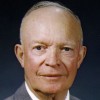
Possibly my hatred of war blinds me so that I cannot comprehend the arguments they adduce. But, in my opinion, there is no such thing as a preventive war. Although this suggestion is repeatedly made, none has yet explained how war prevents war. Worse than this, no one has been able to explain away the fact that war creates the conditions that beget war.
Dwight David Eisenhower (1890–1969) American general, US President (1953–61)
Speech, Carnegie Institute, Pittsburgh (19 Oct 1950)
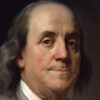
’Tis easier to prevent bad habits than to break them.
Benjamin Franklin (1706–1790) American statesman, scientist, philosopher, aphorist
Poor Richard (1745 ed.)
(Source)
When will our consciences grow so tender that we will act to prevent human misery rather than avenge it?
Eleanor Roosevelt (1884–1962) American politician, diplomat, activist; First Lady of the US (1933–45)
Column (1946-02-16), “My Day”
(Source)
Regarding the Holocaust, on visiting a Jewish refugee camp in Frankfurt, Germany.