Nations, like individuals, cannot become desperate gamblers with impunity. Punishment is sure to overtake them sooner or later.
Charles Mackay (1814-1889) Scottish poet, journalist, song writer
Memoirs of Extraordinary Popular Delusions and the Madness of Crowds, “The South-Sea Bubble” (1841)
(Source)
Quotations about:
risk-taking
Note not all quotations have been tagged, so Search may find additional quotes on this topic.

We might have understood and admired in him protest in the name of legality and liberty, proud opposition, legitimate but perilous resistance to the all-powerful Napoleon. But what pleases us in the treatment of those on their way up is less pleasing in the treatment of those on their way down. We approve of fighting only so long as there is danger, and in any case only those who fought in the first instance have the right to be exterminators at the last. He who has not been a persistent opponent in times of prosperity should remain silent when the downfall comes. Challenging success gives the only legitimacy to prosecuting failure.
[Nous eussions compris et admiré la protestation au nom du droit et de la liberté, l’opposition fière, la résistance périlleuse et juste à Napoléon tout-puissant. Mais ce qui nous plaît vis-à-vis de ceux qui montent nous plaît moins vis-à-vis de ceux qui tombent. Nous n’aimons le combat que tant qu’il y a du danger ; et, dans tous les cas, les combattants de la première heure ont seuls le droit d’être les exterminateurs de la dernière. Qui n’a pas été accusateur opiniâtre pendant la prospérité doit se taire devant l’écroulement. Le dénonciateur du succès est le seul légitime justicier de la chute.]
Victor Hugo (1802-1885) French writer
Les Misérables, Part 1 “Fantine,” Book 1 “An Upright Man,” ch. 11 (1.1.11) (1862) [tr. Donougher (2013)]
(Source)
On the otherwise-virtuous Bishop Myriel only opposing Napoleon after the emperor's fortunes were waning.
(Source (French)). Alternate translations:We could have understood and admired a protest in the name of right and liberty, a fierce opposition, a perilous and just resistance to Napoleon when he was all-powerful. But what is pleasing to us towards those who are rising, is less pleasing towards those who are falling. We do not admire the combat when there is no danger; and in any case, the combatants of the first hour have alone the right to be the exterminators in the last. He who has not been a determined accuser during prosperity, ought to hold his peace in the presence of adversity. He only who denounces the success at one time has a right to proclaim the justice of the downfall.
[tr. Wilbour (1862)]We could have understood and admired a protest in the name of justice and liberty, a haughty opposition, and a perilous and just resistance offered to the omnipotent Napoleon. But conduct which pleases us toward those who are rising, pleases us less toward those who are falling. We only like the contest so long as there is danger; and, in any case, only the combatants from the beginning have a right to be the exterminators at the end. A man who has not been an obstinate accuser during prosperity must be silent when the crash comes; the denouncer of success is the sole legitimate judge of the fall.
[tr. Wraxall (1862)]We should have understood and admired his protest in the name of right and liberty, his proud opposition, his just but perilous resistance to the all-powerful Napoleon. But that which pleases us in people who are rising pleases us less in the case of people who are falling. We only love the fray so long as there is danger, and in any case, the combatants of the first hour have alone the right to be the exterminators of the last. He who has not been a stubborn accuser in prosperity should hold his peace in the face of ruin. The denunciator of success is the only legitimate executioner of the fall.
[tr. Hapgood (1887)]We would nevertheless have admired him had he, in the name of justice and liberty, pursued a course of high-minded and perilous resistance to Napoleon when the Emperor was at the height of his power. But what is admirable in the case of a rising star is less so when the star is setting. We can respect the struggle only when it is dangerous; and in any case, only those who fight from the beginning deserve the final victory. The man who did not speak out in the time of prosperity does better to keep silent in the time of adversity; only the assailant of success is the legitimate instrument of its downfall.
[tr. Denny (1976)]We could have understood and admired a protest in the name of law and liberty, a fierce opposition, a perilous and just resistance to Napoleon when he was all-powerful. But what pleases us in those who are rising is less pleasing in those who are falling. We do not admire the combat when there is no danger; and in any case, the combatants of the first hour alone have the right to be the exterminators in the last. He who has not been a determined accuser during prosperity should hold his peace in adversity. He alone who denounces the success has a right to proclaim the justice of the downfall.
[tr. Wilbour/Fahnestock/MacAfee (1987)]

Then Old Age said again, — Come, let us walk down the street together, — and offered me a cane, an eyeglass, a tippet, and a pair of over-shoes. — No, much obliged to you, said I. I don’t want those things, and I had a little rather talk with you here, privately, in my study. So I dressed myself up in a jaunty way and walked out alone; — got a fall, caught a cold, was laid up with a lumbago, and had time to think over this whole matter.
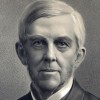
Your body is not a temple, it’s an amusement park. Enjoy the ride.
Anthony Bourdain (1956-2018) American chef, author, travel documentarian
Kitchen Confidential, “Second Course” (2000)
(Source)
While often framed around Bourdain's self-destructive lifestyle, in this context he's discussing being adventuresome when selecting places to dine, including taking some risks in order to gain new food experiences.


Danger is like wine, it goes to your head.
Germaine de Staël (1766-1817) Swiss-French writer, woman of letters, critic, salonist [Anne Louise Germaine de Staël-Holstein, Madame de Staël, Madame Necker]
Corinne, Book 12, ch. 2 (1807)

You will never stub your toe standing still. The faster you go, the more chance there is of stubbing your toe, but the more chance you have of getting somewhere.
Charles F. Kettering (1876-1958) American inventor, engineer, researcher, businessman
(Attributed)
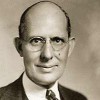

The man who insists upon seeing with perfect clearness before he decides, never decides. Accept life, and you must accept regret.
[Qui veut voir parfaitement clair avant de se déterminer ne se détermine jamais. Qui n’accepte pas le regret n’accepte pas la vie.]Henri-Frédéric Amiel (1821-1881) Swiss philosopher, poet, critic
Journal entry (1856-12-17), Journal Intime (1882) [tr. Ward (1884)]
(Source)
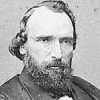
And, to conclude, he that leaveth nothing to Chance will do few things ill, but he will do very few things.
George Savile, Marquis of Halifax (1633-1695) English politician and essayist
“Of Caution and Suspicion,” Political, Moral, and Miscellaneous Thoughts and Reflections (1750)
(Source)
Sometimes incorrectly attributed to Edward Wood, Earl of Halifax (1881-1959).