

What orators lack in depth, they give you in length.
[Ce qui manque aux orateurs en profondeur, ils vous le donnent en longueur.]
Charles-Lewis de Secondat, Baron de Montesquieu (1689–1755) French political philosopher
Pensées Diverses [Assorted Thoughts], # 828 / 1086 (1720-1755) [tr. Clark (2012)]
(Source)
(Source (French)). Other translations:What orators want in depth, they give you in length.
[ed. Taylor (1856)]What orators want in depth, they make up to you in length.
[ed. Wood (1899)]What orators want in depth, they make up for in length.
[ed. Harbottle/Dalbiac (1904)]What is wanting in orators in depth, they make up to you in length.
[ed. Benham (1907)]What orators lack in profundity, they will give you in length.
[tr. Dargan (1907)]What orators lack in depth, they make up in length.
[ed. Jones (1908)]What orators lack in depth, they make up to you in length.
[ed. Stevenson (1947)]
Quotations about:
wordiness
Note not all quotations have been tagged, so Search may find additional quotes on this topic.
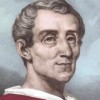
But, as we have seen, many people try to conceal their poverty of thought under a flood of verbiage.
[Aber freilich suchen viele Schriftsteller gerade unter dem Wortüberfluß ihre Gedankenarmuth zu verbergen.]
Arthur Schopenhauer (1788–1860) German philosopher
Parerga and Paralipomena, Vol. 2, ch. 23 “On Authorship and Style [Über Schriftstellerei und Stil],” § 283 (1851) [tr. Saunders (1890)]
(Source)
(Source (German)). Alternate translation:But, truly, many authors try to hide their poverty of thought under a superfluity of words.
[tr. Dircks (1897)]
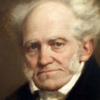
To use many words to communicate few thoughts is everywhere the unmistakable sign of mediocrity. To gather much thought into few words stamps the man of genius.
[Viele Worte machen, um wenige Gedanken mitzutheilen, ist überall das untrügliche Zeichen der Mittelmäßigkeit; das des eminenten Kopfes dagegen, viele Gedanken in wenige Worte zu schließen.]
Arthur Schopenhauer (1788–1860) German philosopher
Parerga and Paralipomena, Vol. 2, ch. 23 “On Authorship and Style [Über Schriftstellerei und Stil],” § 283 (1851) [tr. Saunders (1890)]
(Source)
(Source (German)). Alternate translations:The use of many words in order to express little thought is everywhere the infallible sign of mediocrity; while to clothe much thought in a few words is the infallible sign of distinguished minds.
[tr. Dircks (1897)]To use many words for the purpose of conveying few ideas is everywhere the infallible sign of mediocrity; whereas that of an eminent mind is the inclusion of many ideas into few words.
[tr. Payne (1974)]
No one can stand a person who talks too long and will not give others a chance to speak.
ὁ πλεονάζων λόγῳ βδελυχθήσεται,
καὶ ὁ ἐνεξουσιαζόμενος μισηθήσεται.The Bible (The Old Testament) (14th - 2nd C BC) Judeo-Christian sacred scripture [Tanakh, Hebrew Bible], incl. the Apocrypha (Deuterocanonicals)
Book 22b. Sirach (Ecclesiasticus) 20: 8ff (Sir 20:8) [tr. GNT (1992 ed.)]
(Source)
More on the history and acceptance of this Apocryphal book here and here.
(Source (Greek)). Alternate translations:He that useth many words shall be abhorred; and he that taketh to himself authority therein shall be hated.
[tr. KJV (1611)]He that useth many words shall hurt his own soul: and he that taketh authority to himself unjustly shall be hated.
[tr. DRA (1899)]The man who talks too much will get himself disliked,
and the self-appointed oracle will make himself hated.
[tr. JB (1966)]Someone who talks too much will earn dislike,
and someone who usurps authority will earn hatred.
[tr. NJB (1985)]Those who talk excessively will be loathed,
and those who pretend
to have authority will be hated.
[tr. CEB (2011)]Whoever talks too much is detested,
and whoever pretends to authority is hated.
[tr. NRSV (2021 ed.)]
In your prayers do not babble as the gentiles do, for they think that by using many words they will make themselves heard. Do not be like them; your Father knows what you need before you ask him.
[Προσευχόμενοι δὲ μὴ βατταλογήσητε ὥσπερ οἱ ἐθνικοί, δοκοῦσιν γὰρ ὅτι ἐν τῇ πολυλογίᾳ αὐτῶν εἰσακουσθήσονται. μὴ οὖν ὁμοιωθῆτε αὐτοῖς· οἶδεν γὰρ ὁ πατὴρ ὑμῶν ὧν χρείαν ἔχετε πρὸ τοῦ ὑμᾶς αἰτῆσαι αὐτόν.]
The Bible (The New Testament) (AD 1st - 2nd C) Christian sacred scripture
Book 1. Gospel of Matthew 6: 7ff (Matt 6:7–8) (Jesus) [NJB (1985)]
(Source)
No Synoptic parallels.
(Source (Greek)). Other translations:But when ye pray, use not vain repetitions, as the heathen do: for they think that they shall be heard for their much speaking. Be not ye therefore like unto them: for your Father knoweth what things ye have need of, before ye ask him.
[KJV (1611)]In your prayers do not babble as the pagans do, for they think that by using many words they will make themselves heard. Do not be like them; your Father knows what you need before you ask him.
[JB (1966)]When you pray, do not use a lot of meaningless words, as the pagans do, who think that their gods will hear them because their prayers are long. Do not be like them. Your Father already knows what you need before you ask him.
[GNT (1976)]When you pray, don’t pour out a flood of empty words, as the Gentiles do. They think that by saying many words they’ll be heard. Don’t be like them, because your Father knows what you need before you ask.
[CEB (2011)]When you are praying, do not heap up empty phrases as the gentiles do, for they think that they will be heard because of their many words. Do not be like them, for your Father knows what you need before you ask him.
[NRSV (2021 ed.)]
Some judge books by their thickness, as though they had been written to exercise the arms, instead of the mind.
[Estiman algunos los libros por la corpulencia, como si se escriviessen para exercitar antes los braços que los ingenios.]
Baltasar Gracián y Morales (1601–1658) Spanish Jesuit priest, writer, philosopher
The Art of Worldly Wisdom [Oráculo Manual y Arte de Prudencia], § 27 (1647) [tr. Fischer (1937)]
(Source)
(Source (Spanish)). Other translations:Some value Books for their bulk, as if they were made rather to load the Arms than to exercise the mind.
[Flesher ed. (1685)]Some reckon books by the thickness, as if they were written to try the brawn more than the brain.
[tr. Jacobs (1892)]Some praise books for their girth, as if they were written to exercise our arms, not our wits.
[tr. Maurer (1992)]
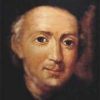
Method is not less requisite in ordinary conversation than in writing, provided a man would talk to make himself understood. I who hear a thousand coffee-house debates every day, am very sensible of this want of method in the thoughts of my honest countrymen. There is not one dispute in ten which is managed in those schools of politics, where, after the first three sentences, the question is not entirely lost. Our disputants put me in mind of the scuttle-fish, that when he is unable to extricate himself, blackens all the water about him, till he becomes invisible.
Joseph Addison (1672–1719) English essayist, poet, statesman
Essay (1712-09-05), The Spectator, No. 476
(Source)
