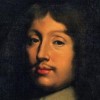
But, as we have seen, many people try to conceal their poverty of thought under a flood of verbiage.
[Aber freilich suchen viele Schriftsteller gerade unter dem Wortüberfluß ihre Gedankenarmuth zu verbergen.]
Arthur Schopenhauer (1788–1860) German philosopher
Parerga and Paralipomena, Vol. 2, ch. 23 “On Authorship and Style [Über Schriftstellerei und Stil],” § 283 (1851) [tr. Saunders (1890)]
(Source)
(Source (German)). Alternate translation:But, truly, many authors try to hide their poverty of thought under a superfluity of words.
[tr. Dircks (1897)]
Quotations about:
loquaciousness
Note not all quotations have been tagged, so Search may find additional quotes on this topic.
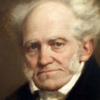
To use many words to communicate few thoughts is everywhere the unmistakable sign of mediocrity. To gather much thought into few words stamps the man of genius.
[Viele Worte machen, um wenige Gedanken mitzutheilen, ist überall das untrügliche Zeichen der Mittelmäßigkeit; das des eminenten Kopfes dagegen, viele Gedanken in wenige Worte zu schließen.]
Arthur Schopenhauer (1788–1860) German philosopher
Parerga and Paralipomena, Vol. 2, ch. 23 “On Authorship and Style [Über Schriftstellerei und Stil],” § 283 (1851) [tr. Saunders (1890)]
(Source)
(Source (German)). Alternate translations:The use of many words in order to express little thought is everywhere the infallible sign of mediocrity; while to clothe much thought in a few words is the infallible sign of distinguished minds.
[tr. Dircks (1897)]To use many words for the purpose of conveying few ideas is everywhere the infallible sign of mediocrity; whereas that of an eminent mind is the inclusion of many ideas into few words.
[tr. Payne (1974)]
No one can stand a person who talks too long and will not give others a chance to speak.
ὁ πλεονάζων λόγῳ βδελυχθήσεται,
καὶ ὁ ἐνεξουσιαζόμενος μισηθήσεται.The Bible (The Old Testament) (14th - 2nd C BC) Judeo-Christian sacred scripture [Tanakh, Hebrew Bible], incl. the Apocrypha (Deuterocanonicals)
Book 22b. Sirach (Ecclesiasticus) 20: 8ff (Sir 20:8) [tr. GNT (1992 ed.)]
(Source)
More on the history and acceptance of this Apocryphal book here and here.
(Source (Greek)). Alternate translations:He that useth many words shall be abhorred; and he that taketh to himself authority therein shall be hated.
[tr. KJV (1611)]He that useth many words shall hurt his own soul: and he that taketh authority to himself unjustly shall be hated.
[tr. DRA (1899)]The man who talks too much will get himself disliked,
and the self-appointed oracle will make himself hated.
[tr. JB (1966)]Someone who talks too much will earn dislike,
and someone who usurps authority will earn hatred.
[tr. NJB (1985)]Those who talk excessively will be loathed,
and those who pretend
to have authority will be hated.
[tr. CEB (2011)]Whoever talks too much is detested,
and whoever pretends to authority is hated.
[tr. NRSV (2021 ed.)]
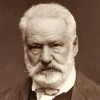
Of a disposition at once unsociable and talkative, desiring to see no one, yet wishing to converse with some one, he solved the difficulty by talking to himself.
[D’une complexion farouche et bavarde, ayant le désir de ne voir personne et le besoin de parler à quelqu’un, il se tirait d’affaire en se parlant à lui-même.]
Victor Hugo (1802–1885) French writer, journalist, human rights activist, politician
The Man Who Laughs [L’Homme qui rit; The Laughing Man; By Order of the King], Part 1, Preliminary, ch. 1 (1.0.1) (1869) [tr. Unknown, Authorized (1871)]
(Source)
(Source (French)). Other translations:Of a disposition at once unsociable and talkative, desiring to see no one, yet longing to converse with some one, he solved the difficulty by talking to himself.
[tr. Unknown (1869)]Of a shy and loquacious disposition, desiring to see no one, yet feeling the need of talking to some one, he extricated himself from the dilemma by talking to himself.
[tr. Hapgood (1888)]Of an unsociable and talkative disposition, not wanting to see any one, and yet wanting to talk to some one, he got out of the difficulty by talking to himself.
[tr. Phillips (1894)]Of a fierce and talkative disposition, with a desire to see no one and a need to talk to someone, he got by by talking to himself.
[tr. Lavelle (2003)]
Owl was telling Kanga an Interesting Anecdote full of long words like Encyclopædia and Rhododendron to which Kanga wasn’t listening.
A. A. Milne (1882–1956) English poet and playwright [Alan Alexander Milne]
Winnie-the-Pooh, ch. 8 “Christopher Robin Leads an Expotition” (1926)
(Source)
LOQUACITY, n. A disorder which renders the sufferer unable to curb his tongue when you wish to talk.
Ambrose Bierce (1842–1914?) American writer and journalist
“Loquacity,” The Devil’s Dictionary (1911)
(Source)
Originally published in the "Cynic's Dictionary" column in the San Francisco Examiner (1888-04-29).
It is not a Fault in Company to talk much; but to continue it long, is certainly one; for, if the Majority of those who are got together be naturally silent or cautious, the Conversation will flag, unless it be often renewed by one among them, who can start new Subjects, provided he doth not dwell upon them, but leaveth Room for Answers and Replies.
Jonathan Swift (1667–1745) English writer and churchman
“Hints Towards an Essay on Conversation” (c. 1710)
(Source)
I cannot guess why it is so, but those who know the least speak the most.
[E non so io indovinare donde ciò proceda, che chi meno sa più ragioni.]
Giovanni della Casa (1503–1556) Florentine poet, author, diplomat, bishop
Galateo: Or, A Treatise on Politeness and Delicacy of Manners [Il Galateo overo de’ costumi], ch. 24 (1558) [tr. Einsenbichler/Bartlett (1986)]
(Source)
(Source (Italian)). Other translations:Nor can I guess at the cause, (though it is certainly fact) why he that knows the least, should always talk the most.
[tr. Graves (1774)]I cannot divine how it happens that the man who knows the least is the most argumentative.
[Source]

Some judge books by their thickness, as though they had been written to exercise the arms, instead of the mind.
[Estiman algunos los libros por la corpulencia, como si se escriviessen para exercitar antes los braços que los ingenios.]
Baltasar Gracián y Morales (1601–1658) Spanish Jesuit priest, writer, philosopher
The Art of Worldly Wisdom [Oráculo Manual y Arte de Prudencia], § 27 (1647) [tr. Fischer (1937)]
(Source)
(Source (Spanish)). Other translations:Some value Books for their bulk, as if they were made rather to load the Arms than to exercise the mind.
[Flesher ed. (1685)]Some reckon books by the thickness, as if they were written to try the brawn more than the brain.
[tr. Jacobs (1892)]Some praise books for their girth, as if they were written to exercise our arms, not our wits.
[tr. Maurer (1992)]
As great minds can express much in a few words, so small minds have the contrary talent of talking a great deal without saying anything at all.
[Comme c’est le caractère des grands esprits de faire entendre en peu de paroles beaucoup de choses, les petits esprits, au contraire, ont le don de beaucoup parler, et de ne rien dire.]
François VI, duc de La Rochefoucauld (1613–1680) French epigrammatist, memoirist, noble
Réflexions ou sentences et maximes morales [Reflections; or Sentences and Moral Maxims], ¶142 (1665-1678) [tr. FitzGibbon (1957)]
(Source)
Present in the 1st (1665) ed. A 1665 variant:[Comme c’est le caractère des grands esprits de faire entendre avec peu de paroles beaucoup de choses, les petits esprits, en revanche, ont le don de beaucoup parler, et de ne dire rien.]
(Source (French)). Other translations:As great Wits have a peculiar Faculty of saying a great deal in a little; so half witted Fellows have a Talent of talking much, and yet saying nothing.
[tr. Stanhope (1694), ¶143]As it is the characteristic of great wits to say much in few words, so small wits seem to have the gift of speaking much and saying nothing.
[pub. Donaldson (1783), ¶414; ed. Lepoittevin-Lacroix (1797), ¶137]It is the characteristic of great wits to say much in a few words; small wits seem to have the gift of speaking much and saying nothing.
[ed. Carvill (1835), ¶419]As it is the characteristic of great wits; to convey a great deal in a few words, so, on the contrary, small wits have the gift of speaking much and saying nothing.
[ed. Gowens (1851), ¶145]As it is the mark of great minds to say many things in a few words, so it is that of little minds to use many words to say nothing.
[tr. Bund/Friswell (1871), ¶142]As it is a trait of powerful intellects to express much in a few words; inversely, small minds talk much and say little.
[tr. Heard (1917), ¶142]It is a mark of great minds to say much in a few words. On the other hand, small minds possess the gift of talking much and saying nothing.
[tr. Stevens (1939), ¶142]As it is the mark of great minds to convey much in few words, so small minds are skilled at talking at length and saying little.
[tr. Kronenberger (1959), ¶142]As the stamp of great minds is to suggest much in a few words, so, contrariwise, little minds have the gift of talking a great deal and saying nothing.
[tr. Tancock (1959), ¶142]As it is the character of great minds to make many things understood in few words; so small minds, on the contrary, have the gift of speaking much, and saying nothing.
[tr. Siniscalchi (1994)]Just as great spirits make much understood with few words, small ones have the gift of speaking very much without saying anything.
[tr. Whichello (2016)]