Children, like grown-ups, enjoy the sense of achievement derived from mastering a difficulty, but this requires a consistency of effort of which few are capable without some outside encouragement. The capacity for consistent self-direction is one of the most valuable that a human being can possess. It is practically unknown in young children, and is never developed either by a very rigid discipline or by complete freedom.
Bertrand Russell (1872–1970) English mathematician and philosopher
Education and the Social Order [Education and the Modern World], ch. 2 “The Negative Theory of Education” (1932)
(Source)
Quotations about:
application
Note not all quotations have been tagged, so Search may find additional quotes on this topic.
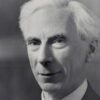
He who learns but does not think is lost. He who thinks but does not learn is in great danger.
Eleanor Roosevelt (1884–1962) American politician, diplomat, activist; First Lady of the US (1933–45)
(Misattributed)
This quote is often attributed to Eleanor Roosevelt, and, where a source is given, usually to her Autobiography (e.g.). I am unable to find it in that work, nor in the three earlier separate memoirs she wrote, nor in any other written source.
If she did use the phrase, she was quoting from the popular Waley (1938) translation of Confucius, Analects, 2.15.

Beware the student of one teacher. A good idea spirals into dogma when it gets applied to everything and stretched beyond the areas where it is useful. Remain open and embrace a lot of teachers.

Science doesn’t supply happiness; but neither does its lack. The same can be said of social utopias: they aren’t created by science, but neither does lack of science provide them. Science has cast up dangerous and cruel knowledge, which has been exploited for warfare and dictatorial power; but so have cultures so little gifted with scientists that they either make do with imported weapons or rely on clubs, axes, and daggers. Scientific information about our mistakes — for instance, that deforestation invites mud slides and deserts, that overfishing depletes fish stocks — doesn’t guarantee we will avoid such mistakes or correct them, but that is owing to failure to heed what science uncovers.
Jane Jacobs (1916–2006) American-Canadian journalist, author, urban theorist, activist
Dark Age Ahead, ch. 3 “Science Abandoned” (2004)
(Source)

Nothing in education is so astonishing as the amount of ignorance it accumulates in the form of inert facts.
Henry Adams (1838–1918) American journalist, historian, academic, novelist
The Education of Henry Adams, ch. 25 (1907)
(Source)
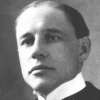
We must not forget that when radium was discovered no one knew that it would prove useful in hospitals. The work was one of pure science. And this is a proof that scientific work must not be considered from the point of view of the direct usefulness of it. It must be done for itself, for the beauty of science, and then there is always the chance that a scientific discovery may become like the radium a benefit for humanity.
Marie Curie (1867–1934) Polish-French physicist and chemist [b. Maria Salomea Skłodowska]
“The Discovery of Radium,” lecture, Vassar College (1921-05-14)
(Source)
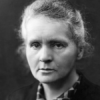
We all have a pretty clear understanding of goodness, but it seldom applies to the situation we’re in at the moment.
Mignon McLaughlin (1913–1983) American journalist and author
The Neurotic’s Notebook, ch. 5 (1963)
(Source)

An interface is humane if it is responsive to human needs and considerate of human frailties.
Jef Raskin (1943–2005) American computer scientist, writer
The Humane Interface, 1-6 (2000)
(Source)
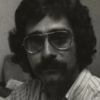
Write. No amount of self-inflicted misery, altered states, black pullovers or being publicly obnoxious will ever add up to your being a writer. Writers write. On you go.
Alison Louise "A. L." Kennedy (b. 1965) Scottish writer and comedian
In “Ten Rules for Writing Fiction,” The Guardian (20 Feb 2010)
(Source)

An education isn’t how much you have committed to memory, or even how much you know. It’s being able to differentiate between what you do know and what you don’t. It’s knowing where to go to find out what you need to know, and it’s knowing how to use the information once you get it.
William Feather (1889–1981) American publisher, author
(Attributed)
The original source for this has not been found. It is quoted (without source) in Carman Fish, "The Safety Valve" column, National Safety News (1960-01). Prior to that, it is also quoted in Telephony Magazine, Vol. 150 (1956), p. 23 (but that article itself notes it is quoting from an issue of Copperweld Magazine).
The first two sentences are often credited to Anatole France, but this seems to be a fairly recent (1990s?) misattribution.
Another variant (attributed to France, uncited; e.g.): "True education is the ability to discern the difference between what you do know and what you don't."
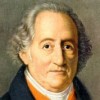
Knowing is not enough; we must apply. Willing is not enough; we must do.
Johann Wolfgang von Goethe (1749–1832) German poet, statesman, scientist
(Attributed)
Used by Bruce Lee, and sometimes attributed to him.
The possession of facts is knowledge; the use of them is wisdom; the choice of them, education. Knowledge is not power but riches, and like them, has its value in spending.
Thomas Jefferson (1743–1826) American political philosopher, polymath, statesman, US President (1801–09)
(Spurious)
Widely attributed to Jefferson, but with no citation or written record that can be found.