DEDICATED
to that amazing device, the Required Reading List,
better even than artificial respiration
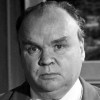
for keeping dead authors alive.Richard Armour (1906–1989) American poet and author
Book (1960), The Classics Reclassified, Dedication
(Source)
Quotations about:
classics
Note not all quotations have been tagged, so Search may find additional quotes on this topic.

Had there been a literary censorship in Rome, we should have had to-day neither Horace, Juvenal, nor the philosophical works of Cicero. If Milton, Dryden, Pope, and Locke had not been free, England would have had neither poets nor philosophers; there is something positively Turkish in proscribing printing; and hampering it is proscription.
[S’il y avait eu une inquisition littéraire à Rome, nous n’aurions aujourd’hui ni Horace, ni Juvénal, ni les œuvres philosophiques de Cicéron. Si Milton, Dryden, Pope, et Locke, n’avaient pas été libres l’Angleterre n’aurait eu ni des poètes, ni des philosophes: il y a je ne sais quoi de turc à proscrire l’imprimerie, et c’est la proscrire que la trop gêner.]
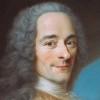
Voltaire (1694–1778) French writer [pseud. of Francois-Marie Arouet]
Letter (1733-06-20) to a First Commissioner [Lettre á un premier commis] [tr. Tallentyre (1919)]
(Source)
When I think of antiquity, the detail that frightens me is that those hundreds of millions of slaves on whose backs civilization rested generation after generation have left behind them no record whatever. We do not even know their names. In the whole of Greek and Roman history, how many slaves’ names are known to you? I can think of two, or possibly three. One is Spartacus and the other is Epictetus. Also, in the Roman room at the British Museum there is a glass jar with the maker’s name inscribed on the bottom, “Felix fecit.” I have a vivid mental picture of poor Felix (a Gaul with red hair and a metal collar round his neck), but in fact he may not have been a slave; so there are only two slaves whose names I definitely know, and probably few people can remember more. The rest have gone down into utter silence.
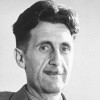
George Orwell (1903–1950) English journalist, essayist, writer [pseud. of Eric Arthur Blair]
Essay (1942-08), “Looking Back on the Spanish War,” ch. 4, Such, Such Were the Joys, essay 8 (1953)
(Source)
EPIGRAM. A platitude with vine-leaves in its hair.
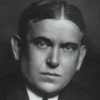
H. L. Mencken (1880–1956) American writer and journalist [Henry Lewis Mencken]
A Book of Burlesques, “The Jazz Webster” (1924)
(Source)
You imply our education is of no use to you in after life. But no education is. We are not an employment agency; all we can do is to give you a grounding in the art of mixing with your fellow men, to tell you what to expect from life and give you an outward manner and inward poise, an old prescription from the eighteenth century which we call a classical education, an education which confers the infrequent virtues of good sense and good taste and the benefit of dual nationality, English and Mediterranean, and which, taking into account the difficulties of modern life, we find the philosophy best able to overcome them.
Cyril Connolly (1903–1974) English intellectual, literary critic and writer.
Enemies of Promise, Part 3, ch. 24 “Vale” (1938)
(Source)
Speaking as a personified Eton College.