MARCUS: As our birth brings to us the beginning, so may death bring the end of all things. As nothing belonged to us before we were born, so nothing will belong to us after we are dead.
[Ut, quo modo initium nobis rerum omnium ortus noster adferat, sic exitum mors, ut nihil pertinuit ad nos ante ortum, sic nihil post mortem pertinebit.]
Marcus Tullius Cicero (106–43 BC) Roman orator, statesman, philosopher
Tusculan Disputations [Tusculanae Disputationes], Book 1, ch. 38 (1.38) / sec. 91 (1.91) (45 BC) [tr. Peabody (1886)]
(Source)
(Source (Latin)). Other translations:As our Birth giveth us an entrance into the business of this World, so Death should give our Exit from it. Which, as before our Birth, it nothing concern'd us, so neither shall it after Death.
[tr. Wase (1643)]As our birth was the beginning of things with us, death will be the end; and as we were no ways concerned with them before we were born, so we shall have none after we are dead.
[tr. Main (1824)]As our birth is the entrance of all things for us, so death is the exit; as before we saw the light nothing belonged to us, so nothing will belong to us after the scene is closed.
[tr. Otis (1839)]Just in the same manner as our birth was the beginning of things with us, so death will be the end; and as we were no ways concerned with anything before we were born, so neither shall we be after we are dead.
[tr. Yonge (1853)]As birth introduces us to the beginning of things, so does death to the end, it follows that, as before [birth] there was nothing which concerned us, so there will be nothing that concerns us after death.
[tr. Black (1889)][...] As we possessed nothing before birth, so will nothing remain to us after death.
[ed. Harbottle (1897)]Our birth brings the beginning of everything for us, so death brings the end: then just as nothing affected us before [birth], so nothing will affect us after death.
[tr. Douglas (1985)]Just as birth is the beginning of everything for us, so death is the end, and just as nothing mattered to us before we were born, nothing will matter after we die.
[tr. Habinek (1996)]Just as our birth brings the beginning of all things, so our death brings the end of all, then just as nothing affected us before birth, so nothing will affect us after death.
[tr. Davie (2017)]
Quotations about:
oblivion
Note not all quotations have been tagged, so Search may find additional quotes on this topic.
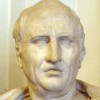
MARCUS: Death is no annihilation, carrying off and blotting out everything, but rather, if I may so describe it, a change of abode, and an alteration in our manner of life.
[Mortem non interitum esse omnia tollentem atque delentem, sed quandam quasi migrationem commutationemque vitae.]
Marcus Tullius Cicero (106–43 BC) Roman orator, statesman, philosopher
Tusculan Disputations [Tusculanae Disputationes], Book 1, ch. 12 (1.12) / sec. 27 (1.27) (45 BC) [ed. Harbottle (1897)]
(Source)
On the belief, from antiquity, in the soul and survival of it beyond death.
(Source (Latin)). Alternate translations:Death was not an Annihilation, but a removal and change only of Life.
[tr. Wase (1643)]Death was not so entire a destruction as to leave nothing remining, but a certain transmigration, as it were, and change of life.
[tr. Main (1824)]Death was not a destruction, involving a total and absolute demolition, but rather a certain migration and change of life.
[tr. Otis (1839)]Death was not so entire a destruction as wholly to abolish and destroy everything, but rather a kind of transmigration, as it were, and change of life.
[tr. Yonge (1853)]Death is not a catastrophe that takes away and blots out everything, but is, so to speak, a migration and a change of life.
[tr. Peabody (1886)]Death was not a destruction which removed and obliterated everything, but only a migration, as it were, and an exchange of one life for another.
[tr. Black (1889)]
Of many writers who filled their age with wonder, and whose names we find celebrated in the books of their contemporaries, the works are now no longer to be seen, or are seen only amidst the lumber of libraries which are seldom visited, where they lie only to show the deceitfulness of hope, and the uncertainty of honour.
Samuel Johnson (1709–1784) English writer, lexicographer, critic
Essay (1759-06-02), The Idler, No. 59
(Source)

Though in reviewing the incidents of my Administration I am unconscious of intentional error, I am nevertheless too sensible of my defects not to think it probable that I may have committed many errors. Whatever they may be, I fervently beseech the Almighty to avert or mitigate the evils to which they may tend. I shall also carry with me the hope that my country will never cease to view them with indulgence, and that, after forty-five years of my life dedicated to its service with an upright zeal, the faults of incompetent abilities will be consigned to oblivion, as myself must soon be to the mansions of rest.
George Washington (1732–1799) American military leader, Founding Father, US President (1789–1797)
Letter (1796-09-17), “Farewell Address” [with J. Madison, A. Hamilton]
(Source)
Published in the American Daily Advertiser, Philadelphia (1796-09-19).

OBLIVION, n. The state or condition in which the wicked cease from struggling and the dreary are at rest. Fame’s eternal dumping ground. Cold storage for high hopes. A place where ambitious authors meet their works without pride and their betters without envy. A dormitory without an alarm clock.
Ambrose Bierce (1842–1914?) American writer and journalist
“Oblivion,” The Devil’s Dictionary (1911)
(Source)
Originally published in the "Cynic's Word Book" column in the New York American (1904-09-27), and the "Cynic's Dictionary" column in the San Francisco Examiner (1903-10-28).

When I think of antiquity, the detail that frightens me is that those hundreds of millions of slaves on whose backs civilization rested generation after generation have left behind them no record whatever. We do not even know their names. In the whole of Greek and Roman history, how many slaves’ names are known to you? I can think of two, or possibly three. One is Spartacus and the other is Epictetus. Also, in the Roman room at the British Museum there is a glass jar with the maker’s name inscribed on the bottom, “Felix fecit.” I have a vivid mental picture of poor Felix (a Gaul with red hair and a metal collar round his neck), but in fact he may not have been a slave; so there are only two slaves whose names I definitely know, and probably few people can remember more. The rest have gone down into utter silence.
George Orwell (1903–1950) English journalist, essayist, writer [pseud. of Eric Arthur Blair]
Essay (1942-08), “Looking Back on the Spanish War,” ch. 4, Such, Such Were the Joys, essay 8 (1953)
(Source)
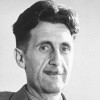
A man may feel so completely thwarted that he seeks no form of satisfaction, but only distraction and oblivion. He then becomes a devotee of “pleasure.” That is to say, he seeks to make life bearable by becoming less alive. Drunkenness, for example, is temporary suicide: the happiness that it brings is merely negative, a momentary cessation of unhappiness.
Bertrand Russell (1872–1970) English mathematician and philosopher
Conquest of Happiness, Part 1, ch. 1 “What Makes People Unhappy?” (1930)
(Source)
When Life is woe,
And Hope is dumb,
The World says, “Go!”
The Grave says, “Come!”
But what is all this fear of and opposition to Oblivion? What is the matter with the soft Darkness, the Dreamless Sleep?
James Thurber (1894–1961) American humorist, cartoonist, writer
In Clifton Fadiman, I Believe: The Personal Philosophies of Twenty-Three Eminent Men and Women of Our Time (1940)
(Source)
Also published in Forum and Century (Jun 1939). Words spoken by Sylvester Blougram, the title character from Robert Browning's "Bishop Blougram's Apology" (1855).
Ignorance is not bliss — it is oblivion. Determined ignorance is the hastiest kind of oblivion.
There is nothing more dreadful to an author than neglect, compared with which reproach, hatred, and opposition are names of happiness; yet this worse, this meanest fate, every one who dares to write has reason to fear.
Samuel Johnson (1709–1784) English writer, lexicographer, critic
Source (1750-03-24), The Rambler, No. 2
(Source)
Fame is a vapor; popularity an accident; riches take wings; the only earthly certainty is oblivion ….
Horace Greeley (1881–1872) American newspaper editor, reformer, politician
Recollections of a Busy Life, ch. 18 (1868)
(Source)
Quoted by Mark Twain in his Notebook (1869), and often attributed to him. Frequently misquoted as "Fame is a vapor; popularity an accident; riches take wings; those who cheer today will curse tomorrow; only one thing endures: character." More discussion of this quotation here.
Some of them left a name behind them,
so that their praises are still sung.
While others have left no memory,
and disappeared as though they had not existed,
they are now as though they had never been,
and so too, their children after them.[εἰσὶν αὐτῶν οἳ κατέλιπον ὄνομα
τοῦ ἐκδιηγήσασθαι ἐπαίνους·
καὶ εἰσὶν ὧν οὐκ ἔστιν μνημόσυνον
καὶ ἀπώλοντο ὡς οὐχ ὑπάρξαντες
καὶ ἐγένοντο ὡς οὐ γεγονότες
καὶ τὰ τέκνα αὐτῶν μετ᾽ αὐτούς.]The Bible (The Old Testament) (14th - 2nd C BC) Judeo-Christian sacred scripture [Tanakh, Hebrew Bible], incl. the Apocrypha (Deuterocanonicals)
Book 22b. Sirach (Ecclesiasticus) 44: 8ff (Sir 44:8–9) [JB (1966)]
(Source)
Speaking of the rich, powerful, and famous of any age.
More on the history and acceptance of this Apocryphal book here and here.
(Source (Greek)). Other translations:There be some of them, that have left a name behind them, that their praises might be reported.
And some there be, which have no memorial; who are perished, as though they had never been; and are become as though they had never been born; and their children after them.
[KJV (1611)]They that were born of them have left a name behind them, that their praises might be related:
And there are some, of whom there is no memorial: who are perished, as if they had never been: and are become as if they had never been born, and their children with them.
[DRA (1899)]Some of them left a name behind them,
so that their praises are still sung.
While others have left no memory,
and disappeared as though they had not existed.
They are now as though they had never been,
and so too, their children after them.
[tr. NJB (1985)]Some of them left a reputation,
and people still praise them today.
There are others who are not remembered,
as if they had never lived,
who died and were forgotten,
they, and their children after them.
[GNT (1976)]Some of them left behind a name
so that their praises might be told.
For some there is no memory,
and they perished as though
they hadn’t existed.
These have become as though
they hadn’t been born,
they and even their children after them.
[tr. CEB (2011)]Some of them have left behind a name,
so that others declare their praise.
But of others there is no memory;
they have perished as though they had never existed;
they have become as though they had never been born,
they and their children after them.
[NRSV (1989 ed.)]From among them some left a name, that they be rested on their legacy.
And from among them some were not remembered, and ceased to be when they ceased to be.
When they were no more, they were no more, and their children after them.
[tr. RJPS (2023 ed.) 44:8–10]

If you would escape moral and physical assassination, do nothing, say nothing, be nothing — court obscurity, for only in oblivion does safety lie.
Elbert Hubbard (1856–1915) American writer, businessman, philosopher
Little Journeys to the Homes of American Statemen, “William H. Seward” (1916)
(Source)
Variants show up elsewhere in Hubbard's writings and and his quote epigrams.Often misattributed to Aristotle.
- To escape criticism -- do nothing, say nothing, be nothing.
- To avoid unkind criticism: do nothing, say nothing, be nothing.
- There is only one way to avoid criticism: do nothing, say nothing and be nothing.
But the iniquity of oblivion blindely scattereth her poppy, and deals with the memory of men without distinction to merit of perpetuity. […] Who knows whether the best of men be known? or whether there be not more remarkable persons forgot, then any that stand remembred in the known account of time?
Thomas Browne (1605–1682) English physician and author
Hydriotaphia, or Urne-Buriall, ch. 5 (1658)
(Source)