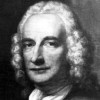
SGANARELLE: But when a great lord is a wicked man, it is a terrible thing.
[Mais un grand seigneur méchant homme est une terrible chose.]
Molière (1622–1673) French playwright, actor [stage name for Jean-Baptiste Poquelin]
Don Juan [Dom Juan], Act 1, sc. 1 (1665) [tr. Waller (1904)]
(Source)
(Source (French)). Other translations:But a great Lord, a wicked Man, is a terrible thing.
[tr. Clitandre (1672)]If a great lord is a wicked man it is a terrible thing.
[tr. Van Laun (1876)]But if a great lord is also a wicked man, it is a terrible thing.
[tr. Wall (1879)]But a wicked nobleman is a terrible thing.
[tr. Page (1908)]But a great lord who is a wicked man is a terrible thing.
[tr. Frame (1967)]But a wicked nobleman is a frightening master.
[tr. Bermel (1987)]But a great lord who's a wicked man is a frightening thing.
[tr. Wilbur (2001)]
Sometimes rendered "What a terrible thing to be a great lord, yet a wicked man," though I could not find a good source for that phrasing, which is also attributed to Carlos Castañeda.
Quotations about:
noble
Note not all quotations have been tagged, so Search may find additional quotes on this topic.

Virtuous love consists in decorous desire for the beautiful.
[Δίκαιος ἔρως ἀνυβρίστως ἐφίεσθαι τῶν καλῶν]
Democritus (c. 460 BC - c. 370 BC) Greek philosopher
Frag. 73 (Diels) [tr. Freeman (1948)]
(Source)
Diels citation "73. (87 N.) DEMOKRATES. 38."; collected in Joannes Stobaeus (Stobaios) Anthologium III, 5, 23. Freeman notes this as one of the Gnômae, from a collection called "Maxims of Democratês," but because Stobaeus quotes many of these as "Maxims of Democritus," they are generally attributed to the latter. Other translations:
- "Rightful love is longing without violence for the noble." [tr. Barnes (1987)]
- "Just lust is longing for noble things without arrogance." [tr. @sententiq (2018)]

Whenever a man does a thoroughly stupid thing, it is always from the noblest motives.
Oscar Wilde (1854–1900) Irish poet, wit, dramatist
The Picture of Dorian Gray, ch. 6 (1891)

Handsome is that handsome does.
Henry Fielding (1707–1754) English novelist, dramatist, satirist
A History of Tom Jones, a Foundling, Book 4, ch. 12 (1749)