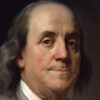
This Court sits to interpret, in appropriate judicial controversies, a Constitution which, in its Bill of Rights, formulates the conditions of a democracy. But democracy is the least static form of society. Its basis is reason, not authority. Formulas embodying vague and uncritical generalizations offer tempting opportunities to evade the need for continuous thought. But so long as men want freedom, they resist this temptation.
Felix Frankfurter (1882–1965) American jurist, teacher; US Supreme Court Justice (1939–62)
Pennekamp v. Florida, 328 U.S. 331, 350–351 (1946) [concurring]
(Source)
Quotations about:
abstraction
Note not all quotations have been tagged, so Search may find additional quotes on this topic.
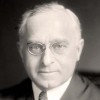
MARCUS: The power of separating the intellect from the senses, and reason from instinct, is characteristic of the highest genius.
[Magni autem est ingenii sevocare mentem a sensibus et cogitationem ab consuetudine abducere.]
Marcus Tullius Cicero (106–43 BC) Roman orator, statesman, philosopher
Tusculan Disputations [Tusculanae Disputationes], Book 1, ch. 16 (1.16) / sec. 38 (1.38) (45 BC) [ed. Harbottle (1897)]
(Source)
On being able to consider the immortality a disembodied soul without instinctively visualizing animate human bodies in an afterlife.
(Source (Latin)). Alternate translations:Now it is the part of a noble Wit, to call the Mind off from the Senses, and take it out of the common Road.
[tr. Wase (1643)]To withdraw the mind from sensual objects, and abstract our thoughts from what we are accustomed to, is the property of a great genius.
[tr. Main (1824)]But it is the part of great genius to call off the mind from the senses, and to abstract the thought from custom.
[tr. Otis (1839)]To withdraw the mind from sensual objects, and abstract our thoughts from what we are accustomed to, is an attribute of great genius.
[tr. Yonge (1853)]It is the work of surpassing genius to separate the mind from the senses, and to divert thought from its accustomed channels.
[tr. Peabody (1886)]Now it is an attribute of great genius; to distract the mind from the senses, and to withdraw the thoughts from every-day associations.
[tr. Black (1889)]It calls for great intelligence to separate the mind from the senses and to sever thought from mere habit.
[tr. Douglas (1985)]Still, it takes a great talent to isolate the mind from the senses and to redirect thought from its habitual patterns.
[tr. Habinek (1996)]Now, it requires considerable intelligence to separate the mind from the senses and to divide thought from mere habit.
[tr. Davie (2017)]
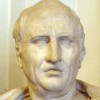
Almost everybody is deeply affected when some one he loves suffers from cancer. Most people are moved when they see the sufferings of unknown patients in hospitals. Yet when they read that the death-rate from cancer is such-and-such, they are as a rule only moved to momentary personal fear lest they or some one dear to them should acquire the disease. The same is true of war: people think it dreadful when their son or brother is mutilated, but they do not think it a million times as dreadful that a million people should be mutilated. A man who is full of kindliness in all personal dealings may derive his income from incitement to war or from the torture of children in “backward” countries.
All these familiar phenomena are due to the fact that sympathy is not stirred, in most people, by a merely abstract stimulus. A large proportion of the evils in the modern world would cease if this could be remedied.Bertrand Russell (1872–1970) English mathematician and philosopher
Education and the Good Life, Part 1, ch. 2 “The Aims of Education” (1926)
(Source)

The next stage in the development of a desirable form of sensitiveness is sympathy. There is a purely physical sympathy: a very young child will cry because a brother or sister is crying. This, I suppose, affords the basis for the further developments.
The two enlargements that are needed are: first, to feel sympathy even when the sufferer is not an object of special affection; secondly, to feel it when the suffering is merely known to be occurring, not sensibly present. The second of these enlargements depends mainly upon intelligence. It may only go so far as sympathy with suffering which is portrayed vividly and touchingly, as in a good novel; it may, on the other hand, go so far as to enable a man to be moved emotionally by statistics. This capacity for abstract sympathy is as rare as it is important.Bertrand Russell (1872–1970) English mathematician and philosopher
Education and the Good Life, Part 1, ch. 2 “The Aims of Education” (1926)
(Source)
This (in the penultimate sentence) appears to be the origin of phrases such as:Sometimes attributed to George Bernard Shaw or Oscar Wilde.
- "The of a truly intelligent person to be moved by statistics."
- "he mark of a civilized man is the ability to look at a column of numbers, and weep."
For more discussion, see: Quote Origin: It Is the Mark of a Truly Intelligent Person To Be Moved By Statistics – Quote Investigator®.
We are stubborn because we are narrow-minded; it is hard to believe what is beyond the scope of our vision.
[La petitesse de l’esprit fait l’opiniâtreté, et nous ne croyons pas aisément ce qui est au delà de ce que nous voyons.]
François VI, duc de La Rochefoucauld (1613–1680) French epigrammatist, memoirist, noble
Réflexions ou sentences et maximes morales [Reflections; or Sentences and Moral Maxims], ¶265 (1665-1678) [tr. Heard (1917), ¶273]
(Source)
This maxim was in the 1st (1665) edition (with the wording "... fait souvent l’opiniâtreté ...")
(Source (French)). Other translations:It is from a Weakness and Littleness of Soul, that Men are Stiff and Positive in their Opinions; and we are very loth to Believe, what we are not able to Comprehend, and make out to Our Selves.
[tr. Stanhope (1694), ¶266]Narrowness of mind is often the cause of obstinacy: we do not easily believe beyond what we see.
[pub. Donaldson (1783), ¶319; ed. Lepoittevin-Lacroix (1797), ¶248]Narrowness of mind is often the cause of obstinacy; we believe no farther than we can see.
[ed. Carvill (1835), ¶458]Narrowness of mind is the cause of obstinacy -- we do not easily believe what is beyond our sight.
[ed. Gowens (1851), ¶276]A narrow mind begets obstinacy, and we do not easily believe what we cannot see.
[tr. Bund/Friswell (1871), ¶265]Obstinacy of opinion is due to want of intelligence; we find it difficult to believe what is beyond our mental horizon.
[tr. Stevens (1939), ¶265]A small mind is a stubborn mind; it is hard to believe what lies beyond our field of vision.
[tr. FitzGibbon (1957), ¶265]A small mind becomes an obstinate mind: we find it hard to believe what lies beyond our understanding.
[tr. Kronenberger (1959), ¶265]Obstinacy comes from limited intelligence, and we do not readily believe what is beyond our field of vision.
[tr. Tancock (1959), ¶265]Narrowness of mind begets obstinacy; and we do not easily believe what we cannot see ourselves.
[tr. Whichello (2016) ¶]
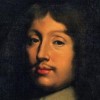
We are living, it seems, into the culmination of a long warfare — at first merely commercial and then industrial, always unabashedly violent — against human beings and other creatures, and of course against the earth itself. The purpose of this warfare has been to render the real goods of the world into various forms of abstract wealth: money, gold, shares, etc.
Wendell Berry (b. 1934) American farmer, educator, poet, conservationist
Speech (2005-05-14), Commencement, Lindsey Wilson College, Columbia, Kentucky
(Source)
This was either excerpted from, or included in, his undated essay "Letter to Daniel Kemmis," collected in The Way of Ignorance and Other Essays, Part 2 (2005).

PIERROT:I love
Humanity; but I hate people.Edna St. Vincent Millay (1892–1950) American poet
Play (1920), Aria da Capo
(Source)
Millay's comment on the socialist movement.
On the dogmas of religion as distinguished from moral principles, all mankind, from the beginning of the world to this day, have been quarrelling, fighting, burning and torturing one another, for abstractions unintelligible to themselves and to all others, and absolutely beyond the comprehension of the human mind. Were I to enter on that arena, I should only add an unit to the number of Bedlamites.
Thomas Jefferson (1743–1826) American political philosopher, polymath, statesman, US President (1801–09)
Letter (1816-11-11) to Matthew Carey
(Source)
Mistakenly identified in some sources as Archibald Carey.
Men differ daily, about things which are subject to Sense, is it likely then they should agree about things invisible.
Benjamin Franklin (1706–1790) American statesman, scientist, philosopher, aphorist
Poor Richard (1743 ed.)
(Source)