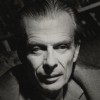
NARRATOR: And then one day, nearly two thousand years after one man had been nailed to a tree for saying how great it would be to be nice to people for a change a girl sitting on her own in a small cafe in Rickmansworth suddenly realized what it was that had been going wrong all this time, and she finally knew how the world could be made a good and happy place. This time it was right, it would work, and no one would have to get nailed to anything. Sadly however, before she could get to a phone to tell anyone, the Earth was unexpectedly demolished to make way for a new hyperspace bypass and so the idea was lost forever.
Douglas Adams (1952–2001) English author, humorist, screenwriter
Hitchhiker’s Guide to the Galaxy, Phase 1, “Fit the 2nd” (BBC Radio) (1978-03-15)
(Source)
Though in the second radio episode, when adapted into the book The Hitchhiker's Guide to the Galaxy (1979), this passage was moved into the Introduction:And then, one Thursday, nearly two thousand years after one man had been nailed to a tree for saying how great it would be to be nice to people for a change a girl sitting on her own in a small cafe in Rickmansworth suddenly realized what it was that had been going wrong all this time, and she finally knew how the world could be made a good and happy place. This time it was right, it would work, and no one would have to get nailed to anything.
Sadly however, before she could get to a phone to tell anyone, a terrible stupid catastrophe occurred, and the idea was lost forever.
Quotations about:
change the world
Note not all quotations have been tagged, so Search may find additional quotes on this topic.
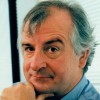
For ourselves and for the present, we are safe; our immediate peril is past. But for how long are we safe; and how far have we removed our peril? If our nation could not itself exist half slave and half free, are we sure that it can exist in a world half slave and half free? Is the same conflict less irrepressible when world wide than it was eighty years ago when it was only nation wide? Right knows no boundaries, and justice no frontiers; the brotherhood of man is not a domestic institution.
Learned Hand (1872–1961) American jurist
“A Pledge of Allegiance,” speech, Central Park, New York City (1945-05-20)
(Source)
His second "I Am an American Day" address. Collected in The Spirit of Liberty (1953).
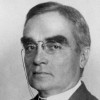
The encyclopedia is the only place in the world where World Domination comes before Work!
— The last words of Joaquin the Illiterate, just before he hit that big red button labeled Do Not Touch
Phil Foglio (b. 1956) American writer, cartoonist
Agatha H. and the Siege of Mechanicsburg (2020), ch. 3, Epigraph [with Kaja Foglio]
(Source)
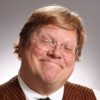
Here’s to the crazy ones — the misfits, the rebels, the troublemakers, the round pegs in the square holes, the ones who see things differently. They’re not fond of rules, and they have no respect for the status quo. You can quote them, disagree with them, glorify or vilify them. About the only thing you can’t do is ignore them, because they change things, they push the human race forward. While some may see them as the crazy ones, we see genius, because the people who are crazy enough to think that they can change the world are the ones who do.
Steve Jobs (1955–2011) American computer inventor, entrepreneur
“To the Crazy Ones,” TV advertisement (1997)
(Source)
Often cited as a quotation from Steve Jobs, this was an Apple advertisement developed by Chiat/Day under the direction of Jobs after his return to the company in 1997, under the campaign "Think Different." The ad and its text was created by Chiat/Day talent like Craig Tanimoto, Rob Siltanen, and Ken Segall. (For more information on the ad's development, see Siltanen's article.)
Jobs did narrate the text at least once, but the original 1997 ad was voiced by Richard Dreyfuss.
Note: nearly all transcripts say, "But the only thing you can't do ..." while the word voiced is "About the only thing you can't do ...."

When I was younger, I thought I could change this world. Now I no longer think so but for emotional reasons I must keep on fighting a holding action.
Robert A. Heinlein (1907–1988) American writer
Friday [Dr. Baldwin] (1982)
Power worship blurs political judgement because it leads, almost unavoidably, to the belief that present trends will continue. Whoever is winning at the moment will always seem to be invincible. […] This habit of mind leads also to the belief that things will happen more quickly, completely, and catastrophically than they ever do in practice. The rise and fall of empires, the disappearance of cultures and religions, are expected to happen with earthquake suddenness, and processes which have barely started are talked about as though they were already at an end.
George Orwell (1903–1950) English journalist, essayist, writer [pseud. of Eric Arthur Blair]
Essay (1946-05), “Second Thoughts on James Burnham,” Polemic Magazine
(Source)
Published separately as a pamphlet, James Burnham and the Managerial Revolution (1946).
And we must face the fact that the United States is neither omnipotent or omniscient — that we are only six percent of the world’s population — that we cannot impose our will upon the other ninety-four percent of mankind — that we cannot right every wrong or reverse each adversity — and that therefore there cannot be an American solution to every world problem.
John F. Kennedy (1917–1963) American politician, author, journalist, US President (1961–63)
Speech, University of Washington, Seattle (16 Nov 1961)
I wanted to change the world. But I have found that the only thing one can be sure of changing is oneself.
Aldous Huxley (1894–1963) English novelist, essayist and critic
Quoted in “Sayings of the Week,” The Observer (2 Jul 1961)
Not actually found in any of Huxley's published works, and this reference does not provide a source or situation where it was said.
For more discussion: I Wanted To Change the World. But I Have Found That the Only Thing One Can Be Sure of Changing Is Oneself – Quote Investigator®