

If I have all the eloquence of men or of angels, but speak without love, I am simply a gong booming or a cymbal clashing. If I have the gift of prophecy, understanding all the mysteries there are, and knowing everything, and if I have faith in all its fulness, to move mountains, but without love, then I am nothing at all. If I give away all that I possess, piece by piece, and if I even let them take my body to burn it, but am without love, it will do me no good whatever.
[Ἐὰν ταῖς γλώσσαις τῶν ἀνθρώπων λαλῶ καὶ τῶν ἀγγέλων, ἀγάπην δὲ μὴ ἔχω, γέγονα χαλκὸς ἠχῶν ἢ κύμβαλον ἀλαλάζον. καὶ ἐὰν ἔχω προφητείαν καὶ εἰδῶ τὰ μυστήρια πάντα καὶ πᾶσαν τὴν γνῶσιν καὶ ἐὰν ἔχω πᾶσαν τὴν πίστιν ὥστε ὄρη μεθιστάναι, ἀγάπην δὲ μὴ ἔχω, οὐθέν εἰμι. κἂν ψωμίσω πάντα τὰ ὑπάρχοντά μου καὶ ἐὰν παραδῶ τὸ σῶμά μου ἵνα καυχήσωμαι, ἀγάπην δὲ μὴ ἔχω, οὐδὲν ὠφελοῦμαι.]
The Bible (The New Testament) (AD 1st - 2nd C) Christian sacred scripture
1 Corinthians 13: 1-3 [JB (1966)]
(Source)
Various editions note that the final "if" varies between manuscripts as to whether it's to give up the body to be burned, or to do so to boast.
See Coffin (2004).
(Source (Greek)). Alternate translations:Though I speak with the tongues of men and of angels, and have not charity, I am become as sounding brass, or a tinkling cymbal. And though I have the gift of prophecy, and understand all mysteries, and all knowledge; and though I have all faith, so that I could remove mountains, and have not charity, I am nothing. And though I bestow all my goods to feed the poor, and though I give my body to be burned, and have not charity, it profiteth me nothing.
[KJV (1611)]Though I command languages both human and angelic -- if I speak without love, I am no more than a gong booming or a cymbal clashing. And though I have the power of prophecy, to penetrate all mysteries and knowledge, and though I have all the faith necessary to move mountains -- if I am without love, I am nothing. Though I should give away to the poor all that I possess, and even give up my body to be burned -- if I am without love, it will do me no good whatever.
[NJB (1985)]I may be able to speak the languages of human beings and even of angels, but if I have no love, my speech is no more than a noisy gong or a clanging bell. I may have the gift of inspired preaching; I may have all knowledge and understand all secrets; I may have all the faith needed to move mountains -- but if I have no love, I am nothing. I may give away everything I have, and even give up my body to be burned -- but if I have no love, this does me no good.
[GNT (1992 ed.)]If I speak in tongues of human beings and of angels but I don’t have love, I’m a clanging gong or a clashing cymbal. If I have the gift of prophecy and I know all the mysteries and everything else, and if I have such complete faith that I can move mountains but I don’t have love, I’m nothing. If I give away everything that I have and hand over my own body to feel good about what I’ve done but I don’t have love, I receive no benefit whatsoever.
[CEB (2011)]If I speak in the tongues of humans and of angels but do not have love, I am a noisy gong or a clanging cymbal. And if I have prophetic powers and understand all mysteries and all knowledge and if I have all faith so as to remove mountains but do not have love, I am nothing. If I give away all my possessions and if I hand over my body so that I may boast[a] but do not have love, I gain nothing.
[NRSV (2021 ed.)]
Quotations about:
prophecy
Note not all quotations have been tagged, so Search may find additional quotes on this topic.
The prophecies of Nostradamus consist of upwards of a thousand stanzas, each of four lines, and are to the full as obscure as the oracles of old. They take so great a latitude, both as to time and space, that they are almost sure to be fulfilled somewhere or other in the course of a few centuries.
Charles Mackay (1814-1889) Scottish poet, journalist, song writer
Memoirs of Extraordinary Popular Delusions and the Madness of Crowds, “Fortune-Telling” (1841)
(Source)
During seasons of great pestilence, men have often believed the prophecies of crazed fanatics, that the end of the world was come. Credulity is always greatest in times of calamity.
Charles Mackay (1814-1889) Scottish poet, journalist, song writer
Memoirs of Extraordinary Popular Delusions and the Madness of Crowds, “Modern Prophecies” (1841)
(Source)
SECOND APPARITION: Be bloody, bold, and resolute. Laugh to scorn
The power of man, for none of woman born
Shall harm Macbeth.William Shakespeare (1564-1616) English dramatist and poet
Macbeth, Act 4, sc. 1, l. 90ff (4.1.90-92) (1606)
(Source)

Take awl the prophecys that hav cum tew pass, and awl that hav caught on the center, and failed tew cum tew time, and make them up into an average, and yer will find, that buying stock, on the Codfish Bank ov Nufoundland, at 50 per cent, for a rise, iz, in comparison, a good spekulatiff bizziness.
[Take all the prophecies that have come to pass, and all that have caught on the center and failed to come to time, and make them up into an average, and you will find that buying stock on the codfish Bank of Newfoundland, at 50 percent, for a rise, is, in comparison, a good speculative business.]Josh Billings (1818-1885) American humorist, aphorist [pseud. of Henry Wheeler Shaw]
Everybody’s Friend, Or; Josh Billing’s Encyclopedia and Proverbial Philosophy of Wit and Humor, ch. 150 “Affurisms: Parboils” (1874)
(Source)
Ours is the crowning era foretold in prophecy;
Born of Time, a great new cycle of centuries
Begins. Justice returns to earth, the Golden Age
Returns, and its first-born comes down from heaven above.
Look kindly, chaste Lucina, upon this infant’s birth,
For with him shall hearts of iron cease, and hearts of gold
Inherit the whole earth — yes, Apollo reigns now.
[Ultima Cumaei venit iam carminis aetas;
magnus ab integro saeclorum nascitur ordo:
iam redit et Virgo, redeunt Saturnia regna;
iam nova progenies caelo demittitur alto.
Tu modo nascenti puero, quo ferrea primum
desinet ac toto surget gens aurea mundo,
casta fave Lucina: tuus iam regnat Apollo.]Virgil (70-19 BC) Roman poet [b. Publius Vergilius Maro; also Vergil]
Eclogues [Eclogae, Bucolics, Pastorals], No. 4 “Pollio,” l. 5ff (4.5-11) (42-38 BC) [tr. Day Lewis (1963)]
(Source)
Celebrating the birth of Saloninus, a boy born in the consulship of his father and Virgil's patron C. Asinius Pollio. Or, possibly, writing of Marcellus, son of Augustus. Or maybe just a lot of veiled references to Augustus himself. Or, say some, divine prophecy of the future Jesus Christ. Lots of theories; some summaries here and here.
References in the various translations are to (a) the prophetic Sybil of Cumae (near Naples); (b) the virgin goddess of Justice, Astraea, who left the world after the first Golden Age to become the constellation Virgo; (c) the goddess of birth, Lucina, who is also identified with Diana, the sister of Apollo.
(Source (Latin)). Alternate translations:And times great order now again is borne,
The maid returns, Saturnian Realms returne:
Now from high Heaven springs a new Progenie.
To th' infant chaste Lucina favouring be,
Who ending iron ages, through all Lands
Shall golden plant: thy Phoebus now commands.
[tr. Ogilby (1649)]The last great Age, foretold by sacred Rhymes,
Renews its finish'd Course, Saturnian times
Roll round again, and mighty years, begun
From their first Orb, in radiant Circles run.
The base degenerate Iron offspring ends;
A golden Progeny from Heav'n descends.
O chaste Lucina speed the Mother's pains,
And haste the glorious Birth; thy own Apollo reigns!
[tr. Dryden (1709)]Comes the last age, by Cumæ's maid foretold:
'Afresh the mighty line of years unroll'd,
The Virgin now, now Saturn's sway returns;
Now the blest globe a heaven-sprung Child adorns,
Whose genial power shall whelm earth's iron race,
And plant once more the golden in its place.
Thou, chaste Lucina, but that child sustain:
And, lo! disclosed thine own Apollo's reign!
[tr. Wrangham (1830)]The last era, of Cumæan song, is now arrived: The great series of ages begins anew. Now, too, returns the virgin Astræa, returns the reign of Saturn; now a new progeny is sent down from high heaven. Be thou but propitious to the infant boy, under whom first the iron age shall cease, and the golden age overall the world arise, O chaste Lucina; now thy own Apollo reigns.
[tr. Davidson (1854)]Come are those last days that the Sybil sang:
The ages' mighty march begins anew.
Now comes the virgin, Saturn reigns again:
Now from high heaven descends a wondrous race.
Thou on the newborn babe -- who first shall end
That age of iron, bid a golden dawn
Upon the broad world -- Lucina, smile:
Now thy Apollo reigns.
[tr. Calverley (c. 1871)]The last æra of Sibylline prophecy has come at last; a mighty cycle of ages is being born afresh. At length the maiden Astraea is returning; the happy reign of Saturn is returning; now a new and better race is descending from the realms on high. Do thou only, chaste Lucina, smile on the birth of the boy, under whose auspices the iron brood shall first begin to fail, and a golden race shall rise throughout the world: thine own Apollo is now on his throne.
[tr. Wilkins (1873)]See the last era of prophetic voice!
The world and its inhabitants rejoice.
With a fair offspring of celestial birth,
The reign of innocence returns to earth.
Apollo, fulgent god of beauteous dawn,
And chaste Diana, bless the glorious morn.
The iron age retires; the boy is born.
[tr. King (1882), l. 267ff]At last they dawn; those latter days, so long
Prefigured in the old Cumæan song:
Fresh as the dew of earth's primeval morn,
Of this great series the first age is born:
The lost Astraea greeting us again,
The olive, and the just Saturnian reign:
Already the first fruit is largely given,
And a new progeny descends from heaven,
The links of iron ages to destroy,
(Thou, virgin ever helpful, speed the boy)
And with a golden race to fill the way
From Nile to Thule: give him to the day,
Purest Lucina: circling time explains
The Sibyl, and thy own Apollo reigns.
[tr. Palmer (1883)]Now the last age by Cumæ's Sibyl sung
has come and gone, and the majestic roll
of circling centuries begins anew:
justice returns, returns old Saturn's reign,
with a new breed of men sent down from heaven.
Only do thou, at the boy's birth in whom
the iron shall cease, the golden race arise,
befriend him, chaste Lucina; 'tis thine own
Apollo reigns.
[tr. Greenough (1895)]The last era of Cumæan song, has now arrived: The great series of ages begins anew. Now, too, returns the virgin Astræa, the reign of Saturn returns; now a new race of men is being sent down from high heaven. And in a special degree, O chaste Lucina, be but propitious to the infant boy, under whom first the iron age shall cease, and the golden age arise over all the world; now your own brother Apollo reigns.
[tr. Bryce (1897)]Now is come the last age of the Cumæan prophecy: the great cycle of periods is born anew. Now returns the Maid, returns the reign of Saturn: now from high heaven a new generation comes down. Yet do thou at that boy's birth, in whom the iron race shall begin to cease, and the golden to arise over all the world, holy Lucina, be gracious; now thine own Apollo reigns.
[tr. Mackail (1899)]Now dawns the last age of Cumæan song!
Once more the circling centuries begin --
The Virgin reappears and Saturn reigns:
From heav'n descends a novel progeny;
Now to this child in whom the iron race
Throughout the world shall cease and turn to gold,
Extend thy aid, Lucina, chaste and kind,
For thy Apollo reigns.
[tr. Mackail/Cardew (1908)]Now come the world's last days, the age foretold
By Cumae's prophetess in sacred song.
The vast world-process brings a new-born time.
Once more the Virgin comes and Saturn's reign.
Behold a heaven-born offspring earthward hies! Holy Lucina, lend thy light and aid
The while this child is born before whose power
The iron race of mortals shall away,
And o'er this earth a golden people reign.
For blest Apollo is at last their king.
[tr. Williams (1915)]Now is come the last age of Cumaean song; the great line of the centuries begins anew. Now the Virgin returns, the reign of Saturn returns; now a new generation descends from heaven on high. Only do you, pure Lucina, smile on the birth of the child, under whom the iron brood shall at last cease and a golden race spring up throughout the world! Your own Apollo now is king!
[tr. Fairclough (Loeb) (1916)]The last age told by Cumae's seer is come,
A might roll of generations new
Is now arising. Justice now returns
And Saturn's realm, and from high heaven descends
A worthier race of men. Only do thou
Smile, chaste Lucina, on the infant boy,
With whom the iron age will pass away,
The golden age in all the earth be born;
For thine Apollo reigns.
[tr. Royds (1922)]We have reached the last era in Sibylline song. Time has conceived and the great Sequence of the Ages starts afresh. Justice, the Virgin, comes back to dwell with us, and the rule of Saturn is restored. The Firstborn of the New Age is already on his way from high heaven down to earth. With him, the Iron Race shall end and Golden Man inherit all the world. Smile on the Baby's birth, immaculate Lucina; your own Apollo is enthroned.
[tr. Rieu (1949)]At last approaches that era the Sibyl foreshadowed,
The centuries flower afresh in a great world-order,
Justice, the Virgin, returns, and the peace of Saturn;
Already the new race ventures from heights of heaven.
All that we ask, immaculate Mother of childbirth,
Is your smile on the baby born, who finally cancels
The breed of iron and fosters the golden-hearted
Throughout the world: your own Light-giver has triumphed!
[tr. Johnson (1960)]The last great age the Sybil told has come;
The new order of centuries is born;
The Virgin now returns; and the reign of Saturn;
The new generation now comes down from heaven.
Lucina, look with favor on this child,
-- Lucina, goddess, pure -- this child by whom
The Age of Iron gives way to the Golden Age.
Now is the time of your Apollo's reign.
[tr. Ferry (1999)]Now the last age of the Cumaean prophecy begins:
the great roll-call of the centuries is born anew:
now Virgin Justice returns, and Saturn’s reign:
now a new race descends from the heavens above.
Only favour the child who’s born, pure Lucina, under whom
the first race of iron shall end, and a golden race
rise up throughout the world: now your Apollo reigns.
[tr. Kline (2001)]
But, oh, how little they know, the omniscient seers.
What good are prayers and shrines to a person mad with love?
The flame keeps gnawing into her tender marrow hour by hour
and deep in her heart the silent wound lives on.
Dido burns with love — the tragic queen.[Heu vatum ignarae mentes! quid vota furentem,
quid delubra iuvant? Est mollis flamma medullas
interea, et tacitum vivit sub pectore volnus.
Uritur infelix Dido ….]Virgil (70-19 BC) Roman poet [b. Publius Vergilius Maro; also Vergil]
The Aeneid [Ænē̆is], Book 4, l. 65ff (4.65-68) (29-19 BC) [tr. Fagles (2006), l. 82ff]
(Source)
Of lovesick Dido.
(Source (Latin)). Alternate translations:Ah ignorant Priests, what availes temples, pray'r,
To ease th'inrag'd! whilst soft fire wastes her veins,
And in her breast, a silent wound remaines.
Unhappy Dido burnes ....
[tr. Ogilby (1649)]What priestly rites, alas! what pious art,
What vows avail to cure a bleeding heart!
A gentle fire she feeds within her veins,
Where the soft god secure in silence reigns.
[tr. Dryden (1697)]Alas, how ignorant the minds of seers! what can prayers, what can temples, avail a raging lover? The gentle flame preys all the while upon her vitals and the secret wound rankles in her breast. Unhappy dido burns ....
[tr. Davidson/Buckley (1854)]Alas! but seers are blind to day:
Can vows, can sacrifice allay
A frantic lover's smart?
The very marrow of her frame
Is turning all the while to flame,
The wound is at her heart.
Unhappy Dido! all ablaze ....
[tr. Conington (1866)]Alas, the ignorance
Of all prophetic lore! What vows, what shrines
Can help her raging love? The soft flame burns,
Meanwhile, the marrow of her life; the wound
Lives silently, and rankles 'neath her breast.
The unhappy Dido [...] with burning bosom ....
[tr. Cranch (1872), l. 85ff]Ah, witless souls of soothsayers! how may vows or shrines help her madness? all the while the subtle flame consumes her inly, and deep in her breast the wound is silent and alive.
[tr. Mackail (1885)]Woe's me! the idle mind of priests! what prayer, what shrine avails
The wild with love!—and all the while the smooth flame never fails
To eat her heart: the silent wound lives on within her breast:
Unhappy Dido burneth up ....
[tr. Morris (1900), l. 65ff]Blind seers, alas! what art
To calm her frenzy, now hath vow or shrine?
Deep in her marrow feeds the tender smart,
Unseen, the silent wound is festering in her heart.
Poor Dido burns ....
[tr. Taylor (1907), st. 9-10; l. 71ff]How blind the hearts of prophets be! Alas!
Of what avail be temples and fond prayers
to change a frenzied mind? Devouring ever,
love's fire burns inward to her bones; she feels
quick in her breast the viewless, voiceless wound.
[tr. Williams (1910)]Ah, blind souls of seers! Of what avail are vows or shrines to one wild with love? All the while the flame devours her tender heart-strings, and deep in her breast lives the silent wound. Unhappy Dido burns ....
[tr. Fairclough (1916)]Alas, poor blind interpreters! What woman
In love is helped by offerings or altars?
Soft fire consumes the marrow-bones, the silent
Wound grows, deep in the heart.
Unhappy Dido burns ....
[tr. Humphries (1951)]Ah, little the soothsayers know! What value have vows or shrines
For a woman wild with passion, the while love's flame eats into
Her gentle flesh and love's wound works silently in her breast?
So burns the ill-starred Dido ....
[tr. Day Lewis (1952)]But oh the ignorance of the augurs! How
can vows and altars help one wild with love?
Meanwhile the supple flame devours her marrow;
within her breast the silent wound lives on.
Unhappy Dido burns ....
[tr. Mandelbaum (1971), l. 86ff]Alas, what darkened minds have soothsayers!
What good are shrines and vows to maddened lovers?
The inward fire eats the soft marrow away,
And the internal wound bleeds on in silence.
Unlucky Dido, burning ...
[tr. Fitzgerald (1981), l. 91ff]But priests, as we know, are ignorant. What use are prayers and shrines to a passionate woman? The flame was eating the soft marrow of her bones and the wound lived quietly under her breast. Dido was on fire with love ....
[tr. West (1990)]Ah, the unknowing minds of seers! What use are prayers
or shrines to the impassioned? Meanwhile her tender marrow
is aflame, and a silent wound is alive in her breast.
Wretched Dido burns ....
[tr. Kline (2002)]But what do prophets know? How much can vows,
Or shrines, help a raging heart? Meanwhile the flame
Eats her soft marrow, and the wound lives,
Silent beneath her breast. Dido is burning.
[tr. Lombardo (2005)]But what can prophets know? What use are vows
and shrines to the obsessed? The flame devoured her soft marrow;
the silent wound throbbed in her heart.
Unhappy Dido burned.
[tr. Bartsch (2021)]
By applying conjecture to the countless delusions of drunk or crazy men we may sometimes deduce what appears to be a real prophecy; for who, if he shoots at a mark all day long, will not occasionally hit it? We sleep every night and there is scarcely ever a night when we do not dream; then do we wonder that our dreams come true sometimes? Nothing is so uncertain as a cast of dice and yet there is no one who plays often who does not sometimes make a Venus-throw and occasionally twice or thrice in succession. Then are we, like fools, to prefer to say that it happened by the direction of Venus rather than by chance? And if we are to put no trust in false visions at other times I do not see what especial virtue there is in sleep to entitle its false visions to be taken as true.
[Iam ex insanorum aut ebriorum visis innumerabilia coniectura trahi possunt, quae futura videantur. Quis est enim, qui totum diem iaculans non aliquando conliniet? Totas noctes dormimus, neque ulla est fere, qua non somniemus, et miramur aliquando id quod somniarimus evadere? Quid est tam incertum quam talorum iactus? Tamen nemo est quin saepe iactans Venerium iaciat aliquando, non numquam etiam iterum ac tertium. Num igitur, ut inepti, Veneris id impulsu fieri malumus quam casu dicere? Quodsi ceteris temporibus falsis visis credendum non est, non video, quid praecipui somnus habeat, in quo valeant falsa pro veris.]
Marcus Tullius Cicero (106-43 BC) Roman orator, statesman, philosopher
De Divinatione [On Divination], Book 2, ch. 59 (2.59) / sec. 121 (44 BC) [tr. Falconer (1923)]
(Source)
The "Venus throw" or "Point of Venus" was the highest-scoring throw in the Roman game of Tali, throwing four knucklebone dice to show one each of the four main sides (1, 3, 4, 6). (Source (Latin)). Alternate translation:From the visions of drunkards and madmen one might, doubtless, deduce innumerable consequences by conjecture, which might seem to be presages of future events. For what person who aims at a mark all day long will not sometimes hit it? We sleep every night; and there are very few on which we do not dream; can we wonder then that what we dream sometimes comes to pass? What is so uncertain as the cast of dice? and yet no one plays dice often without at times casting the point of Venus, and sometimes even twice or thrice in succession. Shall we, then, be so absurd as to attribute such an event to the impulse of Venus, rather than to the doctrine of chance? If then, on ordinary occasions, we are not bound to give credit to false appearances, I do not see why sleep should enjoy this special privilege, that its false seemings should be honoured as true realities.
[tr. Yonge (1853)]What is more uncertain than the fall of the dice? Yet everyone will occasionally throw the double six, if he throws often enough; nay, sometimes even twice or thrice running.
[Source]
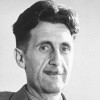
Nearly all creators of Utopia have resembled the man who has toothache, and therefore thinks happiness consists in not having toothache. They wanted to produce a perfect society by an endless continuation of something that had only been valuable because it was temporary. The wider course would be to say that there are certain lines along which humanity must move, the grand strategy is mapped out, but detailed prophecy is not our business. Whoever tries to imagine perfection simply reveals his own emptiness.
George Orwell (1903-1950) English journalist, essayist, writer [pseud. of Eric Arthur Blair]
“Can Socialists Be Happy?” Tribune (1943-12-20) [as John Freeman]
(Source)
Yet some men say in many parts of England that King Arthur is not dead, but had by the will of our Lord Jesu into another place; and men say that he shall come again, and he shall win the holy cross. I will not say it shall be so, but rather I will say, here in this world he changed his life. But many men say that there is written upon his tomb this verse: Hic jacet Arthurus Rex, quondam Rex que futurus.
[Here lies Arthur, the once and future king.]

And when matins and the first mass was done, there was seen in the churchyard, against the high altar, a great stone four square, like unto a marble stone; and in midst thereof was like an anvil of steel a foot on high, and therein stuck a fair sword naked by the point, and letters there were written in gold about the sword that said thus:—Whoso pulleth out this sword of this stone and anvil, is rightwise king born of all England.
For unto us a child is born, unto us a son is given; and the government shall be upon his shoulders; and his name shall be called Wonderful, Counsellor, the Mighty God, the everlasting Father, the Prince of Peace.
The Bible (The Old Testament) (14th - 2nd C BC) Judeo-Christian sacred scripture [Tanakh, Hebrew Bible], incl. the Apocrypha (Deuterocanonicals)
Isaiah 9: 6 [KJV (1611)]
(Source)
Alternate translations:For there is a child born for us, a son given to us and dominion is laid on his shoulders; and this is the name they give him: Wonder-Counsellor, Mighty-God, Eternal-Father, Prince-of-Peace.
[JB (1966), 9:5]A child is born to us!
A son is given to us!
And he will be our ruler.
He will be called, “Wonderful Counselor,”
“Mighty God,” “Eternal Father,”
“Prince of Peace.”
[GNT (1976)]For a child has been born for us,
a son given to us;
authority rests upon his shoulders,
and he is named
Wonderful Counselor, Mighty God,
Everlasting Father, Prince of Peace.
[NRSV (1989 ed.)]For a child has been born to us,
A son has been given us.
And authority has settled on his shoulders.
He has been named
“The Mighty God is planning grace;
The Eternal Father, a peaceable ruler.”
[RJPS (2023 ed.), 9:5]
The best Qualification of a Prophet is to have a good Memory.
George Savile, Marquis of Halifax (1633-1695) English politician and essayist
“Experience,” Political, Moral, and Miscellaneous Reflections (1750)
(Source)

Least and last of all should I undertake to criticise works on the Apocalypse. it is between 50. and 60. years since I read it, & I then considered it as merely the ravings of a Maniac, no more worthy, nor capable of explanation than the incoherences of our own nightly dreams.
Thomas Jefferson (1743-1826) American political philosopher, polymath, statesman, US President (1801-09)
Letter (1825-01-17) to Alexander Smyth
(Source)
On the Book of Revelation.
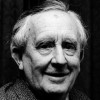
Seek for the Sword that was broken:
In Imladris it dwells;
There shall be counsels taken
Stronger than Morgul-spells.
There shall be shown a token
That Doom is near at hand,
For Isildur’s Bane shall waken,
And the Halfling forth shall stand.J.R.R. Tolkien (1892-1973) English writer, fabulist, philologist, academic [John Ronald Reuel Tolkien]
The Lord of the Rings, Vol. 1: The Fellowship of the Ring, Book 2, ch. 2 “The Council of Elrond” (1954)
(Source)
Boromir's prophetic dream, which brought him to Rivendell.
ELRIC: As I look at you, Ambassador Mollari, I see a great hand reaching out of the stars. The hand is your hand. And I hear sounds — the sounds of billions of people calling your name.
LONDO: My followers?
ELRIC: Your victims.J. Michael (Joe) Straczynski (b. 1954) American screenwriter, producer, author [a/k/a "JMS"]
Babylon 5, 2×03 “The Geometry of Shadows” (16 Nov 1994)

All that is gold does not glitter,
Not all those who wander are lost;
The old that is strong does not wither,
Deep roots are not reached by the frost.From the ashes a fire shall be woken,
A light from the shadows shall spring;
Renewed shall be blade that was broken,
The crownless again shall be king.J.R.R. Tolkien (1892-1973) English writer, fabulist, philologist, academic [John Ronald Reuel Tolkien]
The Lord of the Rings, Vol. 1: The Fellowship of the Ring, Book 1, ch. 7 “Strider” (1954)
(Source)
A poem by Bilbo, recorded in a letter from Gandalf to Frodo, referring to Aragorn. Bilbo later repeats the poem at the Council of Elrond.
See Herbert, Shakespeare.
The wolf also shall dwell with the lamb, and the leopard shall lie down with the kid; and the calf and the young lion and the fatling together; and a little child shall lead them.
The Bible (The Old Testament) (14th - 2nd C BC) Judeo-Christian sacred scripture [Tanakh, Hebrew Bible], incl. the Apocrypha (Deuterocanonicals)
Isaiah 11: 6 [KJV (1611)]
(Source)
Alternate translations:Wolves and sheep will live together in peace,
and leopards will lie down with young goats.
Calves and lion cubs will feed together,
and little children will take care of them.
[GNT (1976)]The wolf will live with the lamb, the panther lie down with the kid, calf, lion and fat-stock beast together, with a little boy to lead them.
[NJB (1985)]The wolf shall dwell with the lamb,
The leopard lie down with the kid;
The calf, the beast of prey, and the fatling together,
With a little boy to herd them.
[JPS (1985)]The wolf shall live with the lamb;
the leopard shall lie down with the kid;
the calf and the lion will feed together,
and a little child shall lead them.
[NRSV (1989 ed.)]
I am well aware of the Toil and Blood and Treasure, that it will cost Us to maintain this Declaration, and support and defend these States. — Yet through all the Gloom I can see the Rays of ravishing Light and Glory. I can see that the End is more than worth all the Means. And that Posterity will tryumph in that Days Transaction, even altho We should rue it, which I trust in God We shall not.
John Adams (1735–1826) American lawyer, Founding Father, statesman, US President (1797–1801)
Letter (1776-07-03, p.m.) to Abigail Adams
(Source)
In the original draft, the ending lines read: "And that Posterity will tryumph altho you and I may rue it which I trust in God We shall not."
Early printings of this letter (and that of the morning) changed the recipient to an unnamed male friend. They were used by some (given the date on them and references elsewhere in them) to argue that Independence Day should be celebrated on July 2nd; others published versions with the dates modified to align with a July 4th date for the holiday. The record was not clarified until Charles Francis Adams (grandson of John and Abigail) published a record of his grandparents' correspondence in 1876.
For the record, Independence was voted on and approved by the Continental Congress on 1776-07-02, and the final text of the Declaration of Independence approved and signed on 1776-07-04. Adams was writing on the day in-between.
REGAN: Jesters do oft prove prophets.
William Shakespeare (1564-1616) English dramatist and poet
King Lear, Act 5, sc. 3, l. 83 (5.3.83) (1606)
(Source)
Frequently misattributed (with "often" for "oft") to Joseph Addison.