Whether we and our politicians know it or not, Nature is party to all our deals and decisions, and she has more votes, a longer memory, and a sterner sense of justice than we do.
Wendell Berry (b. 1934) American farmer, educator, poet, conservationist
Endorsement blurb for Charles E. Little, The Dying of the Trees (1997)
(Source)
Quotations about:
public policy
Note not all quotations have been tagged, so Search may find additional quotes on this topic.

Seems to me it’s a simple concept — the concentration of wealth is a Bad Idea. Since capital tends to concentrate, it is one of the functions of government to oppose this tendency. That’s why we used to have antimonopoly laws and the like.
When you see government encouraging the concentration of wealth, check your wallet.Molly Ivins (1944-2007) American writer, political columnist [Mary Tyler Ivins]
Essay (1991-02), “Season of Drear,” The Progressive
(Source)

The true rule, in determining to embrace, or reject any thing, is not whether it have any evil in it; but whether it have more of evil, than of good. There are few things wholly evil, or wholly good. Almost every thing, especially of governmental policy, is an inseparable compound of the two; so that our best judgment of the preponderance between them is continually demanded.
Abraham Lincoln (1809-1865) American lawyer, politician, US President (1861-65)
Speech (1848-06-20), “Internal Improvements,” US House of Representatives, Washington, D.C.
(Source)
Speaking on internal improvements (infrastructure) as part of governmental policy. Taken from the copy of the speech Lincoln submitted to the Congressional Globe Appendix and the Illinois Journal (1848-07-20).

If all public questions were settled by shooting dice, fifty percent of them would be settled correctly. This would be five times as good a score as we make now.
H. L. Mencken (1880-1956) American writer and journalist [Henry Lewis Mencken]
A Little Book in C Major, ch. 3, § 19 (1916)
(Source)
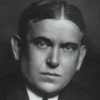
And from your policy do not wholly banish fear,
For what man living, freed from fear, will still be just?
Aeschylus (525-456 BC) Greek dramatist (Æschylus)
The Eumenides
There is no question in my mind that it is time for the country to become fairly radical for a generation. History shows that where this occurs occasionally, nations are saved from revolution.
Franklin Delano Roosevelt (1882-1945) American lawyer, politician, statesman, US President (1933-1945)
Letter (1930-05-12) to John A. Kingsbury
(Source)
All men in whose character there is not an element of hardened baseness must admit the need in our public life of those qualities which we somewhat vaguely group together when we speak of “reform,” and all men of sound mind must also admit the need of efficiency.
There are, of course, men of such low moral type, or of such ingrained cynicism, that they do not believe in the possibility of making anything better, or do not care to see things better. There are also men who are slightly disordered mentally, or who are cursed with a moral twist which makes them champion reforms less from a desire to do good to others than as a kind of tribute to their own righteousness, for the sake of emphasizing their own superiority. From neither of these classes can we get any real help in the unending struggle for righteousness.
There remains the great body of the people, including the entire body of those through whom the salvation of the people must ultimately be worked out. All these men combine or seek to combine in varying degrees the quality of striving after the ideal, that is, the quality which makes men reformers, and the quality of so striving through practical methods — the quality which makes men efficient. Both qualities are absolutely essential. The absence of either makes the presence of the other worthless or worse.
The effect of the religious freedom Amendment to our Constitution was to take every form of propagation of religion out of the realm of things which could directly or indirectly be made public business, and thereby be supported in whole or in part at taxpayers’ expense. That is a difference which the Constitution sets up between religion and almost every other subject matter of legislation, a difference which goes to the very root of religious freedom and which the Court is overlooking today. This freedom was first in the Bill of Rights because it was first in the forefathers’ minds; it was set forth in absolute terms, and its strength is its rigidity. It was intended not only to keep the states’ hands out of religion, but to keep religion’s hands off the state, and, above all, to keep bitter religious controversy out of public life by denying to every denomination any advantage from getting control of public policy or the public purse.
Robert H. Jackson (1892-1954) US Supreme Court Justice (1941-54), lawyer, jurist, politician
Everson v. Board of Education, 330 U.S. 1, 26-27 (1947) [dissent]
(Source)