Take care not to attain victories over your superior. — All conquest is detested, and to conquer your master is either a folly or a calamity. All superiority is abominated; how much more superiority over superiority.
[Excusar victorias del patrón. Todo vencimiento es odioso, y del dueño, o necio, o fatal. Siempre la superioridad fue aborrecida, cuanto más de la misma superioridad.]
Baltasar Gracián y Morales (1601–1658) Spanish Jesuit priest, writer, philosopher
The Art of Worldly Wisdom [Oráculo Manual y Arte de Prudencia], § 7 (1647) [tr. Duff (1877)]
(Source)
(Source (Spanish)). Alternate translations:To have a care not to outdoe ones Master. All Superiority is odious, but in a Subject over his Prince, it is ever foolish, or fatal.
[Flesher ed. (1685)]Avoid Victories over Superiors. All victories breed hate, and that over your superior is foolish or fatal. Superiority is always detested, à fortiori superiority over superiority.
[tr. Jacobs (1892)]Avoid outshining the master. All victory is odious but victory over the master, either the part of stupidity, or of fate. Superiority has always been detested, and most thoroughly when greatest.
[tr. Fischer (1937)]Don't outshine your boss. Being defeated is hateful, and besting one's boss is either foolish or fatal. Superiority is always odiouis, especially to superiors and sovereigns.
[tr. Maurer (1992)]
Quotations about:
superior
Note not all quotations have been tagged, so Search may find additional quotes on this topic.

Shall I tell you the secret of the true scholar? It is this: Every man I meet is my master in some point, and in that I learn of him.
Ralph Waldo Emerson (1803–1882) American essayist, lecturer, poet
“Greatness,” Letters and Social Aims (1876)
(Source)
This appears to be the origin of the much more common paraphrase (not found in Emerson's works, but popularized by Dale Carnegie in How to Win Friends and Influence People (1936)): "In my walks, every man I meet is my superior in some way, and in that, I learn from him."

Pedantry is properly the over-rating of any kind of knowledge we pretend to.
Jonathan Swift (1667–1745) English writer and churchman
A Treatise on Good Manners and Good Breeding (1754)

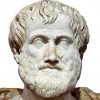
Again, the male is by nature superior, and the female inferior; and the one rules, and the other is ruled; this principle, of necessity, extends to all mankind.
Aristotle (384–322 BC) Greek philosopher
Politics [Πολιτικά], Book 1, ch. 5 / 1254b [tr. B. Jowett (1885)]
(Source)
Aristotle is arguing that there is a natural distinction between the rulers and ruled, starting first with animals, then with sex. Other translations:
- "Again, the relation of male to female is naturally that of superior and inferior, ruling and ruled, and the same kind of relation must necessarily exist in the case of all men generally." [tr. Bolland (1877)]
- "So is it naturally with the male and the female; the one is superior, the other inferior; the one governs, the other is governed; and the same rule must necessarily hold good with respect to all mankind." [tr. Ellis (1912)]
- "Again, as between the sexes, the male is by nature superior and the female inferior, the male ruler and the female subject. And the same must also necessarily apply in the case of mankind as a whole." [tr. Rackham (1932)]
- "Further, the relation of male to female is by nature a relation of superior to inferior and ruler to ruled. The same must of necessity hold in the case of human being generally." [tr. Lord (1984)]
For such is the nature of men that howsoever they may acknowledge many others to be more witty, or more eloquent or more learned, yet they will hardly believe there be many so wise as themselves; for they see their own wit at hand, and other men’s at a distance.

A person who is nice to you, but rude to the waiter, is not a nice person.
Dave Barry (b. 1947) American humorist, author, columnist
“25 Things I Have Learned In 50 Years,” #21 (1997)

I admire men of character, and I judge character not by how men deal with their superiors, but mostly how they deal with their subordinates, and that, to me, is where you find out what the character of a man is.
Norman Schwarzkopf (1934–2012) American military leader
Journal-World (27 March 1991)