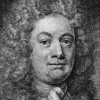
That was the pattern of school life — a continuous triumph of the strong over the weak. Virtue consisted in winning: it consisted in being bigger, stronger, handsomer, richer, more popular, more elegant, more unscrupulous than other people — in dominating them, bullying them, making them suffer pain, making them look foolish, getting the better of them in every way. Life was hierarchical and whatever happened was right. There were the strong, who deserved to win and always did win, and there were the weak, who deserved to lose and always did lose, everlastingly.
George Orwell (1903–1950) English journalist, essayist, writer [pseud. of Eric Arthur Blair]
Essay (1948-06), “‘Such, Such Were the Joys …’,” sec. 5, Partisan Review (1952-09)
(Source)
This autobiographical essay was drafted around 1939, revised around 1946, and then completed in May or June of 1948. Collected in Such, Such Were the Joys, essay 8 (1953), though the full, unredacted version was not published until 2000.
Quotations about:
zero-sum game
Note not all quotations have been tagged, so Search may find additional quotes on this topic.
I said to God, “What are they doing?”
God said, “Making pitfalls into which their fellows may sink.”
I said to God, “Why do they do it?”
God said, “Because each thinks that when his brother falls he will rise.”Olive Schreiner (1855–1920) South African author, political activist, intellectual, freethinker
“The Sunlight Lay Across My Bed,” Dreams (1890)
(Source)
Describing Hell.

But the best state for human nature is that in which, while no one is poor, no one desires to be richer, nor has any reason to fear being thrust back, by the efforts of others to push themselves forward.
John Stuart Mill (1806–1873) English philosopher and economist
Principles of Political Economy, Book 4, ch. 6 (1871)
(Source)
In any country, regardless of what its laws say, wherever people act upon the idea that the disadvantage of one man is the good of another, there slavery exists. Wherever, in any country the whole people feel that the happiness of all is dependent upon the happiness of the weakest, there freedom exists.
Booker T. Washington (1856–1915) American educator, writer
Speech, Republican Club, New York City (12 Feb 1909)
(Source)
The real “haves” are they who can acquire freedom, self-confidence, and even riches without depriving others of them. They acquire all of these by developing and applying their potentialities.
On the other hand, the real “have nots” are those who cannot have aught except by depriving others of it. They can feel free only by diminishing the freedom of others, self-confident by spreading fear and dependence among others, and rich by making others poor.Eric Hoffer (1902–1983) American writer, philosopher, longshoreman
Passionate State of Mind, Aphorism 115 (1955)
(Source)
Comparison, more than Reality, makes Men happy or wretched.
Thomas Fuller (1654–1734) English physician, preacher, aphorist, writer
Gnomologia: Adages and Proverbs (compiler), # 1133 (1732)
(Source)