Blessed are the forgetful: for they “get the better” even of their blunders.
[Selig sind die Vergesslichen: denn sie werden auch mit ihren Dummheiten “fertig”.]
Friedrich Nietzsche (1844–1900) German philosopher and poet
Jenseits von Gut und Böse [Beyond Good and Evil], Aphorism 217 (1886) [tr. Zimmern (1906)]
(Source)
Quoted by Mary Svevo (Kirsten Dunst) in Eternal Sunshine of the Spotless Mind (2004). The character says she found it in Bartlett's.
(Source (German)). Other translations:Blessed are the forgetful: for they get over their stupidities.
[tr. Kaufmann (1966)]Blessed are the forgetful: for they shall "have done" with their stupidities too.
[tr. Hollingdale (1973, 1990)]Blessed are the forgetful, for they are "done" with their stupidities as well.
[tr. Johnston]
Quotations about:
forgetfulness
Note not all quotations have been tagged, so Search may find additional quotes on this topic.
CALVIN’S DAD: Why is it I can recall a cigarette ad jingle from 25 years ago, but I can’t remember what I just got up to do?

Memory is a net; one finds it full of fish when he takes it from the brook; but a dozen miles of water have run through it without sticking.
WENDY: Oh! Peter, when Captain Hook carried us away —
PETER: Who’s Captain Hook? Is it a story? Tell it me.
WENDY: (aghast) Do you mean to say you’ve even forgotten Captain Hook, and how you killed him and saved all our lives?
PETER: (fidgeting) I forget them after I kill them.
J. M. Barrie (1860–1937) Scottish novelist and dramatist [James Matthew Barrie]
When Wendy Grew Up — An Afterthought (1908, publ. 1957)
(Source)
Most of When Wendy Grew Up was eventually folded into the evolving main play, Peter Pan, or The Boy Who Wouldn't Grow Up, Act 5 (first performed in 1904, eventually published in 1928), though these lines were not included.
In Barrie's 1911 novelization, Peter and Wendy, ch. 17 "When Wendy Grew Up," this is rendered:She had looked forward to thrilling talks with him about old times, but new adventures had crowded the old ones from his mind.
“Who is Captain Hook?” he asked with interest when she spoke of the arch enemy.
“Don’t you remember,” she asked, amazed, “how you killed him and saved all our lives?”
“I forget them after I kill them,” he replied carelessly.
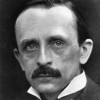
That’s the characteristic of our country. We can get all lathering at the time over some political campaign promise, or some conference pledge, but if the thing just drags along long enough we forget what it was that originally promised. The short memories of the American voters is what keeps our politicians in office.
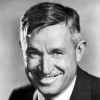
I have no wish to remember everything. There are many things in most men’s lives that had better be forgotten. There is that time, many years ago, when we did not act quite as honorably, quite as uprightly, as we perhaps should have done — that unfortunate deviation from the path of strict probity we once committed, and in which, more unfortunate still, we were found out — that act of folly, of meanness, of wrong. Ah, well! we paid the penalty, suffered the maddening hours of vain remorse, the hot agony of shame, the scorn, perhaps, of those we loved. Let us forget.
Jerome K. Jerome (1859–1927) English writer, humorist [Jerome Klapka Jerome]
Idle Thoughts of an Idle Fellow, “On Memory” (1886)
(Source)
First published in Home Chimes (1885-09-26).

If you forget the victims
of yesterday’s sorrow
you could become
a victim of tomorrow.Yevgeny Yevtushenko (1933–2017) Russian poet, writer, film director, academic [Евге́ний Евтуше́нко, Evgenij Evtušenko]
“Fuku,” Almost at the End (1987) [tr. Bouis]
(Source)
First printed, in Russian, in Novyi mir, No. 9 (1985). In "Yevtushenko: A Soviet Poet Turns to Movie Making," New York Times (2 Feb 1986), Yevtushenko translates it himself as:He who forgets the victims of yesterday, may become the victim of tomorrow.

Our memories are card-indexes consulted and then put back in disorder by authorities whom we do not control.
Cyril Connolly (1903–1974) English intellectual, literary critic and writer.
The Unquiet Grave, Part 3 “La Clé des Chants” (1944)
(Source)
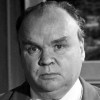
The trouble about man is twofold. He cannot learn truths which are too complicated; he forgets truths which are too simple.
Rebecca West (1892–1983) British author, journalist, literary critic, travel writer [pseud. for Cicily Isabel Fairfield]
The Meaning of Treason, Epilogue (1947)
(Source)

One of the keys to happiness is a bad memory.
Rita Mae Brown (b. 1944) American author, playwright
(Attributed)

Many of the ugly pages of American history have been obscured and forgotten. A society is always eager to cover misdeeds with a cloak of forgetfulness, but no society can fully repress an ugly past when the ravages persist into the present. America owes a debt of justice which it has only begun to pay. If it loses the will to finish or slackens in its determination, history will recall its crimes and the country that would be great will lack the most indispensable element of greatness — justice.
Martin Luther King, Jr. (1929–1968) American clergyman, civil rights leader, social activist, preacher
Where Do We Go from Here: Chaos or Community? (1967)
(Source)
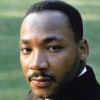
Sleep, ignorant of pain, sleep, ignorant of grief, may you come to us blowing softly, kindly, kindly come, king.
Sophocles (496–406 BC) Greek tragic playwright
Philoctetes, l. 827.
(Source)
Other translations: "Come, blowing softly, Sleep, that know'st not pain, / Sleep, ignorant of grief, / Come softly, surely, kingly sleep, and bless ...." [E. H. Plumptre (1871)]