

Let no one delay to study philosophy while he is young, and when he is old let him not become weary of the study; for no man can ever find the time unsuitable or too late to study the health of his soul. And he who asserts either that it is not yet time to philosophize, or that the hour is passed, is like a man who should say that the time is not yet come to be happy, or that it is too late.
[Μήτε νέος τις ὢν μελλέτω φιλοσοφεῖν, μήτε γέρων ὑπάρχων κοπιάτω φιλοσοφῶν: οὔτε γὰρ ἄωρος οὐδείς ἐστιν οὔτε πάρωρος πρὸς τὸ κατὰ ψυχὴν ὑγιαῖνον. ὁ δὲ λέγων ἢ μήπω τοῦ φιλοσοφεῖν ὑπάρχειν ἢ παρεληλυθέναι τὴν ὥραν ὅμοιός ἐστι τῷ λέγοντι πρὸς εὐδαιμονίαν ἢ μήπω παρεῖναι τὴν ὥραν ἢ μηκέτι εἶναι τὴν ὥραν.]
Diogenes Laërtius (fl. 3rd C AD) Greek biographer [Διογένης Λαέρτιος]
Lives and Opinions of Eminent Philosophers, Book 10, “Epicurus,” sec. 122 (3rd C AD) [tr. Yonge (1915), ch. 27]
(Source)
Letter from Epicurus to Menoeceus. (Source (Greek)). Other translations:Let no Man that is Young delay the Study of Philosophy, nor when he is Old, be weary of Philosophers. For no Man can be too early, nor no Man past his Time, in what concerns the Health of the Soul. For he that says, 'tis not yet time to study Philosophy, or that he has past his time, is like to him who says, that the time to attain Happiness is past, or is not yet come.
[tr. Kippmax (1696)]Let no one be slow to seek wisdom when he is young nor weary in the search thereof when he is grown old. For no age is too early or too late for the health of the soul. And to say that the season for studying philosophy has not yet come, or that it is past and gone, is like saying that the season for happiness is not yet or that it is now no more.
[tr. Hicks (Loeb) (1925), sec. 122]No one is to delay studying philosophy in their youth or to weary of it in old age. For no one is either too young or too old to be healthy of soul. Anyone who says it's either too soon or too late to study philosophy is like someone who says it's too soon or too late for happiness.
[tr. White (2020), sec. 122]
Quotations about:
too late
Note not all quotations have been tagged, so Search may find additional quotes on this topic.

SALISBURY: O, call back yesterday, bid time return ….
William Shakespeare (1564–1616) English dramatist and poet
Richard II, Act 3, sc. 2, l. 70 (3.2.50) (1595)
(Source)
Telling Richard it would have been great if the king had returned from his Irish wars a day earlier, because yesterday his waiting army of Welshmen went over to Bolingbroke's side, having heard a rumor that Richard was dead.

The time to begin most things is ten years ago.
Mignon McLaughlin (1913–1983) American journalist and author
The Second Neurotic’s Notebook, ch. 5 (1966)
(Source)

It’s but little good you’ll do a-watering the last year’s crop.
George Eliot (1819–1880) English novelist [pseud. of Mary Ann Evans]
Adam Bede, ch. 18 [Mrs. Poyser] (1859)
(Source)
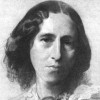
EXPERIENCE, n. The wisdom that enables us to recognize as an undesirable old acquaintance the folly that we have already embraced.
Ambrose Bierce (1842–1914?) American writer and journalist
“Experience,” The Cynic’s Word Book (1906)
(Source)
Included in The Devil's Dictionary (1911). Originally published in the "Devil's Dictionary" column in the San Francisco Wasp (1884-06-07).

A resolution to avoid an evil is seldom framed till the evil is so far advanced as to make avoidance impossible.
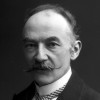
You can’t go back and change the beginning, but you can start where you are and change the ending.
C. S. Lewis (1898–1963) English writer, literary scholar, lay theologian [Clive Staples Lewis]
(Spurious)
Not found in Lewis' writings, and not considered authentic. There is some similarity to this Lewis quotation. More discussion here:
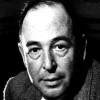
there are worse things than
being alone
but it often takes decades
to realize this
and most often
when you do
it’s too late
and there’s nothing worse
than
too late.Charles Bukowski (1920–1994) German-American author, poet
“Oh Yes,” You Get So Alone At Times That It Just Makes Sense (1986)
(Source)
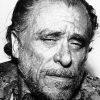
We are all at a wonderful ball where the champagne sparkles in every glass and soft laughter falls upon the summer air. We know, by the rules, that at some moment the Black Horsemen will come shattering through the great terrace doors, wreaking vengeance and scattering the survivors. Those who leave early are saved, but the ball is so splendid no one wants to leave while there is still time, so that everyone keeps asking, “What time is it? What time is it?” but none of the clocks have any hands.
George Goodman (1930–2014) American author, economics broadcast commentator [pseud. Adam Smith]
Supermoney, Part 3, ch. 2 (1972)
(Source)
An explanation he gave to a "mass-circulation magazine" about the stock bubble in 1968. He later incorporated a variation of the story in a republication of his 1968 The Money Game:We are all at a wonderful party, and by the rules of the game we know that at some point in time the Black Horsemen will burst through the great terrace doors to cut down the revelers; those who leave early may be saved, but the music and wines are so seductive that we do not want to leave, but we do ask, "What time is it? What time is it?" Only none of the clocks have any hands.
Oh why do we not say the important things, it would be so easy, and we are damned because we do not.
Bertolt Brecht (1898–1956) German poet, playwright, director, dramaturgist
“Song about my mother [Lied von meiner Mutter],” from “Thirteen Psalms” (1920) [tr. Middleton]
It is never too late to do right.
Ralph Waldo Emerson (1803–1882) American essayist, lecturer, poet
Letter to Elizabeth Tucker (1832-02-01)
Counsel is irksome when the Matter is past Remedy.
Thomas Fuller (1654–1734) English physician, preacher, aphorist, writer
Gnomologia: Adages and Proverbs (compiler), # 1181 (1732)
(Source)

FORD: Better three hours too soon than a minute too late.
William Shakespeare (1564–1616) English dramatist and poet
Merry Wives of Windsor, Act 2, sc. 2, l. 319 (2.2.319) (1597)
(Source)
Come, my friends.
‘Tis not too late to seek a newer world.
Push off, and sitting well in order smite
The sounding furrows; for my purpose holds
To sail beyond the sunset, and the baths
Of all the western stars, until I die.
We learn geology the morning after the earthquake.
Ralph Waldo Emerson (1803–1882) American essayist, lecturer, poet
Essay (1860), “Considerations by the Way,” The Conduct of Life, ch. 7
(Source)
Based on a course of lectures by that name first delivered in Pittsburg, 1851-03.