“Lucky we know the forest so well, or we might get lost,” said Rabbit half an hour later, and he gave the careless laugh which you give when you know the Forest so well that you can’t get lost.
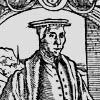
A. A. Milne (1882–1956) English poet and playwright [Alan Alexander Milne]
House at Pooh Corner, ch. 7 “Tigger Is Unbounced” (1928)
(Source)
Quotations about:
devil-may-care
Note not all quotations have been tagged, so Search may find additional quotes on this topic.
A verse of the dreadful song with which on the Never Land the pirates stealthily trumpet their approach —
Yo ho, yo ho, the pirate life,
The flag of skull and bones,
A merry hour, a hempen rope,
And hey for Davy Jones![…] They continue their distasteful singing as they disembark —
Avast, belay, yo ho, heave to,
A-pirating we go,
And if we’re parted by a shot
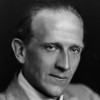
We’re sure to meet below!J. M. Barrie (1860–1937) Scottish novelist and dramatist [James Matthew Barrie]
Peter Pan, Act 2 (1904, pub. 1928)
Background text in the play, in two parts of the act.
In Barrie's 1911 novelization, Peter and Wendy, ch. 5 "The Island Come True," this is rendered (in two parts) with the verses reversed:We hear them before they are seen, and it is always the same dreadful song:
“Avast belay, yo ho, heave to,
A-pirating we go,
And if we’re parted by a shot
We’re sure to meet below!”
[...] You or I, not being wild things of the woods, would have heard nothing, but they heard it, and it was the grim song:
“Yo ho, yo ho, the pirate life,
The flag o’ skull and bones,
A merry hour, a hempen rope,
And hey for Davy Jones.”
Let the world slide, let the world go:
A fig for care, and a fig for woe!
If I can’t pay, why, I can owe;
And death makes equal the high and low.
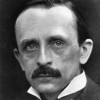
Be merry, friends!John Heywood (1497?-1580?) English playwright and epigrammist
Ballad (1576), “Be Merry Friends,” st. 17
(Source)
Collected in John Payne Collier (ed.), A Book of Roxburghe Ballads (1847), which includes more history about it.
This quote from the final stanza of the ballad (as reconstructed) was popularized when quoted in Bartlett's Familiar Quotations, 5th Ed. (1870) and subsequent editions.
The ballad also shows up in a collection of James Orchard Halliwell (ed.), The Moral Play of Wit and Science (1848) for the Shakespeare Society. This has an earlier version of the ballad, which does not include this stanza. (It also wavers in spelling between "mery" / "merye" and "frends" / "freendes.") This is in turn endnoted with five contemporary English stanzas, replacing the last two given, which includes that quoted above.
"Let the world slide" is used by the Beggar (Sly) in Shakespeare's Taming of the Shrew, Induction, sc. 1 (c. 1590).