I feel like I was walking across Nevada, like the pioneers, carrying a lot of stuff I need, but as I go along I have to keep dropping off things. I had a piano once but it got swamped at a crossing of the Platte. I had a good frypan but it got too heavy and I left it in the Rockies. I had a couple ovaries but they wore out around the time we were in the Carson Sink. I had a good memory but pieces of it keep dropping off, have to leave them scattered around in the sage brush, on the sand hills.
Quotations about:
letting go
Note not all quotations have been tagged, so Search may find additional quotes on this topic.

BALTHAZAR: Sigh no more, ladies, sigh no more,
Men were deceivers ever,
One foot in sea and one on shore,
To one thing constant never.
Then sigh not so, but let them go,
And be you blithe and bonny,
Converting all your sounds of woe
Into Hey, nonny nonny.William Shakespeare (1564–1616) English dramatist and poet
Much Ado About Nothing, Act 2, sc. 3, l. 64ff (2.3.64-71) (1598)
"Hey, nonny nonny" was a nonsense refrain popular in English music during the Elizabethan era; in context here, it means stop grieving over the guy that dumped you and put that effort instead into some merry-making and song. Music historian Ross Duffin believes the form of Balthazar's tune fits a popular song of the Tudor period, "The Lusty Gallant."

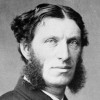
Yet they, believe me, who await
No gifts from chance, have conquered fate.Matthew Arnold (1822–1888) English poet and critic
“Resignation,” The Strayed Reveller and Other Poems (1848)
(Source)
To live in this world
you must be able
to do three things:
to love what is mortal;
to hold itagainst your bones knowing
your own life depends on it;
and, when the time comes to let it go,
to let it go.Mary Oliver (1935–2019) American poet
“In Blackwater Woods,” st. 7-9, American Primitive (1983)
(Source)
Originally published in Yankee Magazine.

Drop the last year into the silent limbo of the past. Let it go, for it was imperfect, and thank God that it can go.
Brooks Atkinson (1894–1984) American drama critic and journalist
Once Around the Sun, “December 31” (1951)
(Source)
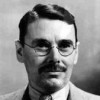
I am not ready to die,
But I am learning to trust death
As I have trusted life.
I am moving
Toward a new freedom
Born of detachment,
And a sweeter grace —
Learning to let go.May Sarton (1912–1995) Belgian-American poet, novelist, memoirist [pen name of Eleanore Marie Sarton]
“Gestalt at Sixty,” sec. 3 (1972)
(Source)

[I]t was followed by a long scream of rage mixed with a roar of complaint: “AAaargwannawannaaaagongongonaargggaaaaBLOON!” which is the traditional sound of a very small child learning that with balloons, as with life itself, it is important to know when not to let go of the string. The whole point of balloons is to teach small children this.
Terry Pratchett (1948–2015) English author
Discworld No. 32, A Hat Full of Sky, ch. 11 “Arthur” (2004)
(Source)
This is apparently the origin of the much more frequently found paraphrase:There are times in life when people must know when not to let go. Balloons are designed to teach small children this.
This shorter form has been used, among other places, in a Change.org petition to Death to reinstate Pratchett after the author's passing. It is possible Pratchett may have used it somewhere else, but I am unable to find it (it does not show up in the alt.fan.pratchett board in any message from him).
See also Cox.

Let the world slide, let the world go:
A fig for care, and a fig for woe!
If I can’t pay, why, I can owe;
And death makes equal the high and low.
Be merry, friends!John Heywood (1497?-1580?) English playwright and epigrammist
Ballad (1576), “Be Merry Friends,” st. 17
(Source)
Collected in John Payne Collier (ed.), A Book of Roxburghe Ballads (1847), which includes more history about it.
This quote from the final stanza of the ballad (as reconstructed) was popularized when quoted in Bartlett's Familiar Quotations, 5th Ed. (1870) and subsequent editions.
The ballad also shows up in a collection of James Orchard Halliwell (ed.), The Moral Play of Wit and Science (1848) for the Shakespeare Society. This has an earlier version of the ballad, which does not include this stanza. (It also wavers in spelling between "mery" / "merye" and "frends" / "freendes.") This is in turn endnoted with five contemporary English stanzas, replacing the last two given, which includes that quoted above.
"Let the world slide" is used by the Beggar (Sly) in Shakespeare's Taming of the Shrew, Induction, sc. 1 (c. 1590).