THE DOCTOR: They’re coming. The angels are coming for you, but listen, your life could depend on this: don’t blink. Don’t even blink. Blink and you’re dead. They are fast, faster than you could believe. Don’t turn your back, don’t look away, and don’t blink!
Steven Moffat (b. 1961) Scottish television writer, producer
Doctor Who (2005), 03×10 “Blink” (2007-06-09)
(Source)
Quotations about:
speed
Note not all quotations have been tagged, so Search may find additional quotes on this topic.

No speed of wind or water rushing by
But you have a speed far greater. You can climb
Back up a stream of radiance to the sky,
And back through history up the stream of time.
And you were given this swiftness, not for haste
Nor chiefly that you may go where you will.
But in the rush of everything to waste,
That you may have the power of standing still—
Off any still or moving thing you say.
Two such as you with a master speed
Cannot be parted nor be swept away
From one another once you are agreed
That life is only life forevermore
Together wing to wing and oar to oar.Robert Frost (1874-1963) American poet
“The Master Speed” (1934)
(Source)
Collected in A Further Range (1937). Frost wrote the poem for his daughter's wedding, and the final line is the epitaph on his wife's portion of their gravestone.
I do so wish sometimes, that I could just pop home for an hour or two as easily in the flesh as in the spirit. No doubt the explorers of 2015, if there is anything left to explore, will not only carry their pocket wireless telephones fitted with wireless telescopes but will also receive their nourishment and warmth by wireless means & also their power to drive their motor sledges, but, of course, there will be an aerial daily excursion to both Poles then & it will be the bottom of the Atlantic, if not the centre of the earth, that will form the goal in those days.
Thomas Orde-Lees (1877-1948) British naval officer, arctic explorer, mountaineer, writer
Diary, aboard HMS Endurance (1915-01-10)
Written while the ship was trapped in the ice during Ernest Shackleton's ill-fated Imperial Trans-Antarctic Expedition. Some versions of the quotation refer to "2012," rather than 2015.
While the reference to "pocket wireless telephones" makes this quotation suspect, Orde-Lees has extensive diary material published, and this appears to be genuine.
The art of leadership is a serious matter. One must not lag behind a movement, because to do so is to become isolated from the masses. But one must not rush ahead, for to rush ahead is to lose contact with the masses. He who wishes to lead a movement and at the same time keep touch with the vast masses, must conduct a fight on two fronts, against those who lag behind and against those who rush ahead.
Josef Stalin (1879-1953) Georgian revolutionary and Soviet dictator
Leninism, Vol. 2 (1926) [tr. Paul (1933)]
(Source)
Often elided, "He who wishes to lead a movement must conduct a fight on two fronts, against those who lag behind and against those who rush ahead."
The future always arrives too fast — and in the wrong order.
Alvin Toffler (1928-2016) American writer and futurist
(Attributed)
Light thinks it travels faster than anything but it is wrong. No matter how fast light travels it finds the darkness has always got there first, and is waiting for it.

You will never stub your toe standing still. The faster you go, the more chance there is of stubbing your toe, but the more chance you have of getting somewhere.
Charles F. Kettering (1876-1958) American inventor, engineer, researcher, businessman
(Attributed)
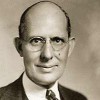
I git thar fustest with the mostest.
Nathan Bedford Forrest (1821-1877) American / Confederate military leader
(Attributed)
Sometimes "corrected" as "I get there firstest with the mostest men," first found in print in a New York Tribune article about Civil War generals. The New York Times (28 May 1918) speculatively corrected this to "Ma'am, I get thar first with the most men."Elsewhere given as "I always make a rule to get there first with the most men."
The quickest way to do many things is to do one thing at a time.
Proverbs, Sayings, and Adages
American proverb (New England)

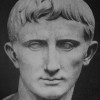
Well done is quickly done.
Augustus (63 BC - AD 14) Roman Emperor, statesman [Imperator Gaius Julius Caesar Augustus; b. Gaius Octavius]
(Attributed)
In Suetonius, The Twelve Caesars, 2.25 [tr. Graves and Grant (1979)]
Soon ripe, soon rotten.
John Clarke (d. 1658) British educator
Proverbs: English and Latine [Paroemiologia Anglo-Latina] (1639)

Whoever is in a hurry shows that the thing he is about is too big for him.
Lord Chesterfield (1694-1773) English statesman, wit [Philip Dormer Stanhope]
Letter to his son, #190 (20 Aug 1749)
(Source)
Fast is fine, but accuracy is everything.
Wyatt Earp (1848-1929) American law officer, gambler, saloon keeper
(Attributed)
It is of no use to possess a lively wit if it is not of the right proportion: the perfection of a clock is not to go fast, but to be accurate.
Luc de Clapiers, Marquis de Vauvenargues (1715-1747) French moralist, essayist, soldier
Reflections and Maxims [Réflexions et maximes] (1746) [tr. Lee (1903)]
(Source)
Excellence is lost sight of in the hunger for sudden performance and praise.
Ralph Waldo Emerson (1803-1882) American essayist, lecturer, poet
“Success,” Society and Solitude (1870)
But in our flowing affairs a decision must be made, — the best, if you can, but any is better than none. There are twenty ways of going to a point, and one is the shortest; but set out at once on one. A man who has that presence of mind which can bring to him on the instant all he knows, is worth for action a dozen men who know as much but can only bring it to light slowly.
Ralph Waldo Emerson (1803-1882) American essayist, lecturer, poet
Essay (1860), “Power,” The Conduct of Life, ch. 2
(Source)
Based on a course of lectures by that name first delivered in Pittsburg (1851-03).
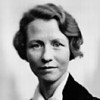
Have you ever noticed when driving that anyone who is driving slower than you is an idiot? And anyone driving faster than you is a maniac? “Say, look at this idiot here! Will you just look at this idiot, just creeping along — whoa, look at that maniac go!” I mean, it’s a wonder we ever get anywhere at all, with all the idiots and maniacs there are.
George Carlin (1937-2008) American comedian
Show (1984-04-19), On Campus, “Cars and Driving,” University of California, Los Angeles
(Source (Video); dialog verified)
This skit was put in text in Napalm & Silly Putty, "Cars and Driving, Part 1," "Idiots and Maniacs" (2001):Have you ever noticed when you're drivin', anyone goin' slower than you is an idiot? And anyone goin' faster than you is a maniac? "Will you look at this idiot!" [points right] "Look at him! Just creepin' along!" [swings head left] "Holy shit! Look at that maniac go!" Why, I tell ya, folks, it's a wonder we ever get anywhere at all these days, what with all the idiots and maniacs out there.
Which was in turn recorded as an audiobook by Carlin. Note the audio version of the book adds "Whoa!" in front of "Holy shit!" and omits the words "these days."
“Thrice is he armed that hath his quarrel just” —
And four times he who gets his fist in fust.Artemus Ward (1834-1867) American humorist, editor, lecturer [pseud. of Charles Farrar Browne]
Shakespeare Up-to-Date
See Shakespeare.Also attributed to Josh Billings in Josh Billings: His Sayings (1865), and sometimes oddly credited to Romans 13:7.
Nothing can be done at once hastily and prudently.
Publilius Syrus (d. 42 BC) Assyrian slave, writer, philosopher [less correctly Publius Syrus]
Sententiae [Moral Sayings], # 557