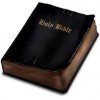
And the multitude of them that believed were of one heart and of one soul: neither said any of them that ought of the things which he possessed was his own; but they had all things common. […] Neither was there any among them that lacked: for as many as were possessors of lands or houses sold them, and brought the prices of the things that were sold, and laid them down at the apostles’ feet: and distribution was made unto every man according as he had need.
[Τοῦ δὲ πλήθους τῶν πιστευσάντων ἦν καρδία καὶ ψυχὴ μία, καὶ οὐδὲ εἷς τι τῶν ὑπαρχόντων αὐτῷ ἔλεγεν ἴδιον εἶναι ἀλλ᾽ ἦν αὐτοῖς ἅπαντα κοινά. […] οὐδὲ γὰρ ἐνδεής τις ἦν ἐν αὐτοῖς· ὅσοι γὰρ κτήτορες χωρίων ἢ οἰκιῶν ὑπῆρχον, πωλοῦντες ἔφερον τὰς τιμὰς τῶν πιπρασκομένων καὶ ἐτίθουν παρὰ τοὺς πόδας τῶν ἀποστόλων, διεδίδετο δὲ ἑκάστῳ καθότι ἄν τις χρείαν εἶχεν.]
The Bible (The New Testament) (AD 1st - 2nd C) Christian sacred scripture
Book 5. Acts of the Apostles 4:32ff (Acts 4:32-35) [KJV (1611)]
(Source)
(Source (Greek)). Alternate translations:The whole group of believers was united, heart and soul; no one claimed for his own use anything that he had, as everything they owned was held in common. [...] None of their members was ever in want, as all those who owned land or houses would sell them, and bring the money from them, to present it to the apostles; it was then distributed to any members who might be in need.
[JB (1966)]The whole group of believers was united, heart and soul; no one claimed private ownership of any possessions, as everything they owned was held in common. [...] None of their members was ever in want, as all those who owned land or houses would sell them, and bring the money from the sale of them, to present it to the apostles; it was then distributed to any who might be in need.
[NJB (1985)]The group of believers was one in mind and heart. None of them said that any of their belongings were their own, but they all shared with one another everything they had. [...] There was no one in the group who was in need. Those who owned fields or houses would sell them, bring the money received from the sale, and turn it over to the apostles; and the money was distributed according to the needs of the people.
[GNT (1992 ed.)]The community of believers was one in heart and mind. None of them would say, “This is mine!” about any of their possessions, but held everything in common. [...] There were no needy persons among them. Those who owned properties or houses would sell them, bring the proceeds from the sales, and place them in the care and under the authority of the apostles. Then it was distributed to anyone who was in need.
[CEB (2011)]Now the whole group of those who believed were of one heart and soul, and no one claimed private ownership of any possessions, but everything they owned was held in common. [...] There was not a needy person among them, for as many as owned lands or houses sold them and brought the proceeds of what was sold. They laid it at the apostles’ feet, and it was distributed to each as any had need.
[NRSV (2021 ed.)]
Quotations about:
redistribution
Note not all quotations have been tagged, so Search may find additional quotes on this topic.
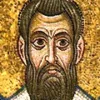
Who are the greedy? Those who are not satisfied with what suffices for their own needs. Who are the robbers? Those who take for themselves what rightfully belongs to everyone. And you, are you not greedy? Are you not a robber? The things you received in trust as a stewardship, have you not appropriated them for yourself? Is not the person who strips another of clothing called a thief? And those who do not clothe the naked when they have the power to do so, should they not be called the same? The bread you are holding back is for the hungry, the clothes you keep put away are for the naked, the shoes that are rotting away with disuse are for those who have none, the silver you keep buried in the earth is for the needy. You are thus guilty of injustice toward as many as you might have aided, and did not.
Basil of Caesarea (AD 330–378) Christian bishop, theologian, monasticist, Doctor of the Church [Saint Basil the Great, Ἅγιος Βασίλειος ὁ Μέγας]
“I Will Tear Down My Barns [καθελῶ μου τὰς ἀποθήκας],” Sermon # 6 [tr. Schroeder (2009)]
(Source)
Why, if all the rich men in the world divided up their money amongst themselves, there wouldn’t be enough to go round!
Christina Stead (1902–1983) Australian writer
House of All Nations, sc. 12 “The Revolution” [Jules] (1938)
(Source)
Pooh-poohing the idea that confiscating wealth from the rich would provide enough money to the poor. The line is also included in the "Credo" at the beginning of the novel, attributed to the character, Jules Bertillon.

Any reasonable system of taxation should be based on the slogan of “Soak the Rich.”
Heywood Broun (1888–1939) American journalist, author
(Attributed)
The urge to distribute wealth equally, and still more the belief that it can be brought about by political action, is the most dangerous of all popular emotions. It is the legitimation of envy, of all the deadly sins the one which a stable society based on consensus should fear the most. The monster state is a source of many evils; but it is, above all, an engine of envy.
Paul Johnson (b. 1928) English journalist, historian, speechwriter, author
The Recovery of Freedom (1980)
NARRATOR: This planet has, or had, a problem which was this: most of the people living on it were unhappy for pretty much of the time. Many solutions were suggested for this problem, but most of these were largely concerned with the movements of small green pieces of paper, which is odd because on the whole it wasn’t the small green pieces of paper that were unhappy.
Douglas Adams (1952–2001) English author, humorist, screenwriter
Hitchhiker’s Guide to the Galaxy, Phase 1, “Fit the 2nd” (BBC Radio) (1978-03-15)
(Source)
Though in the second episode of the radio play, this material was moved in the book, The Hitchhiker's Guide to the Galaxy (1979), into an introduction. The text was left unchanged, except that the first line reads "This planet has -- or rather had -- a problem ...."

Public services have, to use the economist’s word, a strong redistributional effect. And this effect is strongly in favor of those with lower incomes. Those who clamor the loudest for public economy are those for whom public services do the least. Tax reduction that curtails or limits public services has a double effect in comforting the comfortable and afflicting the poor.
People here expect a revolution. There will be no revolution, none that deserves to be called so. There may be a scramble for money. But as the people we see want the things we now have and not better things, it is very certain that they will, under whatever change of forms, keep the old system. When I see changed men, I shall look for a changed world.
Ralph Waldo Emerson (1803–1882) American essayist, lecturer, poet
Journal (1848-04)
Written in London.
Money is like muck, not good except it be spread.
Francis Bacon (1561–1626) English philosopher, scientist, author, statesman
“Of Seditions and Troubles,” Essays, No. 15 (1625)
(Source)
The millions who are in want will not stand by silently forever while the things to satisfy their needs are within easy reach.
Franklin Delano Roosevelt (1882–1945) American lawyer, politician, statesman; US President (1933–45)
Speech (1932-05-22), Commencement, Oglethorpe University, Atlanta, Georgia
(Source)