

When our vices desert us, we flatter ourselves that we are deserting our vices.
[Quand les vices nous quittent, nous nous flattons de la créance que c’est nous qui les quittons.]
François VI, duc de La Rochefoucauld (1613–1680) French epigrammatist, memoirist, noble
Réflexions ou sentences et maximes morales [Reflections; or Sentences and Moral Maxims], ¶192 (1665-1678) [tr. Kronenberger (1959)]
(Source)
Present in the 1st (1665) edition. In that version and the manuscript, the latter part read "... nous voulons nous flatter que c’est nous qui les quittons."
(Source (French)). Other translations:When our Vices forsake us, we please our selves with an Opinion, that we parted first, and left them.
[tr. Stanhope (1694), ¶193]When our vices have left us, we flatter ourselves that we have left them.
[pub. Donaldson (1783), ¶440]When our Vices have left us, we flatter ourselves that we have left them.
[ed. Lepoittevin-Lacroix (1797), ¶184]When our vices leave us, we flatter ourselves that we have left them.
[ed. Carvill (1835), ¶367]When our vices quit us we flatter ourselves with the belief that it is we who quit them.
[ed. Gowens (1851), ¶201]When our vices leave us we flatter ourselves with the idea we have left them.
[tr. Bund/Friswell (1871), ¶192]We flatter ourselves that we quit our vices; in reality our vices quit us.
[tr. Heard (1917), ¶197]When our vices abandon us, we flatter ourselves that it is we who abandon them.
[tr. Stevens (1939), ¶192]When our vices depart from us, we flatter ourselves that it is we who have gotten rid of them.
[tr. FitzGibbon (1957), ¶192]When the vices give us up we flatter ourselves that we are giving up them.
[tr. Tancock (1959), ¶192]When our vices leave us, we flatter ourselves with the belief that it is we who have left them.
[tr. Whichello (2016) ¶192]
Quotations about:
vices
Note not all quotations have been tagged, so Search may find additional quotes on this topic.

Man iz mi brother, and i konsider that i am nearer related tew him through hiz vices, than i am through hiz virtews.
[Man is my brother, and I consider that I am nearer related to him through his vices, than I am through his virtues.]
Josh Billings (1818–1885) American humorist, aphorist [pseud. of Henry Wheeler Shaw]
Josh Billings’ Farmer’s Allminax, 1871-07 (1871 ed.)
(Source)


It is a good thing to recognize one’s own faults.
[Bellum est enim sua vitia nosse.]
Marcus Tullius Cicero (106–43 BC) Roman orator, statesman, philosopher
Epistulae ad Atticum [Letters to Atticus], Book 2, Letter 17, sec. 2 (2.17.2) (59 BC) [tr. Winstedt (1912)]
(Source)
Speaking of his own slight "vanity and thirst for fame."
(Source (Latin)). Alternate translation:It is well to know one's faults.
[tr. Shuckburgh (1900)]It is a great thing to know our own vices.
[ed. Harbottle (1906)]It is a fine thing to recognize one's faults.
[tr. McKinlay (1926), # 14]It's a fine thing to know one's failings.
[tr. Shackleton Bailey (1968), # 37]

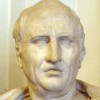

We are firm believers in the maxim that for all right judgment of any man or thing it is useful, nay, essential, to see his good qualities before pronouncing on his bad.
Thomas Carlyle (1795–1881) Scottish essayist and historian
“Goethe,” Foreign Review No. 3 (1828-08)
(Source)
Reviewing Goethe's Sämmtliche Werke, Vollständige Ausgabe Letzter Hand (1827). Reprinted in Carlyle, Critical and Miscellaneous Essays (1845).
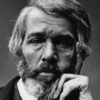
Of all the men embezzling from their employers with whom I have had contact, I can’t remember a dozen who smoked, drank or had any of the vices in which bonding companies are so interested.
Dashiell Hammett (1894–1961) American author, screenwriter, political activist
Interview with Helen Herbert Foster, “House Burglary Poor Trade,” Brooklyn Eagle Magazine (Oct 1929)
(Source)
We try to make virtues of the faults we do not wish to correct.
[Nous essayons de nous faire honneur des défauts que nous ne voulons pas corriger.]
François VI, duc de La Rochefoucauld (1613–1680) French epigrammatist, memoirist, noble
Réflexions ou sentences et maximes morales [Reflections; or Sentences and Moral Maxims], ¶442 (1665-1678) [tr. Kronenberger (1959)]
(Source)
First appeared in the 5th (1678) edition.
(Source (French)). Other translations:We attempt to Vindicate, and value our selves upon those Faults we have no design to mend.
[tr. Stanhope (1694), ¶2.30; (1706 ed.), ¶442]We endeavour to get reputation by those faults we determine not to amend.
[pub. Donaldson (1783), ¶138; ed. Carvill (1835), ¶122]We endeavor to make a merit of faults that we are unwilling to correct.
[ed. Gowens (1851), ¶467]We try to make a virtue of vices we are loth to correct.
[tr. Bund/Friswell (1871), ¶442]We boast the faults we are unwilling to correct.
[tr. Heard (1917), ¶464]We endeavour to take pride in faults that we would rather not correct.
[tr. Stevens (1939), ¶442]We try to glory in those failings which we are unwilling to correct.
[tr. FitzGibbon (1957), ¶442]We try to make virtues out of the faults we have no wish to correct.
[tr. Tancock (1959), ¶442]We try to make a merit of those of our faults which we do not wish to correct.
[tr. Whichello (2016) ¶442]