ROMANA: You mean you didn’t believe his story?
THE DOCTOR: No.
ROMANA: But he had such an honest face.
THE DOCTOR: Romana, you can’t be a successful crook with a dishonest face, can you?
Doctor Who (1963–1989) British science fiction television series, original run (BBC)
16×01 “The Ribos Operation,” Part 2 (1978-09-09 [w. Robert Holmes]
(Source)
Quotations about:
face
Note not all quotations have been tagged, so Search may find additional quotes on this topic.

An eye can threaten like a loaded and leveled gun, or can insult like hissing or kicking; or, in its altered mood, by beams of kindness, it can make the heart dance with joy.
Ralph Waldo Emerson (1803–1882) American essayist, lecturer, poet
Essay (1860), “Behavior,” The Conduct of Life, ch. 5
(Source)
Based on a course of lectures, "The Conduct of Life," delivered in Pittsburg (1851-03).
I have always considered my face a convenience rather than an ornament.
Oliver Wendell Holmes, Sr. (1809–1894) American poet, essayist, scholar
Letter (1882-03-18) to James Russell Lowell
(Source)
I turn away reluctant from your light,
And stand irresolute, a mind undone,
A silly, dazzled thing deprived of sight
From having looked too long upon the sun.Edna St. Vincent Millay (1892–1950) American poet
“When I too long have looked upon your face,” ll. 5-8, Second April, Sonnet 7 (1921)
(Source)
Nothing is so silly as the expression of a man who is being complimented.
André Gide (1869–1951) French author, Nobel laureate
Journal (1906-02-13) [tr. O’Brien (1947)]
(Source)
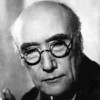
A man has more character in his face at forty than at twenty. He has suffered longer, and the more love, the more suffering, the more character.
Mae West (1892–1980) American film actress
Goodness Had Nothing To Do With It, ch. 21 (1959)
(Source)
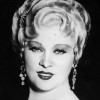
After a certain number of years, our faces become our biographies. We get to be responsible for our faces.
Cynthia Ozick (b. 1928) American writer
Interview by Tom Teicholz, Paris Review, “The Art of Fiction” #95 (Spring 1987)
(Source)
See Camus and Orwell.
Discussion of similar quotations: When You Are Young, You Have the Face Your Parents Gave You. After You Are Forty, You Have the Face You Deserve – Quote Investigator.

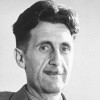
A nationalist is one who thinks solely, or mainly, in terms of competitive prestige. He may be a positive or a negative nationalist — that is, he may use his mental energy either in boosting or in denigrating — but at any rate his thoughts always turn on victories, defeats, triumphs and humiliations. He sees history, especially contemporary history, as the endless rise and decline of great power units, and every event that happens seems to him a demonstration that his own side is on the upgrade and some hated rival is on the downgrade.
George Orwell (1903–1950) English journalist, essayist, writer [pseud. of Eric Arthur Blair]
Essay (1945-05), “Notes on Nationalism,” Polemic Magazine (1945-10)
(Source)
What is it you want to change? Your hair, your face, your body? Why? For God is in love with all those things and he might weep when they are gone.
Catherine of Siena (1347–1380) Italian Catholic mystic, activist, author
(Attributed)

The first time ever I saw your face
I thought the sun rose in your eyes,
And the moon and the stars were the gifts you gave
To the dark and empty skies.Ewan MacColl (1915–1989) Scottish folk singer, songwriter, labour activist, playwright [stage name of James Henry (Jimmy) Miller]
“The First Time Ever I Saw Your Face” (1957)
(Source)
The most important tactic in an argument, next to being right, is to leave an escape hatch for your opponent, so that he can gracefully swing over to your side without an embarrassing loss of face.
Sydney J. Harris (1917–1986) Anglo-American columnist, journalist, author
Pieces of Eight (1982)
(Source)
Frequently misquoted: "The most important thing in an argument, next to being right, is to leave an escape hatch for your opponent, so that he can gracefully swing over to your side without too much apparent loss of face."
I suppose when there’s no more room for another crow’s-foot, one attains a sort of peace?
Ronald Firbank (1886–1926) British novelist and playwright
Valmouth (1918)

I just have one of those faces. People come up to me and say, “What’s wrong?” Nothing. “Well, it takes more energy to frown than it does to smile.” Yeah, you know it takes more energy to point that out than it does to leave me alone?
Bill Hicks (1961–1994) American stand-up comedian, social critic, satirist, musician [William Melvin "Bill" Hicks]
Relentless (1992)
I think your whole life shows in your face and you should be proud of that.
Lauren Bacall (1924–2014) American actress, model [b. Betty Joan Perske]
London Daily Telegraph (2 Mar 1988)

Wrinkles should merely indicate where the smiles have been.
Mark Twain (1835–1910) American writer [pseud. of Samuel Clemens]
Following the Equator, ch. 52, epigraph (Pudd’nhead Wilson’s New Calendar) (1897)
(Source)


Alas, after a certain age, every man is responsible for his face.
[Hélas! après un certain âge tout homme est responsable do son visage.]
Laughter is sunshine; it chases winter from the human face.
[Le rire, c’est le soleil; il chasse l’hiver du visage humain.]
Victor Hugo (1802–1885) French writer, journalist, human rights activist, politician
Les Misérables, Part 2 “Cosette,” Book 8 “Cemeteries Take What Is Given Them,” ch. 9 (2.8.9) (1862) [tr. Wilbour (1862)]
(Source)
(Source (French)). Other translations:For laughter is the sun which drives winter from the human face.
[tr. Wraxall (1862)]A smile is the same as sunshine; it banishes winter from the human countenance.
[tr. Hapgood (1887)]Laughter is a sun that drives out winter from the human face.
[tr. Denny (1976)]Laughter is sunshine; it chases winter from the human face.
[tr. Wilbour/Fahnestock/MacAfee (1987)]Laughter is sunshine. It banishes winter from the human countenance.
[tr. Donougher (2013)]