Convince a phool ov hiz errors, and you make him yure enemy.
[Convince a fool of his errors, and you make him your enemy.]
Josh Billings (1818–1885) American humorist, aphorist [pseud. of Henry Wheeler Shaw]
Josh Billings’ Farmer’s Allminax, 1872-07 (1872 ed.)
(Source)
Quotations about:
embarrassment
Note not all quotations have been tagged, so Search may find additional quotes on this topic.

If your enemies are starving, feed them some bread;
if they are thirsty, give them water to drink.
By doing this, you will heap burning coals on their heads,
and the Lord will reward you.אִם־רָעֵ֣ב שֹׂ֭נַאֲךָ הַאֲכִלֵ֣הוּ לָ֑חֶם וְאִם־צָ֝מֵ֗א הַשְׁקֵ֥הוּ מָֽיִם׃
כִּ֤י גֶחָלִ֗ים אַ֭תָּה חֹתֶ֣ה עַל־רֹאשׁ֑וֹ וַ֝יהֹוָ֗ה יְשַׁלֶּם־לָֽךְ׃The Bible (The Old Testament) (14th - 2nd C BC) Judeo-Christian sacred scripture [Tanakh, Hebrew Bible], incl. the Apocrypha (Deuterocanonicals)
Book 20. Proverbs 25:21ff (Prov 25:21-22) [tr. CEB (2011)]
(Source)
See Romans 12:19-21.
(Source (Hebrew)). Other translations:If thine enemy be hungry, give him bread to eat;
and if he be thirsty, give him water to drink:
for thou shalt heap coals of fire upon his head,
and the Lord shall reward thee.
[KJV (1611)]If your enemy is hungry, give him something to eat; if thirsty, something to drink.
By this you heap red-hot coals on his head, and Yahweh will reward you.
[JB (1966)]If your enemy is hungry, give him something to eat; if thirsty, something to drink.
By this you will be heaping red-hot coals on his head, and Yahweh will reward you.
[NJB (1985)]If your enemies are hungry, feed them; if they are thirsty, give them a drink. 22 You will make them burn with shame, and the Lord will reward you.
[GNT (1992 ed.)]If your enemies are hungry, give them bread to eat,
and if they are thirsty, give them water to drink,
for you will heap coals of fire on their heads,
and the Lord will reward you.
[NRSV (2021 ed.)]If your enemy is hungry, give him bread to eat;
If he is thirsty, give him water to drink.
You will be heaping live coals on his head,
And God will reward you.
[RJPS (2023 ed.)]
That which thou are ashamed to do in the Sight of Men for the Turpitude of it; thou shouldest be more ashamed to do in the Sight of the Angels, and even of God himself, when thou art alone.
Thomas Fuller (1654–1734) English physician, preacher, aphorist, writer
Introductio ad Prudentiam, Vol. 2, # 2324 (1727)
(Source)

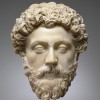
You need to get used to winnowing your thoughts, so that if someone says, “What are you thinking about?” you can respond at once (and truthfully) that you are thinking this or thinking that. And it would be obvious at once from your answer that your thoughts were straightforward and considerate ones — the thoughts of an unselfish person, one unconcerned with pleasure and with sensual indulgence generally, with squabbling, with slander and envy, or anything else you’d be ashamed to be caught thinking.
[ἐθιστέον ἑαυτὸν μόνα φαντάζεσθαι, περὶ ὧν εἴ τις ἄφνω ἐπανέροιτο: τί νῦν διανοῇ; μετὰ παρρησίας παραχρῆμα ἂν ἀποκρίναιο ὅτι τὸ καὶ τό: ὡς ἐξ αὐτῶν εὐθὺς δῆλα εἶναι, ὅτι πάντα ἁπλᾶ καὶ εὐμενῆ καὶ ζῴου κοινωνικοῦ καὶ ἀμελοῦντος ἡδονικῶν ἢ καθάπαξ ἀπολαυστικῶν φαντασμάτων ἢ φιλονεικίας τινὸς ἢ βασκανίας καὶ ὑποψίας ἢ ἄλλου τινός, ἐφ̓ ᾧ ἂν ἐρυθριάσειας ἐξηγούμενος, ὅτι ἐν νῷ αὐτὸ εἶχες.]
Marcus Aurelius (AD 121–180) Roman emperor (161–180), Stoic philosopher
Meditations [To Himself; Τὰ εἰς ἑαυτόν], Book 3, ch. 4 (3.4) (AD 161-180) [tr. Hays (2003)]
(Source)
(Source (Greek)). Other translations:Thou must use thyself to think only of such things, of which if a man upon a sudden should ask thee, what it is that thou art now thinking, thou mayest answer This, and That, freely and boldly, that so by thy thoughts it may presently appear that in all thee is sincere, and peaceable; as becometh one that is made for society, and regards not pleasures, nor gives way to any voluptuous imaginations at all: free from all contentiousness, envy, and suspicion, and from whatsoever else thou wouldst blush to confess thy thoughts were set upon.
[tr. Casaubon (1634)]Let it be your way to think upon nothing, but what you could freely Discover, if the Question was put to you : So that if your Soul was thus laid open, there would nothing appear, but what was Sincere, Good-natur'd, and publick Spirited; not so much as one Libertine, or Luxurious Fancy, nothing of Litigiousness, Envy, or unreasonable Suspicion, or any thing else, which would not bear the Light, without Blushing.
[tr. Collier (1701)]We ought, therefore, to [...] enure ourselves to think on such things, as, if we were of a sudden examined, what are we now musing upon, we could freely answer, such or such matters: so that all within might appear simple and goodnatured, such as becomes a social being, who despises pleasure, and all sensual enjoyment, and is free from emulation, envy, suspicion, or any other passion that we would blush to own we were now indulging in our minds.
[tr. Hutcheson/Moor (1742)]Indeed you should regulate your thoughts in such a manner, that if any one should ask you, on a sudden, what is the subject of them, you may answer him without embarrassment; so that they may evidently appear to be all simplicity and benevolence, and such as become a being born for society; free from every idea of sensuality or lasciviousness; from rancour, envy, or suspicion; or from any other sentiment, which, if you were to confess it, would occasion a blush.
[tr. Graves (1792)]A man should use himself to think of those things only about which if one should suddenly ask, What hast thou now in thy thoughts? with perfect openness thou mightest immediately answer, This or That; so that from thy words it should be plain that everything in thee is simple and benevolent, and such as befits a social animal, and one that cares not for thoughts about pleasure or sensual enjoyments at all, nor has any rivalry or envy and suspicion, or anything else for which thou wouldst blush if thou shouldst say that thou hadst it in thy mind.
[tr. Long (1862)][A man] ought, therefore, not to work his mind to no purpose, nor throw a superfluous link into the chain of thought; and more especially, to avoid curiosity and malice in his inquiry. Accustom yourself, therefore, tot hink up on nothing but what you could freely reveal, if the question were put to you; so that if your soul were thus laid open, there would nothing appear but what was sincere, good-natured, and public-spirited -- not so much as one voluptuous or luxurious fancy, nothing of hatred, envy, or unreasonable suspicion, nor aught else which you could not bring to the light without blushing.
[tr. Collier/Zimmern (1887)]Limit yourself habitually to such regards, that if suddenly asked 'What is in your thoughts now?,' you could tell at once the candid and unhesitating truth -- a direct plain proof, that all your thoughts were simple and in charity, such as befit a social being, who eschews voluptuous or even self-indulgent fancies, or jealousy of any kind, or malice and suspicion, or any other mood which you would blush to own.
[tr. Rendall (1898)]Accustom yourself so, and only so, to think, that, if any one were suddenly to ask you, “Of what are you thinking-now?” you could answer frankly and at once, “Of so and so.” Then it will plainly appear that you are all simplicity and kindliness, as befits a social being who takes little thought for enjoyment or any phantom pleasure; who spurns contentiousness, envy, or suspicion; or any passion the harbouring of which one would blush to own.
[tr. Hutcheson/Chrystal (1902)]A man should accustom himself to think only of those things about which, if one were to ask on a sudden, What now in thy thoughts? thou couldst quite frankly answer at once, This or that; so that thine answer should immediately make manifest that all that is in thee is simple and kindly and worthy of a living being that is social and has no thought for pleasures or for the entire range of sensual images, or for any rivalry, envy, suspicion, or anything else, whereat thou wouldst blush to admit that thou hadst it in thy mind.
[tr. Haines (Loeb) (1916)]You must habituate yourself only to thoughts about which if some one were suddenly to ask: 'What is in your mind now?', you would at once reply, quite frankly, this or that; and so from the answer it would immediately be plain that all was simplicity and kindness, the thoughts of a social being, who disregards pleasurable, or to speak more generally luxurious imaginings or rivalry of any kind, or envy and suspicion or anything else about which you would blush to put into words that you had it in your head.
[tr. Farquharson (1944)]A man should habituate himself to such a way of thinking that if suddenly asked, "What is in your mind at this minute?" he could respond frankly and without hesitation; thus proving that all his thoughts were simple and kindly, as becomes a social being with no taste for the pleasures of sensual imaginings, jealousies, envies, suspicions, or any other sentiments that he would blush to acknowledge in himself.
[tr. Staniforth (1964)]You must train yourself only to think such thoughts that if somebody were suddenly to ask you, "What are you thinking of?" you could reply in all honesty and without hesitation of this or that, and so make it clear at once from your reply that all within you is simple and kindly, and worthy of a social being who has no thought for pleasure, or luxury in general, or contentiousness of any kind, or envy, or suspicion, or anything else that you would blush to admit if you had it in your mind.
[tr. Hard (1997 ed.)]Train yourself to think only those thoughts such that in answer to the sudden question ‘What is in your mind now?’ you could say with immediate frankness whatever it is, this or that: and so your answer can give direct evidence that all your thoughts are straightforward and kindly, the thoughts of a social being who has no regard for the fancies of pleasure or wider indulgence, for rivalry, malice, suspicion, or anything else that one would blush to admit was in one’s mind.
[tr. Hammond (2006)]You should accustom yourself to think only of those things which, if someone were suddenly to ask "What are you thinking?" you could openly answer this or that, so as to reveal straightaway that everything within yourself is straightforward and well disposed, appropriate to a communal being, and without care for base pleasures or even a single one of the delights we take in our experiences, or for any rivalry, slander, suspicion, or anything else which you would blush to answer that you had in your mind.
[tr. Needleman/Piazza (2008)]You must train yourself only to think such thoughts that if somebody were suddenly to ask you, ‘What are you thinking of?’ you could reply in all honesty and without hesitation, of this thing or that, and so make it clear at once from your reply that all within you is simple and benevolent, and worthy of a social being who has no thought for pleasure, or luxury in general, or contentiousness of any kind, or envy, or suspicion, or anything else that you would blush to admit if you had it in your mind.
[tr. Hard (2011 ed.)]You must train yourself only to think the kind of thoughts about which, if someone suddenly asked you, "what are you thinking now?" you would at once answer frankly, "this" or "that." So, from your reply it would immediately be clear that all your thoughts are straightforward and kind and express the character of a social being who has no concern with images of pleasure, or self-indulgence in general, or any kind of rivalry, malice, or suspicion, or anything else you would blush to admit you were thinking about.
[tr. Gill (2013)]
JEFF: You’re not ready for the Giggle Loop. […] Basically, it’s like a feedback loop. You’re somewhere quiet. There’s people. It’s a — it’s a solemn occasion. A wedding. No — it’s a minute’s silence for someone who’s died. […] Minute’s silence ticking away. Tick. Tick. Tick. The Giggle Loop begins. Suddenly, out of nowhere, this thought comes into your head: the worst thing I could possibly do during a minute’s silence is laugh. (Overturns an empty beer glass) And as soon as you think that, you almost do laugh, automatic reaction. But you don’t, you control yourself. You’re fine. Whoo — but then you think how terrible it would have been if you’d laughed out loud in the middle of a minute’s silence. And so you nearly do it again, only this time it’s a bigger laugh. (Stacks a beer glass on top of the first one) And then you think how awful this bigger laugh would have been. And so you nearly laugh again, only this time it’s a very big laugh. (Stacks another glass) It’s an enormous laugh! Let this bastard out, and you get whiplash! (Stacks another glass) Suddenly, you’re in the middle of this completely silent room (Stacks another glass) and your shoulders are going like you’re drilling the road! And what do you think of this situation? Oh, dear Christ, you think it’s funny!

If you can tell anyone about it, it’s not the worst thing you ever did.
Mignon McLaughlin (1913–1983) American journalist and author
The Neurotic’s Notebook, ch. 4 (1963)
(Source)

A little embarrassment prevents a lot of goodness.
Mignon McLaughlin (1913–1983) American journalist and author
The Neurotic’s Notebook, ch. 8 (1963)
(Source)
Nothing is so silly as the expression of a man who is being complimented.
André Gide (1869–1951) French author, Nobel laureate
Journal (1906-02-13) [tr. O’Brien (1947)]
(Source)

If men knew how to blush at their own actions, how many crimes, and not only those that are hidden, but those that are public and well known, would never be committed!
[Si l’homme savait rougir de soi, quels crimes, non seulement cachés, mais publics et connus, ne s’épargnerait-il pas!]
Jean de La Bruyère (1645–1696) French essayist, moralist
The Characters [Les Caractères], ch. 11 “Of Mankind [De l’Homme],” § 151 (11.151) (1688) [tr. Van Laun (1885)]
(Source)
(Source (French)). Other translations:If men could blush at their own actions, how many sins, publick and private, would they save by it?
[Bullord ed. (1696)]If Men knew how to blush at their own Actions, how many Crimes, publick and private, would they save by it!
[Curll ed. (1713)]If Men could blush for themselves, how many Sins, public and private, would they save by it!
[Browne ed. (1752)]If a man knew how to blush at his own actions, what crimes, not only secret but public and overt, would he not spare himself!
[tr. Stewart (1970)]

The mistakes I made from weakness do not embarrass me nearly so much as those I made insisting on my strength.
James Richardson (b. 1950) American poet
“Vectors: 56 Aphorisms and Ten-second Essays,” Michigan Quarterly Review, #27 (Spring 1999)
(Source)

This is love, and the trouble with it: it can make you embarrassed. Love is really liking someone a whole lot and not wanting to screw that up. Everybody’s chewed over this. This unites us, this part of love.
Lemony Snicket (b. 1970) American author, screenwriter, musician (pseud. for Daniel Handler)
Adverbs, “Collectively” (2006)

Life has a tendency to obfuscate and bewilder,
Such as fating us to spend the first part of our lives being embarrassed by our parents and the last part being embarrassed by our childer.

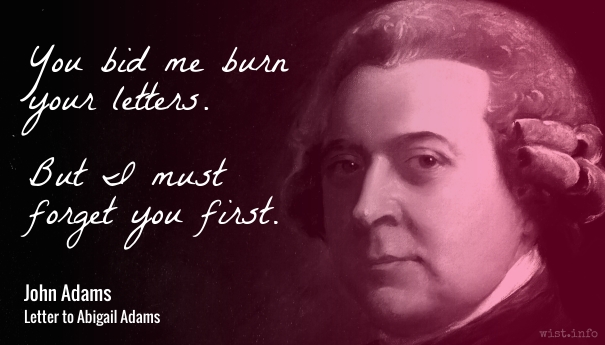
You bid me burn your letters. But I must forget you first.
John Adams (1735–1826) American lawyer, Founder, statesman; US President (1797–1801)
Letter (1776-04-28) to Abigail Adams
(Source)

Mahomet made the people believe that he would call a hill to him, and from the top of it offer up his prayers for the observers of his law. The people assembled. Mahomet called the hill to come to him, again and again; and when the hill stood still he was never a whit abashed, but said, “If the hill will not come to Mahomet, Mahomet will go to the hill.”
Francis Bacon (1561–1626) English philosopher, scientist, author, statesman
Essays, “Of Boldness” (1625)

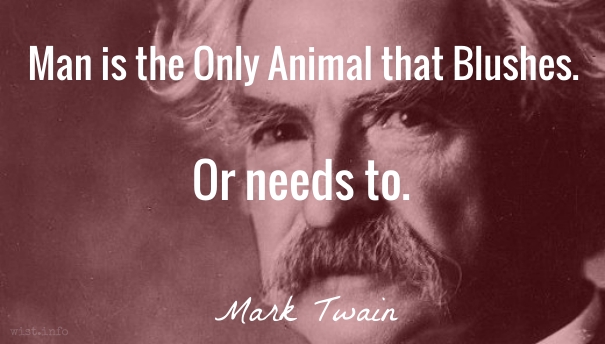
Man is the Only Animal that Blushes. Or needs to.
Mark Twain (1835–1910) American writer [pseud. of Samuel Clemens]
Following the Equator, ch. 27, epigraph (1897)
(Source)
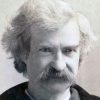
It is an embarrassment to the possessor to have more than he needs.
Publilius Syrus (d. 42 BC) Assyrian slave, writer, philosopher [less correctly Publius Syrus]
Sententiae [Moral Sayings], #1063 [tr. Lyman (1862)]
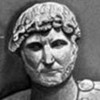
Remembering that I’ll be dead soon is the most important tool I’ve ever encountered to help me make the big choices in life. Because almost everything — all external expectations, all pride, all fear of embarrassment or failure — these things just fall away in the face of death, leaving only what is truly important. Remembering that you are going to die is the best way I know to avoid the trap of thinking you have something to lose.
Steve Jobs (1955–2011) American computer inventor, entrepreneur
Commencement Address, Stanford University (2005)
(Source)

If you are never scared or embarrassed or hurt, it means you never take chances.
Rosalyn Drexler (b. 1926) American visual artist, novelist, playwright, screenwriter [pseud. Julia Sorel]
See How She Runs (1978)
Based on the screenplay by Marvin Gluck. As Julia Sorrel (sometimes attrib. "Julia Soul").
DIARY, n. A daily record of that part of one’s life, which he can relate to himself without blushing.
Ambrose Bierce (1842–1914?) American writer and journalist
“Diary,” The Cynic’s Word Book (1906)
(Source)
Included in The Devil's Dictionary (1911). Originally published in the "Devil's Dictionary" column in the San Francisco Wasp (1882-05-24).

The proper use of embarrassment is as a conscience of manners. As your conscience might trouble you if you do anything immoral, your sense of embarrassment should be activated if you do anything unmannerly. As conscience should come from within, so should embarrassment. Hot tingles and flushes are quite proper when they arise from your own sense of having violated your own standards, inadvertently or advertently, but Miss Manners hereby absolves everyone from feeling any embarrassment deliberately imposed by others.
Judith Martin (b. 1938) American author, journalist, etiquette expert [a.k.a. Miss Manners]
Miss Manners’ Guide to Excruciatingly Correct Behavior, Introduction (1983)
(Source)

There are scarcely any who are not ashamed of having loved, when they love no longer.
[Il n’y a guère de gens qui ne soient honteux de s’être aimés quand ils ne s’aiment plus.]
François VI, duc de La Rochefoucauld (1613–1680) French epigrammatist, memoirist, noble
Réflexions ou sentences et maximes morales [Reflections; or Sentences and Moral Maxims], ¶71 (1665-1678) [tr. Stevens (1939)]
(Source)
First appeared in the fifth (1678) edition.
(Source (French)). Other translations:There are few people who are not ashamed of their amours when the fit is over.
[pub. Donaldson (1783), ¶271; ed. Lepoittevin-Lacroix (1797), ¶69]Most people are ashamed of their amours when the fit is over.
[ed. Carville (1835), ¶232]There are very few people who, when their love is over, are not ashamed of having been in love.
[ed. Gowens (1851), ¶181]There are few people who would not be ashamed of being beloved when they love no longer.
[tr. Bund/Friswell (1871)]There are few of us who are not ashamed of a mutual passion when love has died.
[tr. Heard (1917), ¶177]When two people have ceased to love, the memory that remains is almost always one of shame.
[tr. FitzGibbon (1957)]Few people, when they love no longer, but feel shame for having loved.
[tr. Kronenberger (1959)]There are few people who, when their love for each other is dead, are not ashamed of that love.
[tr. Tancock (1959)]There are few people who are not ashamed of having loved each other when they no longer do so.
[tr. Whichello (2016)]

Never regard something as doing you good if it makes you betray a trust, or lose your sense of shame, or makes you show hatred, suspicion, ill will, or hypocrisy, or a desire for things best done behind closed doors.
[Μὴ τιμήσῃς ποτὲ ὡς συμφέρον σεαυτοῦ, ὃ ἀναγκάσει σέ ποτε τὴν πίστιν παραβῆναι, τὴν αἰδῶ ἐγκαταλιπεῖν, μισῆσαί τινα, ὑποπτεῦσαι, καταράσασθαι, ὑποκρίνασθαι, ἐπιθυμῆσαί τινος τοίχων καὶ παραπετασμάτων δεομένου.]
Marcus Aurelius (AD 121–180) Roman emperor (161–180), Stoic philosopher
Meditations [To Himself; Τὰ εἰς ἑαυτόν], Book 3, ch. 7 (3.7) [tr. Hays (2003)]
(Source)
(Source (Greek)). Other translations:Never esteem of anything as profitable, which shall ever constrain thee either to break thy faith, or to lose thy modesty; to hate any man, to suspect, to curse, to dissemble, to lust after anything, that requireth the secret of walls or veils.
[tr. Casaubon (1634), ch. 8]Don't be fond of any Thing, or think that for your Interest, which makes you break your Word, quit your Modesty, be of a Dissembling, Suspicious, or Outragious Humour; which puts you upon Hating any Person, and enclines you to any Practice, which wont bear the Light, and look the World in the Face.
[tr. Collier (1701)]Never value that as advantageous, which may force you to break your faith; to quit your modesty, or sense of honour; to hate, suspect, or imprecate evil on any one; to dissemble; or to desire any of these things which need walls or curtains to conceal them.
[tr. Hutcheson/Moor (1742)]Never adopt any measure as conducing to your interest, which lays you under a necessity of violating your honour or your modesty; or may excite your hatred or your suspicion, or provoke you to execrate any one, or to practice dissimulation; or, in short, to entertain a wish which will not bear the light, but must be concealed from the world by walls and curtains.
[tr. Graves (1792)]Never value anything as profitable to thyself which shall compel thee to break thy promise, to lose thy self-respect, to hate any man, to suspect, to curse, to act the hypocrite, to desire anything which needs walls and curtains.
[tr. Long (1862)]Think nothing for your interest which makes you break your word, quit your modesty, hate, suspect, or curse any person, or inclines you to any practice which will not bear the light and look the world in the face.
[tr. Collier/Zimmern (1887)]Never esteem anything as of advantage to thee that shall make thee break thy word or lose thy self-respect.
[tr. Morgan, in Bartlett's (1894)]Never prize anything as self-advantage, which will compel you to break faith, to forfeit self-respect, to suspect or hate or execrate another, to play false, to desire anything which requires screens or veils.
[tr. Rendall (1898)]Never esteem aught of advantage which will oblige you to break your faith, or to desert your honour; to hate, to suspect, or to execrate any man; to play a part; or to set your mind on anything that needs to be hidden by wall or curtain.
[tr. Hutcheson/Chrystal (1902)]Prize not anything as being to thine interest that shall ever force thee to break thy troth, to surrender thine honour, to hate, suspect, or curse anyone, to play the hypocrite, to lust after anything that needs walls and curtains.
[tr. Haines (Loeb) (1916)]Never value as an advantage to yourself what will force you one day to break your word, to abandon self-respect, to hate, suspect, execrate another, to act a part, to covet anything that calls for walls or coverings to conceal it.
[tr. Farquharson (1944)]Never value the advantages derived from anything involving breach of faith, loss of self-respect, hatred, suspicion, or execration of others, insincerity, or the desire for something which hast to be veiled and curtained.
[tr. Staniforth (1964)]Never prize as advantageous to yourself anything that will compel you some day to break your word, to offend against propriety, to hate, suspect or curse another, to dissemble, or to desire anything that needs to be veiled behind walls and curtains.
[tr. Hard (1997 ed.)]Never regard as a benefit to yourself anything which will force you at some point to break your faith, to leave integrity behind, to hate, suspect, or curse another, to dissemble, to covet anything needing the secrecy of walls and drapes.
[tr. Hammond (2006)]Never consider anything to be beneficial to you, which could ever compel you to violate your faith in yourself, to abandon your modesty, to hate anybody, to be overly suspicious, cursing, disingenuous, or to lust after anything which must be hidden behind walls or veils.
[tr. Needleman/Piazza (2008)]Never prize as advantageous to yourself anything that will compel you some day to break your word, to offend against propriety, to hate, suspect, or curse another, to pretend, or to desire anything that needs to be veiled behind walls and curtains.
[tr. Hard (2011 ed.)]Never value as beneficial to yourself something that will force you one day to break your word, abandon your sense of shame, hate, suspect, or curse someone else, pretend, or desire something that needs the secrecy of walls or curtains.
[tr. Gill (2013)]Value nothing which compels you to break your promise, to abandon your honor, to hate, suspect or curse anyone, to be a hypocrite, or to lust after anything which needs walls or decorations.
[tr. @sentantiq (2019)]Never value anything you find profitable, to the extent that you have to break a promise, lose your self-respect, hate any person or act the hypocrite.
[tr. McNeill (2019)]Some causes will force you to betray faith, abandon shame, hate or suspect another person, call down curses, put forward explanations, or desire something that requires walls and fences. Do not regard these causes as necessary or beneficial to yourself.
[Source]
But regardless of whether Hitler or the mass murderer of your choice sincerely regretted his actions in his last moments and made it to Heaven, with all due respect, what difference does it make to you? Apart from the awkward silence if you happen to bump into him there, I mean.
John Russell (contemp.) ("jr")
Belief-L (24 Nov. 1999)