No person is so foolish that they don’t understand that if we remain asleep at this moment we will have to live through a rule that is not only cruel and arrogant but ignoble and disgraceful too. You know this man’s arrogance, his friends, and his whole household. To serve shameful lusts, bullies, disgusting and irreverent thieves, those drunkards — well, that is the worst suffering married to the greatest dishonor.
[Nemo est tam stultus qui non intellegat, si indormierimus huic tempori, non modo crudelem superbamque dominationem nobis sed ignominiosam etiam et flagitiosam ferendam. Nostis insolentiam Antoni, nostis amicos, nostis totam domum. Libidinosis, petulantibus, impuris, impudicis, aleatoribus, ebriis servire, ea summa miseria est summo dedecore coniuncta.]
Marcus Tullius Cicero (106-43 BC) Roman orator, statesman, philosopher
Philippics [Philippicae; Antonian Orations], No. 3, ch. 14 / sec. 34-35 (3.14/3.34-35) (44-12-20 BC) [tr. @sentantiq (2021)]
(Source)
Warning of Mark Antony's intentions to succeed Julius Caesar. Once Antony was in power, under the Triumvirate, he had Cicero killed.
(Source (Latin)). Other translations:There is no one so foolish as not to perceive that if we go to sleep over this opportunity we shall have to endure a tyranny which will be not only cruel and haughty, but also ignominious and flagitious. You know the insolence of Antonius; you know his friends, you know his whole household. To be slaves to lustful, wanton, debauched, profligate, drunken gamblers, is the extremity of misery combined with the extremity of infamy.
[tr. Yonge (1903)]No man is so foolish as not to understand that, if we sleep on this crisis, we must bear a tyranny, not merely cruel and arrogant, but also ignominious and infamous. You know Antonius' insolence, you know his friends, you know his whole household. Slavery under men lustful, wanton, foul, unchaste, gamblers and drunkards, this is the utmost misery allied with the utmost disgrace.
[tr. Ker (Loeb) (1926)]No man is so dull as not to realize that if we doze over this crisis we shall have to endure a despotism not only cruel and arrogant but ignominious and disgraceful. You now Antonius' insolence, you know his friends, you know his whole retinue. To be slave to libertines, bullies, foul profligates, gamblers, drunkards, that is the ultimate in misery joined with the ultimate in dishonor.
[tr. Manuwald (2007)]
Quotations about:
regime
Note not all quotations have been tagged, so Search may find additional quotes on this topic.
For of course it is not always the same thing to be a good man and a good citizen.
[οὐ γὰρ ἴσως ταὐτὸν ἀνδρί τ᾽ ἀγαθῷ εἶναι καὶ πολίτῃ παντί.]
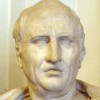
Aristotle (384-322 BC) Greek philosopher
Nicomachean Ethics [Ἠθικὰ Νικομάχεια], Book 5, ch. 2 (5.2.11) / 1130b.29 (c. 325 BC) [tr. Thomson (1953)]
(Source)
Aristotle suggests the distinction comes when a regime is corrupt or unjust, at which point carrying out the duties of a good citizen (supporting the regime) may not align with an individual's virtues.
See also Aristotle, Politics.
(Source (Greek)). Alternate translations:For perhaps it is not the same thing to be a good man, and a good citizen.
[tr. Taylor (1818), 5.2]It may be it is not the same thing to be a good man and a good citizen in every case.
[tr. Chase (1847), 5.4]The perfection of the man is not perhaps in all cases identical with the perfection of the citizens.
[tr. Williams (1869), 5.2]It is possibly not the same thing in all cases to be a good man and to be a good citizen.
[tr. Welldon (1892), 5.5]It is possible that to be a good man is not the same as to be a good citizen of any state whatever.
[tr. Peters (1893), 5.2]Perhaps it is not the same to be a good man and a good citizen of any state taken at random.
[tr. Ross (1908), 5.2]It would seem that to be a good man is not in every case the same thing as to be a good citizen.
[tr. Rackham (1934), 5.2.11]For being a good man is presumably not in every case the same as being a good citizen.
[tr. Reeve (1948)]For perhaps to be a good man is not the same as to be a good citizen in every case.
[tr. Apostle (1975)]Presumably it is not always the same thing to be a good man and a good citizen.
[tr. Thomson/Tredennick (1976)]For, presumably, being a good man is not the same as being every sort of good citizen.
[tr. Irwin/Fine (1995)]For, presumably, being a good person is not in every case the same as being a good citizen.
[tr. Crisp (2000)]For perhaps it is not the same thing in every case to be a good man and to be a good citizen.
[tr. Bartlett/Collins (2011)]

Rulers are no more than attorneys, agents and trustees for the people; and if the cause, the interest and trust is insidiously betray’d, or wantonly trifled away, the people have a right to revoke the authority, that they themselves have deputed, and to constitute abler and better agents, attorneys and trustees.
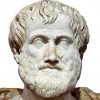
John Adams (1735-1826) American lawyer, Founding Father, statesman, US President (1797-1801)
Essay (1765-09-30), “A Dissertation on the Canon and the Feudal Law,” No. 3, Boston Gazette
(Source)

Nearly all of history is only a string of horrors. If tyrants dismiss it while they are alive, it seems that their successors allow people to transmit to posterity the crimes of their predecessors, in order to offer diversion away from the horror that they inspire themselves.
[Presque toute l’Histoire n’est qu’une suite d’horreurs. Si les tyrans la détestent, tandis qu’ils vivent, il semble que leurs successeurs souffrent qu’on transmette à la postérité les crimes de leurs devanciers, pour faire diversion à l’horreur qu’ils inspirent eux-mêmes.]
Nicolas Chamfort (1741-1794) French writer, epigrammist (b. Nicolas-Sébastien Roch)
Products of Perfected Civilization [Produits de la Civilisation Perfectionée], Part 1 “Maxims and Thoughts [Maximes et Pensées],” ch. 8, ¶ 474 (1795) [tr. Siniscalchi (1994)]
(Source)
(Source (French)). Alternate translations:Nearly all History is a procession of horrors; but, although tyrants hate History in their own lifetime, a general transmission of such crimes is not unpleasing to their descendants, for it distracts attention from their own.
[tr. Mathers (1926)]Almost the whole of history is nothing but a series of horrors. If tyrants detest it while they are alive, their successors seem willing to allow the crimes of their predecessors to be transmitted to posterity, to divert attention from the horror that they themselves inspire.
[tr. Merwin (1969)]Almost the whole of history is nothing more than a series of horrors. If tyrants detest it while they are alive, it seems that their that their successors suffer that the crimes of their predecessors should be laid at the door of posterity, in order to divert attention from the horrors to which they themselves give rise.
[tr. Pearson (1973)]Almost all of history is a story of horror. If tyrants condemn it during their lifetime, their successors seem to allow the crimes of their predecessors to be passed on to posterity, thereby diverting attention from the horror they themselves inspire.
[tr. Parmée (2003)]