There was a stag, once, who could always defeat a stallion
And drive him out of their pasture — until, tired of losing,
The horse begged help of man, and got a bridle in return.
He beat the stag, all right, and he laughed — but then the rider
Stayed on his back, and the bit stayed in his mouth.
Give up your freedom, more worried about poverty than something
Greater than any sum of gold, and become a slave and stay
A slave forever, unable to live on only enough.[Cervus equum pugna melior communibus herbis
pellebat, donec minor in certamine longo
imploravit opes hominis frenumque recepit;
sed postquam victor violins discessit ab hoste,
non equitem dorso, non frenum depulit ore.
Sic qui pauperiem veritus potiore metallis
libertate caret, dominum vehet improbus atque
serviet aeternum, quia parvo nesciet uti.]Horace (65–8 BC) Roman poet, satirist, soldier, politician [Quintus Horatius Flaccus]
Epistles [Epistularum, Letters], Book 1, ep. 10 “To Aristius Fuscus,” l. 34ff (1.10.34-41) (20 BC) [tr. Raffel (1983)]
(Source)
(Source (Latin)). Other translations:An hart the better chevalier as it came then to passe
Did chase an horse that fed with him from eating of the grasse.
The tryumpher after that he was parted from his foe
The man from backe, the bitt from mouthe he could not rid them fro.
So, he that feareth povertie his fredom cannot houlde.
Fredome, better then mettells all better then choysest goulde.
That foole shall beare in dede a Lorde, and lyve a dayly thrall,
For that he will not knowe to use and lyve upon a small.
[tr. Drant (1567)]The Stagg superior both in Arms and Force,
Out of the Common-Pasture drove the Horse:
Untill the vanquish'd after a long fight
Pray'd Man's assistance, and receiv'd the Bit:
But, having beat the Victor, could not now
Bit from his Mouth, nor Man from his Back throw.
So He that fearing Poverty, hath sold
Away his Liberty; better then Gold,
Shall carry a proud Lord upon his back,
And serve for ever, 'cause he could not lack.
[tr. Fanshawe; ed. Brome (1666)]Both fed together, till with injur'ous force,
The stoutest Deer expell'd the weaker Horse:
He beaten, flyes to Man to right his Cause,
Begs help, and takes the Bridle in his Jaws.
Yet tho He Conquer'd, tho He rul'd the Plain,
He bore the Rider still, and felt the Rein.
Thus the mean Wretch, that fearing to be poor,
Doth sell his Liberty for meaner Ore:
Must bear a Lord, He must be still a Slave,
That cannot use the little Nature gave.
[tr. Creech (1684)]A lordly stag, arm'd with superior force,
Drove from their common field a vanquisht horse,
Who for revenge to man his strength enslav'd,
Took up his rider, and the bitt received:
But, though he conquer'd in the martial strife,
He felt his rider's weight, and champt the bitt for life.
So he, who poverty with horror views,
Nor frugal nature's bounty knows to use;
Who sells his freedom in exchange for gold
(Freedom for mines of wealth too cheaply sold),
Shall make eternal servitude his fate,
And feel a haughty master's galling weight.
[tr. Francis (1747)]It chanced that after many a well-fought bout
The Stag contrived to put the Horse to rout;
'Till, from his pasture driven, the foe thought fit
To ask the aid of man and took the bit.
He conquer'd; but, his triumph o'er, began
To find he could shake off nor bit nor man.
such is the fate of him who, if he please,
Might rest in humble competence and ease,
Yet through the dread of penury has sold
That independence which surpasses gold.
Henceforth he'll serve a tyrant for his pains,
And stand or budge as avarice pulls the reins.
[tr. Howes (1845)]The stag, superior in fight, drove the horse from the common pasture, till the latter, worsted in the long contest, implored the aid of man and received the bridle; but after he had parted an exulting conqueror from his enemy, he could not shake the rider from his back, nor the bit from his mouth. So he who, afraid of poverty, forfeits his liberty, more valuable than mines, avaricious wretch, shall carry a master, and shall eternally be a slave, for not knowing how to use a little.
[tr. Smart/Buckley (1853)]The stag was wont to quarrel with the steed,
Nor let him graze in common on the mead:
The steed, who got the worst in each attack,
Asked help from man, and took him on his back:
But when his foe was quelled, he ne'er got rid
Of his new friend, still bridled and bestrid.
So he who, fearing penury, loses hold
Of independence, better far than gold,
Will toil, a hopeless drudge, till life is spent,
Because he'll never, never learn content.
[tr. Conington (1874)]Once on a time a stag, at antlers' point,
Expelled a horse he'd worsted, from the joint
Enjoyment of the pasture both had cropped:
Still, when he ventured near it, rudely stopped.
The steed called in man's aid, and took the bit:
Thus backed, he charged the stag, and conquered it.
But woe the while! nor rider, bit, nor rein
Could he shake off, and be himself again.
So he who, fearing poverty, hath sold
His freedom, better than uncounted gold.
Will bear a master and a master's laws.
And be a slave unto the end, because
He will not learn, what fits him most to know.
How far, discreetly used, small means will go.
[tr. Martin (1881)]The stag, being the more powerful animal in fight, was accustomed to drive off the horse from the open pasture until the latter, feeling his inferiority, after a protracted contest, implored the help of man, and received the rein. But after that, a revengeful victor, he had left his foe he threw not off the rider from his back nor the bit from his mouth. In a like manner the man who, through a dread of a small income, possesses not freedom -- preferable to metallic treasure -- will, basely, carry a master and yield him perpetual servitude, because he knows not how to enjoy a little.
[tr. Elgood (1893)]The stag could best the horse in fighting and used to drive him from their common pasture, until the loser in the long contest begged the help of man and took the bit. But after that, in overweening triumph, he parted from his foe, he did not dislodge the rider from his back or the bit from his mouth. So he who through fear of poverty forfeits liberty, which is better than mines of wealth, will in his avarice carry a master, and be a slave for ever, not knowing how to live on little.
[tr. Fairclough (Loeb) (1926)]The stag, victorious in fight, in course
Drove from the common pasturage the horse,
Until the horse, at last forced to submit,
Called in the help of man and took the bit;
But, when he had subdued his foe by force,
The rider from his back he couldn't divorce,
Nor from his mouth the bit. So, if in dread
Of Want, wone has one's freedom forfeited --
Freedom more precious than a mine outspread --
A master he will carry for his greed,
And always be a slave, because in deed
He knows not how to make a little do.
[tr. A. F. Murison (1931); ed. Kraemer, Jr (1936)]The stag, in time past, could drive
The horse from the feeding ground, and beat him in fighting,
Until the perpetual loser came crying to man
To ask for his help, and accepted the bit. Then the horse
Fought the stag once again to a bitter conclusion, and won.
He walked off and left his foe, but now couldn’t shake
The bit from his mouth or the rider down from his back.
So one who, fearing poverty, loses the liberty
That is worth even more than a gold mine will carry a master,
And cravenly slave for another, simply because
He can't subsist on a little.
[tr. Palmer Bovie (1959)]A stag battled a horse for the best grass in a field
And kept on winning until the loser in that long war
approached a man to beg his help, and took the bit.
But when it had won the bloody clash and routed its foe,
it could neither shake out the bit nor shake off the rider.
Anyone so scared of poverty he'd rather lose his freedom
than his mines is such a fool he bears a rider, a master
he'll obey forever, since he never learned to live on little.
[tr. Fuchs (1977)]The stag was a better fighter than the horse
And often drove him out of their common pasture,
Until the horse, the loser, asked man's help
And acquiesced in taking the bit in his mouth.
But after his famous victory in this battle
He couldn't get the rider off his back
And he couldn't get the bit out of his mouth.
The man who'se afraid to be poor and therefore gives
His liberty away, worth more than gold,
Will carry a master on his back and be
A slave forever, not knowing how to live
On just a little.
[tr. Ferry (2001)]The stag, being stronger than the horse, drove him away from the pasture
they shared, until, having had the worse of the age-old struggle,
the horse turned for help to man, and accept the bit.
But after routing his enemy and leaving the field in triumph
he never dislodged the rider from his back or the bit from his mouth.
So the man who, in fear of poverty, forgoes his independence
(a thing more precious than metals) has the shame of carrying a master;
he's a slave for life, as he will not make the best of a little.
[tr. Rudd (2005 ed.)]The stag could always better the horse in conflict,
And drive him from open ground, until the loser
In that long contest, begging man’s help, took the bit:
Yet, disengaged from his enemy, as clear victor,
He couldn’t shed man from his back, the bit from his mouth.
So the perverse man who forgoes his freedom, worth more
Than gold, through fear of poverty, suffers a master
And is a slave forever, by failing to make much
Of little.
[tr. Kline (2015)]
Quotations about:
servility
Note not all quotations have been tagged, so Search may find additional quotes on this topic.
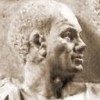
One form of servility consists in a slavish attitude — of the kind incompatible with self-respecting manliness — toward any person who is powerful by reason of his office or position. Servility may be shown by a public servant toward the profiteering head of a large corporation, or toward the anti-American head of a big labor organization. It may also be shown in peculiarly noxious and un-American form by confounding the President or any other official with the country and shrieking “stand by the President” without regard to whether, by so acting, we do or do not stand by the country.
Theodore Roosevelt (1858–1919) American politician, statesman, conservationist, writer, US President (1901–1909)
Essay (1918-05), “Lincoln and Free Speech,” Metropolitan Magazine, Vol. 47, No. 6
(Source)
On censorship actions by the Wilson Administration taken against critics of its handling of war efforts.
Reprinted in Appendix C of his The Great Adventure (1918), and as ch. 7 of that book in Vol. 21 of The Works of Theodore Roosevelt (1925), The Great Adventure
Familiarize yourselves with the chains of bondage, and you are preparing your own limbs to wear them. Accustomed to trample on the rights of those around you, you have lost the genius of your own independence, and become the fit subjects of the first cunning tyrant who rises.
Abraham Lincoln (1809-1865) American lawyer, politician, US President (1861-65)
Speech (1858-09-11), Edwardsville, Illinois
(Source)
As reported in the Alton Weekly Courier (1858-09-16).
The cringing Train of Pow’r, survey;
What Creatures are so low as they!
With what obsequiousness they bend!
To what vile actions condescend!
Their Rise is on their Meanness built,
And Flatt’ry is their smallest Guilt.Benjamin Franklin (1706-1790) American statesman, scientist, philosopher, aphorist
Poor Richard (1741 ed.)
(Source)
It has always seemed absurd to suppose that a god would choose for his companions, during all eternity, the dear souls whose highest and only ambition is to obey.
Robert Green Ingersoll (1833-1899) American lawyer, freethinker, orator
Lecture (1873-12) “Individuality,” Chicago Free Religious Society
(Source)
Full title "Arraignment of the Church and a Plea for Individuality." Collected in The Gods and Other Lectures (1876).
People who wish to salute the free and independent side of their evolutionary character acquire cats. People who wish to pay homage to their servile and salivating roots own dogs.
Anna Quindlen (b. 1953) American journalist, novelist
Article (1991-04-07), “Mr. Smith Goes to Heaven,” New York Times
(Source)
Part of an obituary for her dog, Jason Oliver C. Smith. Reprinted in Thinking Out Loud (1993).

Throw a stick, and the servile dog wheezes and pants and shambles to bring it to you. Do the same before a cat, and he will eye you with coolly polite and somewhat bored amusement.
H. P. Lovecraft (1890-1937) American fabulist [Howard Phillips Lovecraft]
“Cats and Dogs” (23 Nov 1926), Leaves (Summer 1937)
(Source)
Reprinted as "Something about Cats" in Something About Cats: And Other Pieces (1949) [ed. Derleth].
If a man has a genuine, sincere, hearty wish to get rid of his liberty, if he is really bent upon becoming a slave, nothing can stop him. And the temptation is to some natures a very great one.
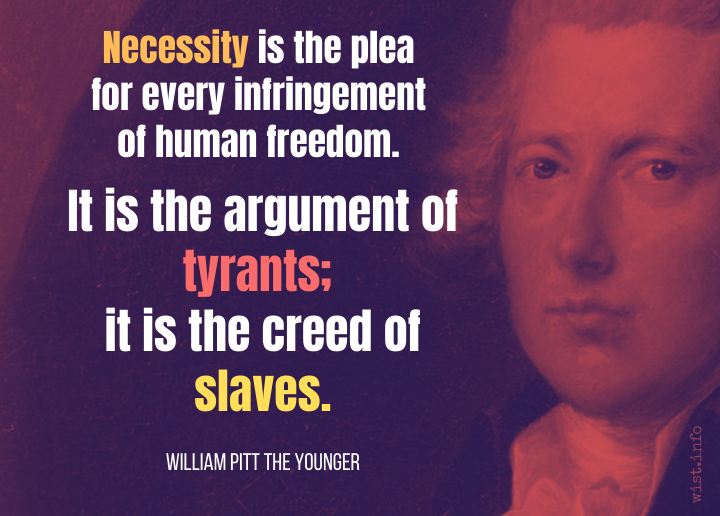
It is true, the bill is said to be founded on necessity; but what is this? Is it not necessity, which has always been the plea of every illegal exertion of power, or exercise of oppression? Is not necessity the pretence of every usurpation? Necessity is the plea for every infringement of human freedom. It is the argument of tyrants; it is the creed of slaves.
Flattery iz like colone water, tew be smelt ov, not swallered.
[Flattery is like cologne water, to be smelt of, not swallowed.]
Josh Billings (1818-1885) American humorist, aphorist [pseud. of Henry Wheeler Shaw]
Josh Billings’ Farmer’s Allminax, 1870-02 (1870 ed.)
(Source)
This passage can be originally found in column material, e.g., in the Middlesex County Journal (Massachusetts) (1969-07-10), "Sollum Thoughts":Flattery is like kolone water, tew be smelt ov, not swallowed.