It is very good to copy what one sees; it is much better to draw what you can’t see any more but is in your memory. It is a transformation in which imagination and memory work together. You only reproduce what struck you, that is to say the necessary. There your memories and your fantasy are freed from the tyranny exercised by nature.
[C’est très bien de copier ce qu’on voit, c’est beaucoup mieux de dessiner ce que l’on ne voit plus que dans son mémoire. C’est une transformation pendant laquelle l’ingéniosité collabore avec la mémoire. Vous ne reproduisez que ce qui vous a frappé, c’est-à-dire le nécessaire. Là, vos souvenirs et votre fantaisie sont libérés de la tyrannie qu’exerce la nature.]
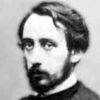
Edgar Degas (1834–1917) French Impressionist artist [b. Hilaire-Germain-Edgar De Gas]
Quoted in Georges Jeanniot, “Souvenirs sur Degas [Memories of Degas],” La Revue Universelle (1933-10-15)
(Source)
The quotation is often cited to Maurice Sérullaz, L'univers de Degas (1979), but Sérullaz says he is requoting Degas from Swiss-French Impressionist painter Pierre-Georges Jeanniot.
Quotations about:
impression
Note not all quotations have been tagged, so Search may find additional quotes on this topic.
Children learn what they experience. They are like wet cement. Any word that falls on them makes an impact.
Haim Ginott (1922–1973) Israeli-American school teacher, child psychologist, psychotherapist [b. Haim Ginzburg]
Between Parent and Child: Revised and Updated Edition, ch. 10 “Summing Up” (2003 ed.) [with A. Ginott and H. W. Goddard]
(Source)
Frequently paraphrased (e.g.) as "Children are like wet cement. Whatever falls on them makes an impression."
This is usually cited as being from the original 1965 edition of the book, but cannot be found there. Instead, it appears to be from the 2003 edition, as revised and updated by his wife, Dr Alice Ginott, and Dr H Wallace Goddard. It is unclear if Haim Ginott may have used this phrase in other contexts.
Charming villains have always had a decided social advantage over well-meaning people who chew with their mouths open.

Such as are thy habitual thoughts, such also will be the character of thy mind; for the soul is dyed by the thoughts.
[Οἷα ἂν πολλάκις φαντασθῇς, τοιαύτη σοι ἔσται ἡ διάνοια: βάπτεται γὰρ ὑπὸ τῶν φαντασιῶν ἡ ψυχή.]
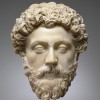
Marcus Aurelius (AD 121–180) Roman emperor (161–180), Stoic philosopher
Meditations [To Himself; Τὰ εἰς ἑαυτόν], Book 5, ch. 16 (2.5) (AD 161-180) [tr. Long (1862)]
(Source)
(Source (Greek)). Other translations:Such as thy thoughts and ordinary cogitations are, such will thy mind be in time. For the soul doth as it were receive its tincture from the fancies, and imaginations.
[tr. Casaubon (1634), 5.15]Your Manners will depend very much upon the Quality of what you frequently think on; For the Soul is as it were Tinged with the Colour, and Complexion of Thought.
[tr. Collier (1701)]Such as the imaginations are which you frequently dwell upon, such will be the disposition of your soul. The soul receives a tincture from the imagination.
[tr. Hutcheson/Moor (1742)]Such as are the objects on which your thoughts are most frequently employed, such will be the state of your mind. For the soul takes a tincture from the usual current of its ideas.
[tr. Graves (1792)]Your manners will depend very much upon the quality of what you frequently think on; for the soul is as it were tinged with the color and complexion of thought.
[tr. Collier/Zimmern (1887)]Repeat impressions, and your understanding will assimilate itself to them; for the soul takes the dye of its impressions.
[tr. Rendall (1898)]The character of your most frequent impressions will be the character of your mind. The soul takes colour from its impressions.
[tr. Hutcheson/Chrystal (1902)]The character of thy mind will be such as is the character of thy frequent thoughts, for the soul takes its dye from the thoughts.
[tr. Haines (Loeb) (1916)]As are your repeated imaginations so will your mind be, for the soul is dyed by its imaginations.
[tr. Farquharson (1944)]Your mind will be like its habitual thoughts; for the soul becomes dyed with the colour of its thoughts.
[tr. Staniforth (1964)]As are your regular impressions, so will your mind be also; for the soul takes its colouring from its impressions.
[tr. Hard (1997 ed.)]The things you think about determine the quality of your mind. Your soul takes on the color of your thoughts.
[tr. Hays (2003)]Your mind will take on the character of your most frequent thoughts: souls are dyed by thoughts.
[tr. Hammond (2006)]Whatever kind of impressions you receive most often, so too will be your mind, for the soul is dyed with the color of one's impressions.
[tr. Needleman/Piazza (2008)]As are your habitual conceptions, so will your mind be also; for the soul takes its colouring from its conceptions.
[tr. Hard (2011 ed.)]As your most frequent impressions are, so will your mind be: your character is coloured by its impressions.
[tr. Gill (2013)]
It is far more impressive when others discover your good qualities without your help.
Judith Martin (b. 1938) American author, journalist, etiquette expert [a.k.a. Miss Manners]
(Attributed)
Widely attributed to Martin, but no citeable source found. Some sources point to Reader's Digest which, on research, was not helpful.

Men hate more steadily than they love; and if I have said something to hurt a man once, I shall not get the better of this by saying many things to please him.
Samuel Johnson (1709–1784) English writer, lexicographer, critic
In James Boswell, Life of Samuel Johnson, “September 15, 1777” (1791)
(Source)