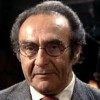
It isn’t enough for poems to be things of beauty:
Let them stun the hearer and lead his heart where they will.[Non satis est pulchra esse poemata; dulcia sunto
Et, quocumque uolent, animum auditoris agunto.]Horace (65–8 BC) Roman poet, satirist, soldier, politician [Quintus Horatius Flaccus]
Epistles [Epistularum, Letters], Book 2, ep. 3 “Art of Poetry [Ars Poetica; To the Pisos],” l. 99ff (2.3.99-100) (19 BC) [tr. Palmer Bovie (1959)]
(Source)
One of the most famous lines in the Ars Poetica.
(Source (Latin)). Other translations:Not lore enough in Poesis, let them be sweetlye fynde,
And let them leade to where them liste the hearers plyante mynde.
[tr. Drant (1567)]Tis not enough the labouring Muse affords
Her Poëms beauty, but a sweet delight,
To worke the hearers minds, still to the plight.
[tr. Jonson (1640); l. 140ff]He that would have Spectators share his Grief,
Must write not only well, but movingly,
And raise Mens Passions to what height he will.
[tr. Roscommon (1680)]'Tis not enough, ye writers, that ye charm
With ease and elegance; a play should warm
With soft concernment; should possess the soul,
And, as it wills, the listening crowd controul.
[tr. Francis (1747)]'Tis not enough that Plays are polish'd, chaste,
Or trickt in all the harlotry of taste,
They must have passion too; beyond controul
Transporting where they please the hearer's soul.
[tr. Coleman (1783)]It is not enough for poems to be fine; they must charm, and draw the mind of the listener at will.
[tr. Blakeney (1828)]'Tis not enough that poetry combine
All fancy's charms in every sounding line:
Empassion'd let her be, and melt at will
The soul to pity or with horror thrill.
[tr. Howes (1845)]It is not enough that poems be beautiful; let them be tender and affecting, and bear away the soul of the auditor whithersoever they please.
[tr. Smart/Buckley (1853)]Mere grace is not enough: a play should thrill
The hearer's soul, and move it at its will.
[tr. Conington (1874)]Fine things won't make a drama: it must thrill
The hearers' souls, and sway them at its will.
[tr. Martin (1881)]Nor is it enough that poems possess beauty in the construction. They must please and, in whatsoever direction they will, send there the feelings of the auditors.
[tr. Elgood (1893)]Not enough is it for poems to have beauty: they must have charm, and lead the hearer's soul where they will.
[tr. Fairclough (Loeb) (1926)]It isn't enough to make lines pretty; they must move,
and affect the hearer's soul exactly as the poet wants.
[tr. Fuchs (1977)]Poems (oh)
can be (oh)
so beautiful
And (oh) so dull.
Poets need charm, too, to seduce our minds.
[tr. Raffel (1983 ed.)]Sheer abstract beauty isn't enough in a poem;
Its language must so persuade the listener
And act upon his soul that he'll respond
As the poem intends.
[tr. Ferry (2001)]Correctness is not enough in a poem; it must be attractive,
leading the listener's emotions in whatever way it wishes.
[tr. Rudd (2005 ed.)]It’s not enough for poems to have beauty: they must have
Charm, leading their hearer’s heart wherever they wish.
[tr. Kline (2015)]
Quotations about:
craft
Note not all quotations have been tagged, so Search may find additional quotes on this topic.
Making a book is a craft, like making a clock; it needs more than native wit to become an author.
[C’est un métier que de faire un livre, comme de faire une pendule: il faut plus que de l’esprit pour être auteur.]
Jean de La Bruyère (1645–1696) French essayist, moralist
The Characters [Les Caractères], ch. 1 “Of Works of the Mind [Des Ouvrages de l’Esprit],” § 3 (1.3) (1688) [tr. Stewart (1970)]
(Source)
(Source (French)). Other translations:To make a Book, is like making a Pendulum, a Man must have Experience, as well as Wit to succeed in it.
[Bullord ed. (1696)]Tis as much a Trade to make a Book, as to make a Watch; there's something more than Wit requisite to make an Author.
[Curll ed. (1713)]To make a Book, is no less a Trade than to make a Clock; something more than Wit is necessary to form an Author.
[Browne ed. (1752)]To make a book is as much a trade as to make a clock; something more than intelligence is required to become an author.
[tr. Van Laun (1885)]

Much of the joy of science is the joy of solid work done by skilled workmen. Many of us are happy to spend our lives in collaborative efforts where to be reliable is more important than to be original. There is a great satisfaction in building good tools for other people to use.
Freeman Dyson (1923–2020) English-American theoretical physicist, mathematician, futurist
Disturbing the Universe, ch. 1 (1979)
(Source)

The reason I can’t take myself seriously as a “creative artist,” Guy dear, is because I’m not one. It’s not somehow not in me to bear very patiently with my own mediocrity. If I can’t — and I can’t — be Shakespeare or Goethe, I’d rather raise good cabbages. And that is why I would not write at all, except that there is more money in writing than in cabbages, not only more money, but more freedom. […] This is why I’m not “filled with my art.” I ain’t got no art. I’ve got only a kind of craftsman’s skill, and make stories as I make biscuits or embroider underwear or wrap up packages.
Rose Wilder Lane (1886–1968) American journalist, travel writer, novelist, political theorist
Letter to Guy Moyston (25 Jun 1925)
(Source)
Quoted in William Holtz, The Ghost in the Little House: A Life of Rose Wilder Lane, ch. 9, sec. 5 (1995).

Yet I think that to all living things there is a pleasure in the exercise of their energies, and that even beasts rejoice in being lithe and swift and strong. But a man at work, making something which he feels will exist because he is working at it and wills it, is exercising the energies of his mind and soul as well as of his body. Memory and imagination help him as he works. Not only his own thoughts, but the thoughts of the men of past ages guide his hands; and, as a part of the human race, he creates. If we work thus we shall be men, and our days will be happy and eventful.
William Morris (1834–1896) British textile designer, writer, socialist activist
“Useful Work versus Useless Toil,” lecture (1884)
(Source)
Printed in Signs of Change (1888).

The world can only be grasped by action, not by contemplation. The hand is more important than the eye. We are active; and indeed we know, as something more than a symbolic accident in the evolution of man, that it is the hand that drives the subsequent evolution of the brain. We find tools today made by man before he became man. Benjamin Franklin in 1778 called man “a tool-making animal,” and that is right.
Jacob Bronowski (1908–1974) Polish-English humanist and mathematician
The Ascent of Man, ch. 3 (1973)