Life’s usefulness is not in its length, but in its use: some who have lived a long time have lived but little — take heed of it while you are still in it. For you to have lived enough lies in your will, not in the number of your years.
[L’utilité du vivre n’est pas en l’espace: elle est en l’usage. Tel a vescu long temps, qui a peu vescu. Attendez vous y pendant que vous y estes. Il gist en vostre volonté, non au nombre des ans, que vous ayez assez vescu.]
Michel de Montaigne (1533–1592) French essayist
Essays, Book 1, ch. 19 (1.19), “That to Philosophize Is to Learn to Die [Que Philosopher, c’est apprendre à mourir]” (1572-03) [tr. Atkinson/Sices (2012)]
(Source)
This essay was present in the 1st (1580) edition, but this passage dates from the final (1595) collection.
Some translators use the older 1588 chapter sequence, and identify this as ch. 20.
(Source (French)). Alternate translations:The profit of life consistes not in the space, but rather in the use. Some man hath lived long, that hath had a short life. Follow it whilst you have time. It consists not in number of yeares, but in your will, that you have lived long enough.
[tr. Florio (1603)]Neither does the Utility of living consist in the length of days, but in the well husbanding and improving of Time, and such an one may have been who has longer continued in the World than the ordinary Age of Man; that has yet liv’d but a little while. Make use of Time while it is present with you. It depends upon your Will, and not upon the number of Days, to have a sufficient length of Life.
[tr. Cotton (1686)]The benefit of life consists not in the space, but in the use of it. Such a one may have lived a long time who yet may be said to have enjoyed but a short life. Give attention to time while it is present with you. It depends upon your will and not upon the nujmber of years that you have lived long enough.
[tr. Friswell (1868)]The utility of living consists not in the length of days, but in the use of time; a man may have lived long, and yet lived but a little. Make use of time while it is present with you. It depends upon your will, and not upon the number of days, to have a sufficient length of life.
[tr. Cotton/Hazlitt (1877)]The usefulness of living is not in length of time, but in its use. A man may have lived long who has lived little. Look well to life whilst you are in life. It depends on your will, not on the number of your years, whether you ahve loved long enough.
[tr. Ives (1925)]Wherever your life ends, it is all there. “The advantage of living is not measured by length, but by use; some men have lived long, and lived little; attend to it while you are in it. It lies in your will, not in the number of years, for you to have lived enough.
[tr. Frame (1943)]The value of life lies not in the length of days but in the use you make of them; he has lived for a long time who has little lived. Whether you have lived enough depends not on the number of your years but on your will.
[tr. Rat (1958), 1.20]The usefulness of living lies not in duration but in what you make of it. Some have lived long and lived little. See to it while you are still here. Whether you have lived enough depends not on a count of years but on your will.
[tr. Screech (1987)]Life is worth not its extent but its use. Some lived little who lived a long while. Pay attention to life while you live yours. Whether you have lived enough depends on your will, not on a number of years.
[tr. HyperEssays (2025)]
Quotations about:
fulfillment
Note not all quotations have been tagged, so Search may find additional quotes on this topic.
If it came true, it wasn’t much of a dream.
Mignon McLaughlin (1913–1983) American journalist and author
The Neurotic’s Notebook, ch. 5 (1963)
(Source)
A blossom must break the sheath it has been sheltered by.
Phyllis Bottome (1884–1963) British novelist and short story writer [mar. Phyllis Forbes Dennis]
The Mortal Storm, ch. 15 (1938)
(Source)
It is good for a professional to be reminded that his professionalism is only a husk, that the real person must remain an amateur, a lover of the work.
May Sarton (1912–1995) Belgian-American poet, novelist, memoirist [pen name of Eleanore Marie Sarton]
Journal of a Solitude, ch. 11 (1973)
(Source)
O prince, in early youth divinely wise,
Born, the Ulysses of thy age to rise
If to the son the father’s worth descends,
O’er the wide wave success thy ways attends
To tread the walks of death he stood prepared;
And what he greatly thought, he nobly dared.[Τηλέμαχ᾽, οὐδ᾽ ὄπιθεν κακὸς ἔσσεαι οὐδ᾽ ἀνοήμων,
εἰ δή τοι σοῦ πατρὸς ἐνέστακται μένος ἠύ,
οἷος κεῖνος ἔην τελέσαι ἔργον τε ἔπος τε:
οὔ τοι ἔπειθ᾽ ἁλίη ὁδὸς ἔσσεται οὐδ᾽ ἀτέλεστος.]Homer (fl. 7th-8th C. BC) Greek author
The Odyssey [Ὀδύσσεια], Book 2, l. 271ff (2.271-274) (c. 700 BC) [tr. Pope (1725)]
(Source)
Athena (looking like Mentor) addressing Odysseus' son, Telemachus.
(Source (Greek)). Other translations:Those Wooers well might know, Telemachus,
Thou wilt not ever weak and childish be,
If to thee be instill’d the faculty
Of mind and body that thy father grac’d;
And if, like him, there be in thee enchac’d
Virtue to give words works, and works their end.
This voyage, that to them thou didst commend,
Shall not so quickly, as they idly ween,
Be vain, or giv’n up, for their opposite spleen.
[tr. Chapman (1616)]If in you you retain the spirit brave
Your father had, to make his word his deed,
Then also the assurance I shall have,
To tell you in your voyage you shall speed.
[tr. Hobbes (1675), l. 257ff]Telemachus! thou shalt hereafter prove
Nor base, nor poor in talents. If, in truth,
Thou have received from heav’n thy father’s force
Instill’d into thee, and resemblest him
In promptness both of action and of speech,
Thy voyage shall not useless be, or vain.
[tr. Cowper (1792), l. 355ff]Not base and foolish after all is done
Shalt thou be counted, if the brave old blood
hath from the sire descended to the son.
If thou like him both word and deed make good,
Then were thy journey all in vain withstood.
[tr. Worsley (1861), st. 37]Tel'mac'! no craven wilt thou be nor dullard;
If but one drop of they sire's good blood be in thee,
Such as he was in feats of deed or word:
So will not be thy journey vain nor bootless!
[tr. Bigge-Wither (1869)]Telemachus, even hereafter thou shalt not be craven or witless, if indeed thou hast a drop of thy father’s blood and a portion of his spirit; such an one was he to fulfil both word and work. Nor, if this be so, shall thy voyage be vain or unfulfilled.
[tr. Butcher/Lang (1879)]Telemachus, now shalt thou be no foolish faintheart thing.
If of they father's good-heart in thee hath sprung the seed,
Such a man for the word well-spoken, and fulfilment of the deed,
Not in vain shall be thy faring, nor thy going forth be undone.
[tr. Morris (1887)]Telemachus, henceforth you shall not be a base man nor a foolish, if in you stirs the brave soul of your father, and you like him can give effect to deed and word. Then shall this voyage not be vain and ineffective.
[tr. Palmer (1891)]Telemachus, if you are made of the same stuff as your father you will be neither fool nor coward henceforward, for Ulysses never broke his word nor left his work half done. If, then, you take after him, your voyage will not be fruitless.
[tr. Butler (1898)]Telemachus, neither hereafter shalt thou be a base man or a witless, if aught of thy father's goodly spirit has been instilled into thee, such a man was he to fulfil both deed and word. So then shall this journey of thine be neither vain nor unfulfilled.
[tr. Murray (1919)]Telemachus, let not your courage and resource fail you now. In your father deed and word notably marched together to their deliberate end. If your body holds a trace of his temper it will suffice to make this effort of yours neither bootless nor aimless.
[tr. Lawrence (1932)]Today has proved you, Telemachus, neither a coward nor a fool, nor destined to be such, if we are right in thinking that your father’s manly vigour has descended to his son -- and what a man he was in action and debate! No fear, then, that this journey of yours will end in farce or failure.
[tr. Rieu (1946)]You'll never be fainthearted or a fool,
Telémakhos, if you have your father's spirit;
he finished what he cared to say,
and what he took in hand he brought to pass.
The sea routes will yield their distances
to his true son, Penélopê's true son.
[tr. Fitzgerald (1961)]Telemachos, you are to be no thoughtless man, no coward,
if truly the strong force of your father is instilled in you;
such a man he was for accomplishing word and action.
Your journey then will be no vain thing nor go unaccomplished.
[tr. Lattimore (1965)]Telemachus,
you'll lack neither courage nor sense from this day on,
not if your father's spirit courses through your veins --
now there was a man, I'd say, in words and action both!
So how can your journey end in shipwreck or defeat?
[tr. Fagles (1996)]You won't turn out to be a fool or a coward,
Telemachus, not if any of Odysseus' spirit
Has been instilled in you. Now there was a man
Who made sure of his words and deeds! Don't worry,
You'll make this journey, and it won't be in vain.
[tr. Lombardo (2000), l. 293ff]Telemachus, if your father’s fine spirit is found in you, you will be neither a fool nor a coward in the time to come, and this journey of yours will be no idle failure. But if you are not Odysseus’ and Penelope’s son, then I have no hopes of you achieving your end. There are not many sons, indeed, who resemble their fathers: most are worse, and only a few are better.
[tr. Kline (2004)]Telemachus, you will not in future prove cowardly or foolish if you have truly inherited your father's strong vigor -- and what a man he was for carrying out his word and deed -- and so your journey will surely not be unfulfilled or in vain.
[tr. Verity (2016)]Telemachus, you will be brave and thoughtful,
if your won father's forcefulness runs through you.
How capable he was, in word and deed!
Your journey will succeed, if you are his.
[tr. Wilson (2017)]Tēlemachos, you'll turn out neither craven nor witless
if in deed you've been imbued with your father's rare strength --
such a man he was, so masterful in both deeds and words!
In that case your mission won't be useless or unfulfilled.
[tr. Green (2018)]Telemachus,
in future days you will not be worthless
or a stupid man, if you have in you now
something of your father’s noble spirit.
He’s the sort of man who, in word and deed,
saw things to their conclusion. So for you
this trip will not be in vain or pointless.
[tr. Johnston (2019), l. 364ff]
Writing isn’t about making money, getting famous, getting dates, getting laid, or making friends. In the end, it’s about enriching the lives of those who will read your work, and enriching your own life, as well. It’s about getting up, getting well, and getting over. Getting happy, okay? Getting happy. […] Writing is magic, as much the water of life as any other creative art. The water is free. So drink. Drink and be filled up.
Your calling is the place where your deep gladness and the world’s deep hunger meet.
Frederick Buechner (b. 1926) American minister, author
The Hungering Dark (1969)
Ah, woe is me, through all my days
Wisdom and wealth I both have got,
And fame and name and great men’s praise;
But Love, ah, Love! I have it not.H. C. Bunner (1855–1896) American novelist and poet [Henry Cuyler Bunner]
“The Way to Arcady” (1892)
(Source)
Yet I think that to all living things there is a pleasure in the exercise of their energies, and that even beasts rejoice in being lithe and swift and strong. But a man at work, making something which he feels will exist because he is working at it and wills it, is exercising the energies of his mind and soul as well as of his body. Memory and imagination help him as he works. Not only his own thoughts, but the thoughts of the men of past ages guide his hands; and, as a part of the human race, he creates. If we work thus we shall be men, and our days will be happy and eventful.
William Morris (1834–1896) British textile designer, writer, socialist activist
“Useful Work versus Useless Toil,” lecture (1884)
(Source)
Printed in Signs of Change (1888).
HAL9000: I am putting myself to the fullest possible use, which is all I think that any conscious entity can ever hope to do.
Stanley Kubrick (1928–1999) American film director, screenwriter, producer
2001: A Space Odyssey (1968) [with Arthur C. Clarke]
Well-married, a man is winged — ill-matched, he is shackled.
Henry Ward Beecher (1813–1887) American clergyman and orator
Norwood; or, Village Life in New England, Vol. 1, ch. 6 (1867)
(Source)
Later requoted in Proverbs from Plymouth Pulpit, ch. 17 "The Family" (1887).
I believe that happiness consists in having a destiny in keeping with our abilities. Our desires are things of the moment, often harmful even to ourselves; but our abilities are permanent, and their demands never cease.
Germaine de Staël (1766–1817) Swiss-French writer, woman of letters, critic, salonist [Anne Louise Germaine de Staël-Holstein, Madame de Staël, Madame Necker]
Reflections on Suicide (1813)
(Source)

The best things in life aren’t things.
Art Buchwald (1925–2007) American humorist, columnist
(Attributed)
How little a thing can make us happy when we feel that we have earned it!
Mark Twain (1835–1910) American writer [pseud. of Samuel Clemens]
Story (1905-12), “Eve’s Diary,” Harper’s Magazine, Vol. 112, No. 1
(Source)
On Adam's admiration for her (Eve) having properly named the dodo.
Published in June, 1906, as its own (illustrated) book.
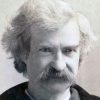
‘Patriotism is not enough.’ But neither is anything else. Science is not enough, religion is not enough, art is not enough, politics and economics are not enough, nor is love, nor is duty, nor is action however disinterested, nor, however sublime, is contemplation. Nothing short of everything will really do.
Aldous Huxley (1894–1963) English novelist, essayist and critic
The Island, “Notes on What’s What” (1962)
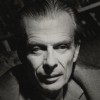
The better part of happiness is to wish to be what you are.
Desiderius Erasmus (1465–1536) Dutch humanist philosopher and scholar
The Praise of Folly, ch. 10 (1509) [tr. Hudson (1941)]
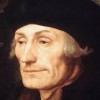
Anything I’ve ever done that ultimately was worthwhile … initially scared me to death.
(Other Authors and Sources)
Betty Bender