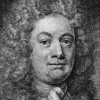
If we did not flatter ourselves, the flattery of others could do us no harm.
[Si nous ne nous flattions point nous-mêmes, la flatterie des autres ne nous pourroit nuire.]
François VI, duc de La Rochefoucauld (1613–1680) French epigrammatist, memoirist, noble
Réflexions ou sentences et maximes morales [Reflections; or Sentences and Moral Maxims], ¶152 (1665-1678) [tr. Kronenberger (1959)]
(Source)
Present in the 1st (1665) edition, where it ended with "... ne nous feroit jamais de mal." See also maxim ¶158.
(Source (French)). Other translations:If we did not Flatter our selves, all the Flatteries of other People could never hurt us.
[tr. Stanhope (1694), ¶153]Did we not flatter ourselves, the flattery of others could never hurt us.
[pub. Donaldson (1783), ¶144; ed. Lepoittevin-Lacroix (1797), ¶146]Were we not to flatter ourselves, the flattery of others would never hurt us.
[ed. Carvill (1835), ¶127]If we did not flatter ourselves, the flattery of others would be very harmless.
[ed. Gowens (1851), ¶155]If we never flattered ourselves the flattery of others would not hurt us.
[tr. Bund/Friswell (1871), ¶152]Did we not flatter ourselves, the flattery of others could not harm us.
[tr. Heard (1917), ¶152]Flattery would do us no harm if we did not flatter ourselves.
[tr. Stevens (1939), ¶152]If we never flattered ourselves, we would be immune to the flattery of others
[tr. FitzGibbon (1957), ¶152]If we never flattered ourselves the flattery of others could do us no harm.
[tr. Tancock (1959), ¶152]If we did not flatter ourselves, the flattery of others could never harm us.
[tr. Whichello (2016) ¶152]
Quotations about:
self-praising
Note not all quotations have been tagged, so Search may find additional quotes on this topic.
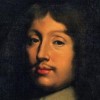
Even the acquisition of knowledge is often much facilitated by the advantages of society: he that never compares his notions with those of others, readily acquiesces in his first thoughts, and very seldom discovers the objections which may be raised against his opinions; he, therefore, often thinks himself in possession of truth, when he is only fondling an errour long since exploded. He that has neither companions nor rivals in his studies, will always applaud his own progress, and think highly of his performances, because he knows not that others have equalled or excelled him. And I am afraid it may be added, that the student who withdraws himself from the world, will soon feel that ardour extinguished which praise or emulation had enkindled, and take the advantage of secrecy to sleep, rather than to labour.
Samuel Johnson (1709–1784) English writer, lexicographer, critic
Essay (1754-01-19), The Adventurer, No. 126
(Source)
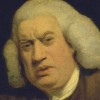
Thare iz two men, prowling around, who want cluss watching, the one, that iz allwuz praizing, and the one, who iz allwuz kondeming, himself.
[There are two men, prowling around, who want close watching: the one that is always praising, and the one who is always condemning, himself.]
Josh Billings (1818–1885) American humorist, aphorist [pseud. of Henry Wheeler Shaw]
Josh Billings’ Trump Kards, ch. 14 “A Ghost” (1874)
(Source)

It is better to be praised by another than by oneself.
[βέλτερον ὑφ’ ἑτέρου ἢ ὑφ’ ἑαυτοῦ ἐπαινέεσθαι.]
Democritus (c. 460 BC - c. 370 BC) Greek philosopher
Frag. 114 (Diels) [tr. Freeman (1948)]
(Source)
Original Greek. Diels citation "114. (117 N.) DEMOKRATES. 82." Freeman notes this as one of the Gnômae, from a collection called "Maxims of Democratês," but because Stobaeus quotes many of these as "Maxims of Democritus," they are generally attributed to the latter. The same translation is made by @sentantiq (2016).
Another translation: "It is better to be praised by others than by oneself." [tr. Barnes (1987)]
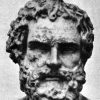
But when all is summed up, a man never speaks of himself without loss; his accusations of himself are always believed; his praises never.
Michel de Montaigne (1533–1592) French essayist
Essays, Book 3, ch. 8 (3.8), “Of the Art of Conversation” (1586–87) [tr. Cotton (1877)]
(Source)
Neither praise, nor dispraise thy self; thy Actions will do it enough.
Thomas Fuller (1654–1734) English physician, preacher, aphorist, writer
Introductio ad Prudentiam, Vol. 1, # 338 (1725)
(Source)