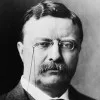

Joint action is, after all, the final significance of all we do in our international politics today. But we are still held back by our old parochial nationalisms. We are still beset by dark prejudices. We are still divided by angry, conflicting ideologies. Yet all around us our science, our instruments, our technologies, our interests, and indeed our deepest aspirations draw us more and more closely into a single neighborhood.
Adlai Stevenson II (1900–1965) American politician, diplomat, statesman
Speech (1965-07-09), “Strengthening the International Development Institutions,” sec. 12, United Nations Economic and Social Council, Palais des Nations, Geneva, Switzerland
(Source)
Stevenson was serving as UN Ambassador from the United States. He died of a heart attack on 1965-07-14, while in London after this trip. This was his last public address, and was read into the Congressional Record for the House of Representatives, 89th US Congress (1965-07-15) by Rep. Abraham Multer of New York.
Quotations about:
international affairs
Note not all quotations have been tagged, so Search may find additional quotes on this topic.
In the future world the misuse of power, as implied in the term “power politics,” must not be a controlling factor in international relations. That is the heart of the principles to which we have subscribed. We cannot deny that power is a factor in world politics any more than we can deny its existence as a factor in national politics. But in a democratic world, as in a democratic Nation, power must be linked with responsibility, and obliged to defend and justify itself within the framework of the general good.
Franklin Delano Roosevelt (1882–1945) American lawyer, politician, statesman; US President (1933–45)
Message (1945-01-06) to Congress, Annual Message (State of the Union)
(Source)

The United States has very large power in the world today. And the partner of power — the corollary — is responsibility. It is our high task to use our power with a sure hand and a steady touch — with the self-restraint that goes with confident strength. The purpose of our power must never be lost in the fact of our power — and the purpose, I take it, is the promotion of freedom, justice and peace in the world.
Adlai Stevenson II (1900–1965) American politician, diplomat, statesman
Speech (1952-08-27), “The Nature of Patriotism,” American Legion Convention, Madison Square Garden, New York City
(Source)
We seek peace — enduring peace. More than an end to war, we want an end to the beginnings of all wars — yes, an end to this brutal, inhuman, and thoroughly impractical method of settling the differences between governments.
Franklin Delano Roosevelt (1882–1945) American lawyer, politician, statesman; US President (1933–45)
Speech (1945-04-13), Jefferson Day (undelivered)
(Source)
Roosevelt died the day before this speech was to be delivered by radio.
I am not sure that, historically, there has been another powerful nation that has been trusted as the United States is trusted today. It is something new under the sun when the proudest nations on earth have not only accepted American leadership in the common defense effort, but have also welcomed our troops and bases on their territory.
Adlai Stevenson II (1900–1965) American politician, diplomat, statesman
Speech (1952-08-27), “The Nature of Patriotism,” American Legion Convention, Madison Square Garden, New York City
(Source)
For years I have hoped that we could stop war as an instrument for settling any national and international difficulties. I have worked for it and shall continue to work for it. However, one has to face the world as it is and, without discarding one’s ideals, meet the realities of the day and keep on working for what one hopes will be a better future.
Eleanor Roosevelt (1884–1962) American politician, diplomat, activist; First Lady of the US (1933–45)
Column (1940-05-17), “My Day”
(Source)

We can gain no lasting peace if we approach it with suspicion and mistrust — or with fear. We can gain it only if we proceed with the understanding and the confidence and the courage which flow from conviction.
Franklin Delano Roosevelt (1882–1945) American lawyer, politician, statesman; US President (1933–45)
Speech (1945-01-20), Inaugural Address, Washington, D.C.
(Source)
We have learned that we cannot live alone, at peace; that our own well-being is dependent on the well-being of other Nations, far away. We have learned that we must live as men and not as ostriches, nor as dogs in the manger.
Franklin Delano Roosevelt (1882–1945) American lawyer, politician, statesman; US President (1933–45)
Speech (1945-01-20), Inaugural Address, Washington, D.C.
(Source)
(Source (Audio); dialog verified)
If I solve my dispute with my neighbor by killing him, I have certainly solved the immediate dispute. If my neighbor was a scoundrel, then the world is no doubt better for his absence. But in killing my neighbor, though he may have been a terrible man who did not deserve to live, I have made myself a killer — and the life of my next neighbor is in greater peril than the life of the last.
Wendell Berry (b. 1934) American farmer, educator, poet, conservationist
Speech (1968-02-10), “A Statement Against the War in Vietnam,” Kentucky Conference on the War and the Draft, University of Kentucky
(Source)
Collected in The Long-Legged House, Part 2 (1969).

So we started in to pay some attention to our neighbors to the south. Up to now our calling card to Mexico or Central America had been a gunboat or a bunch of Violets shaped like Marines. We could never understand why Mexico wasent just crazy about us; for we always had their good-will, and Oil and coffee and minerals, at heart.
Will Rogers (1879–1935) American humorist
Essay (1928-05-12), “More Letters from a Self-Made Diplomat to His President,” Saturday Evening Post, Vol. 200, No. 46
(Source)
Excerpted in Donald Day (ed.), The Autobiography of Will Rogers, ch. 14 (1949), which indicates Rogers' trip to Mexico was in December 1927. The text there is the same except at the very beginning, where it reads "We've started in to pay ..."
Shortened variant:I see where we are starting to pay some attention to our neighbors to the south. We could never understand why Mexico wasn't just crazy about us, for we have always had their good will, and oil and minerals, at heart.

Nations, like individuals, do not always see alike or think alike, and international cooperation and progress are not helped by any Nation assuming that it has a monopoly of wisdom or of virtue.
Franklin Delano Roosevelt (1882–1945) American lawyer, politician, statesman; US President (1933–45)
Message (1945-01-06) to Congress, Annual Message (State of the Union)
(Source)
In 1945, Roosevelt delivered the SOTU as a written message to Congress, not as a speech.
We will not be intimidated by the threats of dictators that they will regard as a breach of international law or as an act of war our aid to the democracies which dare to resist their aggression. Such aid is not an act of war, even if a dictator should unilaterally proclaim it so to be.
Franklin Delano Roosevelt (1882–1945) American lawyer, politician, statesman; US President (1933–45)
Speech (1941-01-06) to Congress, Annual Message (State of the Union), “Four Freedoms,” Washington, D. C.
(Source)
The chief reason warfare is still with us is neither a secret death-wish of the human species, nor an irrepressible instinct of aggression, nor, finally and more plausibly, the serious economic and social dangers inherent in disarmament, but the simple fact that no substitute for this final arbiter in international affairs has yet appeared on the political scene.
Hannah Arendt (1906–1975) German-American philosopher, political theorist
Essay (1969-02-27), “Reflections on Violence,” The New York Review of Books
(Source)
Revised and collected in On Violence, ch. 1 (1970).

It seems to me that America’s objective today should be to try to make herself the best possible mirror of democracy that she can. The people of the world can see what happens here. They watch us to see what we are going to do and how well we can do it. We are giving them the only possible picture of democracy that we can: the picture as it works in actual practice. This is the only way other peoples can see for themselves how it works; and can determine for themselves whether this thing is good in itself, whether it is better than they have, better than what other political and economic systems offer them.
Eleanor Roosevelt (1884–1962) American politician, diplomat, activist; First Lady of the US (1933–45)
Memoir (1961), The Autobiography of Eleanor Roosevelt, Part 4, ch. 41 “Milestones”
(Source)
This text was not in her previous memoirs, but new to her compiled Autobiography.
What could be more absurd, to begin with, than our attitude of high moral outrage against other nations for manufacturing the selfsame weapons that we manufacture? The difference, as our leaders say, is that we will use these weapons virtuously, whereas our enemies will use them maliciously — a proposition that too readily conforms to a proposition of much less dignity: we will use them in our interest, whereas our enemies will use them in theirs.
Wendell Berry (b. 1934) American farmer, educator, poet, conservationist
Essay (1999), “The Failure of War,” Citizenship Papers (2003)
(Source)
To jaw-jaw is always better than to war-war.
Winston Churchill (1874–1965) British statesman and author
Speech (1954-06-25), luncheon, White House, Washington, DC
(Source)
On dealing with the Soviets.

The Americans are poor haters in international affairs because of their innate feeling of superiority over all foreigners. An American’s hatred for a fellow American (for Hoover or Roosevelt) is far more virulent than any antipathy he can work up against foreigners. […] Should Americans begin to hate foreigners wholeheartedly, it will be an indication that they have lost confidence in their own way of life.
Eric Hoffer (1902–1983) American writer, philosopher, longshoreman
True Believer: Thoughts on the Nature of Mass Movements, Part 3, ch. 14, § 73 (3.14.73) (1951)
(Source)

Though progress may be slow, it may be steady and sure. A wise man does not try to hurry history. Many wars have been avoided by patience and many have been precipitated by reckless haste.
Adlai Stevenson II (1900–1965) American politician, diplomat, statesman
Speech (1952-09-09), “World Policy,” Veterans Memorial Auditorium, San Francisco, California
(Source)
In the field of world policy I would dedicate this Nation to the policy of the good neighbor — the neighbor who resolutely respects himself and, because he does so, respects the rights of others — the neighbor who respects his obligations and respects the sanctity of his agreements in and with a world of neighbors.
Franklin Delano Roosevelt (1882–1945) American lawyer, politician, statesman; US President (1933–45)
Speech (1933-03-04), Inaugural Address, Washington, D.C.
(Source)
(Source (video); text confirmed)
I abhor unjust war. I abhor injustice and bullying by the strong at the expense of the weak, whether among nations or individuals. I abhor violence and bloodshed. I believe that war should never be resorted to when, or so long as, it is honorably possible to avoid it. I respect all men and women who from high motives and with sanity and self-respect do all they can to avert war. I advocate preparation for war in order to avert war; and I should never advocate war unless it were the only alternative to dishonor.
Theodore Roosevelt (1858–1919) American politician, statesman, conservationist, writer; US President (1901–09)
Autobiography, ch. 7 “The War of America the Unready” (1913)
(Source)