

Knaves imagine nothing can be done without knavery.
Thomas Fuller (1654–1734) English physician, preacher, aphorist, writer
Gnomologia: Adages and Proverbs (compiler), # 3135 (1732)
(Source)
Quotations about:
knave
Note not all quotations have been tagged, so Search may find additional quotes on this topic.
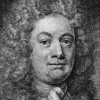
’Tis a small misfortune to oblige an ungrateful man; but it is unbearable to be obliged by a scoundrel.
[Ce n’est pas un grand malheur d’obliger des ingrats, mais c’en est un insupportable d’être obligé à un malhonnête homme.]
François VI, duc de La Rochefoucauld (1613–1680) French epigrammatist, memoirist, noble
Réflexions ou sentences et maximes morales [Reflections; or Sentences and Moral Maxims], ¶317 (1665-1678) [tr. Bund/Friswell (1871)]
(Source)
First present in the 3rd (1671) edition.
(Source (French)). Other translations:The misfortune of obliging unthankful People is no very great misfortune, but to be obliged to a Knave, is one not to be endured.
[tr. Stanhope (1694), ¶317]It is no great misfortune to oblige ingrateful people, but an insupportable one to be forced to be under an obligation to a scoundrel.
[pub. Donaldson (1783), ¶251; ed. Lepoittevin-Lacroix (1797), ¶292]It is no great misfortune to oblige an ungrateful person; but an insupportable one to be under an obligation to a scoundrel.
[ed. Carvill (1835), ¶220]It is not a great misfortune to oblige ungrateful people, but it is an unsupportable one to be under an obligation to a vulgar man.
[ed. Gowens (1851), ¶327]It is no great misfortune to put an ingrate under an obligation, but it is very great misfortune to be indebted to a dishonest person.
[tr. Heard (1917), ¶317]It is no great hardship to meet with ingratitude for our own favours; but intolerable to be indebted for favours to a scoundrel.
[tr. Stevens (1939), ¶317]Ingratitude from those we have helped is no great misfortune: but to be obligated to a cad is quite intolerable.
[tr. FitzGibbon (1957), ¶317]It is no great tragedy to do ungrateful people favors, but it is unbearable to be indebted to a scoundrel.
[tr. Kronenberger (1959), ¶317]It is no great misfortune to have one's kindness repaid by ingratitude, but it is intolerable to be beholden to a scoundrel.
[tr. Tancock (1959), ¶317]It is no great misfortune to oblige an ungrateful man; but it is unbearable to be obliged to a reprobate.
[tr. Whichello (2016), ¶317]It is no great misfortune to receive ingratitude for favors we bestow, but it is unbearable to be indebted to a scoundrel.
[tr. Chandler, ¶317]
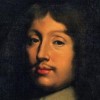
A revengeful knave will do more than he will say; a grateful one will say more than he will do.
Charles Caleb "C. C." Colton (1780–1832) English cleric, writer, aphorist
Lacon: Or, Many Things in Few Words, Vol. 1, § 441 (1820)
(Source)
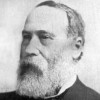
If the weakness of the head were an admissible excuse for the malevolence of the heart, the one-half of mankind would be occupied in aggression, and the other half in forgiveness; but the interests of society peremptorily demand that things should not be so; for a fool is often as dangerous to deal with as a knave, and always more incorrigible.
If thou trustest every one, thou wilt be known to be a Fool; if thou trustest none, thou wilt be suspected to be a Knave.
Thomas Fuller (1654–1734) English physician, preacher, aphorist, writer
Introductio ad Prudentiam, Vol. 2, # 1989 (1727)
(Source)
ALCESTE: His social polish can’t conceal his nature;
One sees at once that he’s a treacherous creature;
No one could possibly be taken in
By those soft speeches and that sugary grin.
The whole world knows the shady means by which
The low-brow’s grown so powerful and rich,
And risen to a rank so bright and high
That virtue can but blush, and merit sigh.
[Au travers de son masque on voit à plein le traître;
Partout il est connu pour tout ce qu’il peut être ;
Et ses roulements d’yeux, et son ton radouci
N’imposent qu’à des gens qui ne sont point d’ici.
On sait que ce pied plat, digne qu’on le confonde,
Par de sales emplois s’est poussé dans le monde,
Et que, par eux son sort de splendeur revêtu
Fait gronder le mérite et rougir la vertu.]Molière (1622–1673) French playwright, actor [stage name for Jean-Baptiste Poquelin]
Le Misanthrope, Act 1, sc. 1 (1666) [tr. Wilbur (1954)]
(Source)
(Source (French)). Other translations:You may plainly perceive the traitor through his mask; he is well known everywhere in his true colours; his rolling eyes and his honeyed tones impose only on those who do not know him. People are aware that this low-bred fellow, who deserves to be pilloried, has, by the dirtiest jobs, made his way in the world; and that the splendid position he has acquired makes merit repine and virtue blush.
[tr. Van Laun (1878)]The treacherous rascal is plainly seen through his mask, he is everywhere known for what he is; his rolling eyes and soft tones impose only upon strangers. People know that this wretched fellow, who ought to be hanged, has pushed his way in the world by dirty jobs, and that the splendid condition he finds himself in through them makes merit grumble and virtue blush.
[tr. Mathew (1890)]Behind his mask the knave is seen, wherever he is known, for what he is; the rolling of his eye, his bated voice, impose on none but those who do not live here. All others know that the sneaking fellow, fit only to be shunned, has by the foulest actions foisted himself upon society, where his career, by their connivance clothed in splendor, makes merit groan and virtue blush.
[tr. Wormeley (1894)]You can clearly see the traitor through his mask. He is known everywhere for what he is: his rolling eyes and his honeyed tones only impose on those people who do not know him. They know that this low-bred cur, who deserves to be exposed, has, by the dirtiest means, pushed himself on in the world; and the splendid position he has acquired by these means makes merit repine and virtue blush.
[tr. Waller (1903)]The traitor's face shows plainly through his mask,
And everywhere he's known for what he is;
His up-turned eyes, his honeyed canting voice,
Impose on none but strangers. All men know
That this confounded, low-bred, sneaking scamp
Has made his way by doing dirty jobs,
And that the splendid fortune these have brought him
Turns merit bitter and makes virtue blush.
[tr. Page (1913)]Behind his mask the scoundrel's visible.
Here everybody knows his character;
And his protesting eyes, his honeyed tongue,
Impose on no one but a casual stranger.
And that contemptible boor notoriously
Has made his way in the world by dirty means,
So that his present splendid situation
Makes merit grumble and makes virtue blush.
[tr. Bishop (1957)]Right through his mask men see the traitor's face,
And everywhere give him his proper place;
His wheedling eyes, his soft and cozening tone,
Fool only those to whom he is not known.
That this knave rose, where he deserved to fall,
By shameful methods, is well known to all,
And that his state, which thanks to these is lush,
Makes merit murmur and makes virtue blush.
[tr. Frame (1967)]
FOOL: That sir which serves and seeks for gain,
And follows but for form,
Will pack when it begins to rain
And leave thee in the storm.
But I will tarry; the Fool will stay,
And let the wise man fly.
The knave turns fool that runs away;
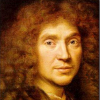
The Fool, no knave, perdy.William Shakespeare (1564–1616) English dramatist and poet
King Lear, Act 2, sc. 4, l. 84ff (2.4.84-91) (1606)
(Source)
Perdie, perdy: "by God" (from the French par Dieu].
The heart never grows better by age; I fear rather worse; always harder. A young liar will be an old one; and a young knave will only be a greater knave as he grows older.
Lord Chesterfield (1694–1773) English statesman, wit [Philip Dormer Stanhope]
Letter to his son, #225 (17 May 1750)
(Source)
Patriotism is the last refuge of a scoundrel.
Samuel Johnson (1709–1784) English writer, lexicographer, critic
Comment (1775-04-07)
(Source)
In James Boswell, The Life of Samuel Johnson (1791). The full quote:Patriotism having become one of our topicks, Johnson suddenly uttered, in a strong determined tone, an apophthegm, at which many will start: "Patriotism is the last refuge of a scoundrel." But let it be considered, that he did not mean a real and generous love of our country, but that pretended patriotism which so many, in all ages and countries, have made a cloak of self-interest.
Ambrose Bierce wrote in his Devil's Dictonary, under "Patriotism," "In Dr. Johnson's famous dictionary patriotism is defined as the last resort of a scoundrel. With all due respect to an enlightened but inferior lexicographer I beg to submit that it is the first."
The saying is famous and noteworthy enough that many others have riffed on it beyond Bierce: see Wilde (and again), Roosevelt, Broun, Asimov, Ericsson, Lewis, and Ehrenreich.

He that dies a martyr proves that he is not a knave, but by no means that he is not a fool.
Charles Caleb "C. C." Colton (1780–1832) English cleric, writer, aphorist
Lacon: Or, Many Things in Few Words, Vol. 1, § 410 (1820)
(Source)