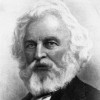
That which thou are ashamed to do in the Sight of Men for the Turpitude of it; thou shouldest be more ashamed to do in the Sight of the Angels, and even of God himself, when thou art alone.
Thomas Fuller (1654–1734) English physician, preacher, aphorist, writer
Introductio ad Prudentiam, Vol. 2, # 2324 (1727)
(Source)
Quotations about:
private life
Note not all quotations have been tagged, so Search may find additional quotes on this topic.

The etiquette of intimacy is very different from the etiquette of formality, but manners are not just something to show off to the outside world. If you offend the head waiter, you can always go to another restaurant. If you offend the person you live with, it’s very cumbersome to switch to a different family.
Judith Martin (b. 1938) American author, journalist, etiquette expert [a.k.a. Miss Manners]
Essay (1996-03/04), Modern Maturity magazine

Oh, you who read some song that I have sung,
What know you of the soul from whence it sprung?
Dost dream the poet ever speaks aloud
His secret thought unto the listening crowd?
Go take the murmuring sea-shell from the shore:
You have its shape, its color and no more.
It tells not one of those vast mysteries
That lie beneath the surface of the seas.
Our songs are shells, cast out by-waves of thought;
Here, take them at your pleasure; but think not
You’ve seen beneath the surface of the waves,
Where lie our shipwrecks and our coral caves.Ella Wheeler Wilcox (1850–1919) American author, poet, temperance advocate, spiritualist
Poems of Passion, Epigraph (1883)
(Source)

We cannot judge either of the feelings or of the character of men with perfect accuracy, from their actions or their appearances in public; it is from their careless conversation, their half-finished sentences that we may hope with the greatest probability of success to discover their real character.

What then, is the object proposed to themselves by these directors of the republic, which they are bound to keep their eyes fixed upon, and towards which they ought to direct their course? That which is most excellent and most desirable to all men in their senses, and to all good and happy men, — ease conjoined with duty.
[Quid est igitur propositum his rei publicae gubernatoribus quod intueri et quo cursum suum derigere debeant? Id quod est praestantissimum maximeque optabile omnibus sanis et bonis et beatis, cum dignitate otium.]
Marcus Tullius Cicero (106–43 BC) Roman orator, statesman, philosopher
Pro Sestio [For Publius Sestius], ch. 45 / sec. 98 (56-03 BC) [tr. Yonge (1891)]
(Source)
The discussion of otium cum dignitate, coined by Cicero, is a key point in Pro Sestio. It is also translated as "leisure with dignity," "peace with dignity," "peace with honor," "fruitful leisure." Socially, it means an active, studious, useful private life or retirement after public service -- as distinguished from idleness, sloth, and indolence. Politically, Cicero used it to reference a secure, stable, peaceful, but still vigorous state, led by the "best men" (aristocrats or optimates).
(Source (Latin)). Other translations:What, therefore, is the aim of these conductors of the affairs of the state, which they ought to keep their eyes upon, and towards which they ought to direct their course? That which is most excellent and most to be desired by all sane and good and well-to-do citizens, tranquillity with freedom.
[tr. Hickie (1888)][...] That which stands first, and is most to be desired by all happy, honest, and healthy-minded men, is ease with dignity.
[ed. Harbottle (1897)]What then is the mark set before those who guide the helm of state, upon which they ought to keep their eyes and towards which they ought to direct their course? It is that which is far the best and the most desirable for all who are sound and good and prosperous; it is "peace with dignity."
[tr. Gardner (Loeb) (1958)]What then are the ideals and objectives towards which these men ought to steer the res publica? They are the finest, the noblest aims of all men of wisdom, integrity, and substance: civil peace for Rome and honour for those who deserve it.
[tr. Wilson/Lacey (1978)][...] What is desired the most, by those who are healthy, good, and blessed, is leisure with honor.
[in Jasper (2008)][...] The thing that is the most outstanding, and chiefly to be desired by all healthy and good and well-off persons, is leisure with honor.
[ed. Stone (2013)]
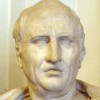
Individualism, at first, only saps the virtues of public life; but in the long run it attacks and destroys all others and is at length absorbed in downright selfishness.
Alexis de Tocqueville (1805–1859) French writer, diplomat, politician
Democracy in America, 2.2.2 (1840) [tr. Reeve & Bowen (1862)]

A man always is to be himself the judge of how much of his mind he will show to other men; even to those he would have work along with him. There are impertinent inquiries made: your rule is to leave the inquirer uninformed on that matter; not, if you can help it, misinformed; but precisely as dark as he was!
Thomas Carlyle (1795–1881) Scottish essayist and historian
Lecture (1840-05-22), “The Hero as King,” Home House, Portman Square, London
(Source)
The lecture notes were collected by Carlyle into On Heroes, Hero-Worship, & the Heroic in History, Lecture 6 (1841).

The holiest of holidays are those
Kept by ourselves in silence and apart;
The secret anniversaries of the heart,
When the full river of feeling overflows.